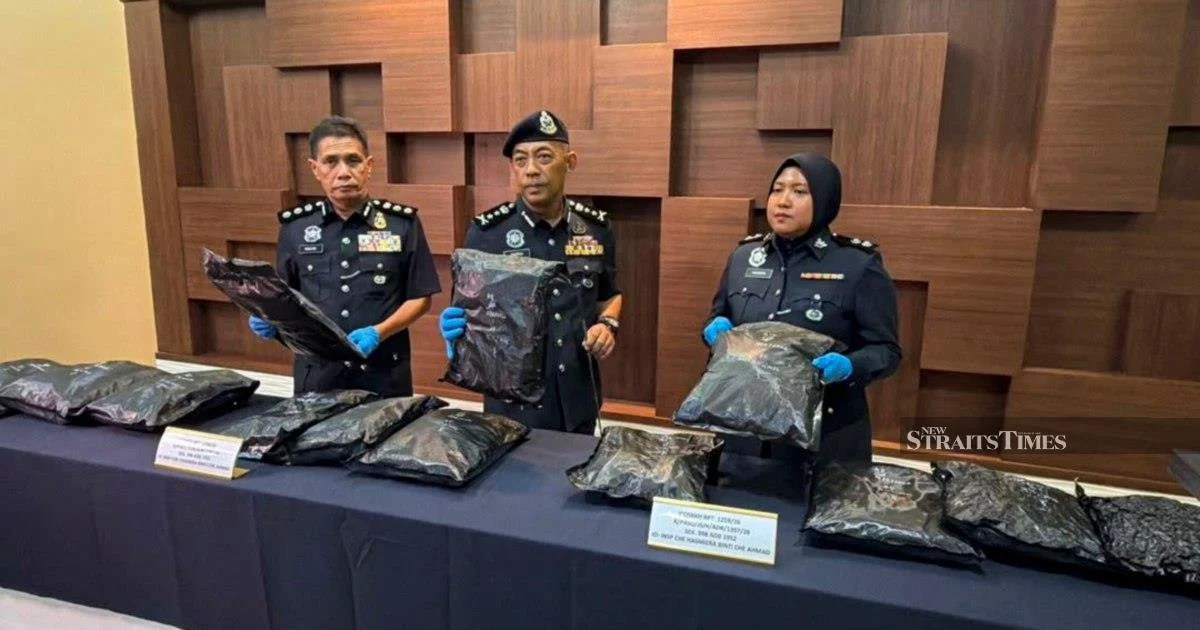
A student enrolled at a private higher education institution was apprehended at Bukit Kayu Hitam on Monday for attempting to bring 14.63 kilograms of cannabis buds into Malaysia from across the border, with the narcotics estimated to have a street value of RM1.17 million.
The arrest marks another instance of the persistent trafficking challenge facing authorities along Malaysia's northern corridor, where major entry points like Bukit Kayu Hitam continue to serve as focal transit hubs for drug smuggling operations. The location, situated directly at the international border crossing between Malaysia and Thailand, remains a strategic chokepoint where law enforcement agencies conduct regular interdiction efforts to intercept contraband destined for local consumption or regional distribution networks.
The involvement of a student in the smuggling operation highlights a troubling pattern observed by enforcement agencies across the region: educational institutions providing cover for otherwise inconspicuous individuals attempting to move large quantities of illegal substances. The use of students as couriers or "transporters" reflects how criminal organisations exploit the relative anonymity and assumed trustworthiness of younger individuals, particularly those engaged in legitimate academic pursuits. This tactic complicates detection at border checkpoints where officers must balance thorough security protocols with the practical flow of genuine student and commuter traffic across the international boundary.
The quantity seized represents a substantial single haul within Malaysia's enforcement context. At 14.63 kilograms, the cannabis buds substantially exceeded typical personal consumption thresholds, indicating clear intent to distribute or traffic rather than simple possession for private use. The valuation of RM1.17 million underscores the commercial significance of the operation and the substantial margins available within the Malaysian illicit drug market, particularly for cannabis products that command premium prices in urban centres and among younger demographics.
The Bukit Kayu Hitam crossing has historically served as a critical node in regional drug trafficking networks. Thailand's continuing challenge with synthetic drug production and cannabis cultivation in its northern provinces creates perpetual supply pressures northward into Malaysia. The porous nature of the border, combined with high volume legitimate traffic, creates operational environments where determined smugglers can exploit gaps between enforcement capacity and detection technology. Intelligence analysts have increasingly documented Thailand-origin cannabis entering Malaysian supply chains through precisely these overland routes.
The arrest occurs within Malaysia's stringent drug enforcement framework, where possession of quantities exceeding designated thresholds automatically triggers presumption of trafficking rather than personal use. The 14.63 kilogram seizure falls comfortably within trafficking quantities under Malaysia's Dangerous Drugs Act, exposing the arrested student to mandatory minimum sentences of five years imprisonment alongside substantial fines. The severity of potential penalties reflects Parliament's commitment to deterring large-scale drug movement, though enforcement agencies acknowledge that economic desperation and organised crime recruitment continue driving individuals toward smuggling roles despite documented risks.
Educational institutions have increasingly become targets for criminal recruitment, offering access to individuals with travel documents, border-crossing legitimacy through student status, and relative institutional oversight. The exploitation of academic credentials as cover for illicit activity represents a concerning intersection between legitimate educational mobility and organised criminal methodology. Universities and colleges, particularly in border regions and international education hubs, face growing pressure to implement awareness programmes addressing these recruitment vulnerabilities among their student populations.
This intercept reflects ongoing operational effectiveness by Malaysia's border security apparatus, despite persistent resource constraints. Customs and narcotics enforcement units stationed along the northern frontier conduct thousands of vehicle inspections monthly, achieving detection rates that represent only a fraction of attempted smuggling operations. The quantity and value of this particular seizure demonstrates that enforcement remains capable of identifying and disrupting significant trafficking movements, particularly when intelligence sharing and checkpoint coordination function effectively.
The broader context involves Thailand's evolving drug landscape, where recent years have witnessed substantial increases in cannabis cultivation following legislative adjustments that permitted medical and research applications. Unregulated cultivation has proliferated beyond licensed facilities, creating abundant supply that flows southward into Malaysian distribution networks where recreational cannabis remains completely prohibited and commands higher prices than in Thailand's partially legalised regime. This regulatory differential creates sustained smuggling pressure that enforcement agencies expect to persist regardless of individual interdictions.
For Malaysian university administrators and student service offices, this arrest signals the need for enhanced outreach regarding trafficking risks and the criminal networks actively recruiting on campuses. Educational institutions increasingly acknowledge responsibility for addressing student vulnerability to organised crime recruitment, implementing awareness sessions that contextualise the dramatic consequences accompanying trafficking convictions. The reputational and educational consequences extend beyond individual sentencing, affecting institutional standing and peer confidence when prominent students become entangled in major criminal cases.
The arrest demonstrates that despite escalating enforcement efforts, Malaysia's drug challenge remains substantial and multifaceted. While single large seizures generate positive headlines emphasising operational success, underlying market demand and profit incentives continue attracting new suppliers and couriers willing to assume significant personal risk. Long-term solutions require addressing both supply-side interdiction and demand-side reduction through education, treatment accessibility, and economic opportunity programmes targeting populations susceptible to recruitment by trafficking organisations.


%22%2F%3E%3C%2Fpattern%3E%3C%2Fdefs%3E%3Crect%20width%3D%22100%25%22%20height%3D%22100%25%22%20fill%3D%22url(%23ph40buhg)%22%2F%3E%3Crect%20width%3D%22100%25%22%20height%3D%22100%25%22%20fill%3D%22url(%23ph40buhp)%22%2F%3E%3Ctext%20x%3D%2250%25%22%20y%3D%2250%25%22%20text-anchor%3D%22middle%22%20dominant-baseline%3D%22central%22%20fill%3D%22rgba(255%2C255%2C255%2C0.95)%22%20font-family%3D%22Georgia%2C%20'Times%20New%20Roman'%2C%20serif%22%20font-weight%3D%22700%22%20font-size%3D%22320%22%20letter-spacing%3D%22-0.02em%22%3EGRS%3C%2Ftext%3E%3C%2Fsvg%3E)