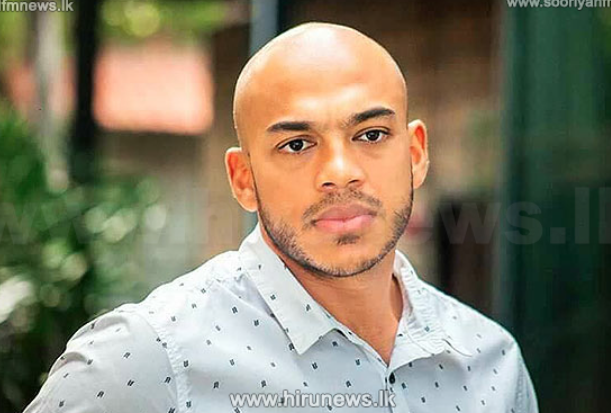
Sri Lanka's anti-corruption authorities have moved against Yoshitha Rajapaksa, the 38-year-old son of former president Mahinda Rajapaksa, detaining him on Wednesday on charges stemming from alleged abuse of state resources during his naval career. The arrest represents a significant development in the campaign to hold accountable members of a family whose influence once extended across multiple branches of the island nation's government and military establishment.
According to the Bribery Commission, Yoshitha Rajapaksa is suspected of leveraging his position as a naval officer to secure benefits that were not legitimately available to him. The investigation centres on his alleged advancement through military ranks without meeting the standard qualifications required of other officers, followed by his attendance at a government-sponsored training programme abroad. This sequence of events raises questions about whether influence and family connections overrode the meritocratic principles that should govern military recruitment and advancement in a professional armed service.
The specific venue of his overseas training adds a notable dimension to the case. Yoshitha Rajapaksa attended a course at Dartmouth, Britain's prestigious naval academy, at state expense during a period when his father held the presidency from 2005 to 2015. Observers at the time noted that his placement reportedly displaced a cadet who had legitimately earned a spot through competitive selection, illustrating how patronage networks can distort institutional integrity. The Bribery Commission's statement emphasises charges of aiding and abetting in connection with improper recruitment and the subsequent misuse of public funds for international training opportunities.
This latest detention occurs against a backdrop of mounting legal vulnerability that has already constrained Yoshitha Rajapaksa's movements and financial position. He had previously faced restrictions on foreign travel and was out on bail in connection with two separate money-laundering investigations. The cumulative weight of these proceedings reflects a pattern of financial scrutiny that authorities have applied to assess the source of assets accumulated during his father's presidency. In one instance, Yoshitha Rajapaksa attributed the funds used to purchase a residential property to the sale of gems allegedly gifted by his grandmother, a explanation that has proven insufficient to satisfy investigators given the elderly relative's inability to account for the provenance of the precious stones themselves.
There remain additional pending cases targeting Yoshitha Rajapaksa that extend beyond the naval training matter. Prosecutors are pursuing charges related to his acquisition of a television network, another asset whose funding mechanisms have drawn scrutiny. These interconnected investigations suggest a comprehensive examination of how wealth and resources moved within the Rajapaksa family ecosystem during the years when executive power concentrated in their hands.
The prosecution's renewed energy reflects a dramatic shift in Sri Lanka's political circumstances and institutional priorities. President Anura Kumara Dissanayake secured election in 2024 explicitly on an anti-corruption mandate, signalling voters' demand for accountability for alleged abuses that accumulated under previous administrations. This electoral outcome has emboldened law enforcement agencies to pursue cases that might have languished or progressed more slowly under earlier political leadership, when the Rajapaksas maintained sufficient influence to impede investigations.
The broader Rajapaksa family has faced accumulating legal jeopardy over several years, with multiple members and associates charged across a spectrum of alleged offences ranging from conventional corruption through to murder accusations. These cases remain in various stages of court proceedings, suggesting that the judicial reckoning will unfold across an extended timeline. Mahinda Rajapaksa himself, despite his historical dominance over Sri Lankan politics, has been compelled to confront serious allegations arising from his period in power.
Particularly significant is the legal exposure affecting Gotabaya Rajapaksa, Mahinda's younger brother, who assumed the presidency in 2019 but was forced to resign in 2022 following civil unrest triggered by an acute economic crisis that devastated household finances across the country. Earlier this month, Gotabaya received a foreign travel ban, constraining his movement as courts consider his plea to forestall potential arrest proceedings. A particularly serious matter hanging over him involves allegations connected to the Easter Sunday bombings of 2019, a terrorist attack that claimed 279 lives and exposed significant security failures during his administration. His request for judicial protection against arrest demonstrates the gravity of exposure he faces and the potential criminal consequences of decisions made during his tenure.
For Malaysian observers, the Sri Lankan experience offers instructive perspectives on how political transitions can enable or constrain anti-corruption enforcement. The intersection of electoral change, institutional independence of prosecution services, and public demand for accountability creates conditions under which long-insulated elites become legally vulnerable. The Rajapaksa cases also illustrate how accumulated wealth and political connections can become liabilities once the political winds shift decisively, highlighting the importance of transparent institutions and merit-based advancement in military and public service appointments.
The arrest of Yoshitha Rajapaksa and the broader acceleration of cases against the Rajapaksa family represent a critical test of Sri Lanka's commitment to genuine institutional reform following years of what many citizens perceived as selective or compromised enforcement under previous administrations. Whether these proceedings result in meaningful convictions and consequences will shape public confidence in the nascent anti-corruption campaign and signal to other political actors the seriousness of potential legal exposure associated with governance misconduct.
%22%2F%3E%3C%2Fpattern%3E%3C%2Fdefs%3E%3Crect%20width%3D%22100%25%22%20height%3D%22100%25%22%20fill%3D%22url(%23ph40buhg)%22%2F%3E%3Crect%20width%3D%22100%25%22%20height%3D%22100%25%22%20fill%3D%22url(%23ph40buhp)%22%2F%3E%3Ctext%20x%3D%2250%25%22%20y%3D%2250%25%22%20text-anchor%3D%22middle%22%20dominant-baseline%3D%22central%22%20fill%3D%22rgba(255%2C255%2C255%2C0.95)%22%20font-family%3D%22Georgia%2C%20'Times%20New%20Roman'%2C%20serif%22%20font-weight%3D%22700%22%20font-size%3D%22320%22%20letter-spacing%3D%22-0.02em%22%3EGRS%3C%2Ftext%3E%3C%2Fsvg%3E)