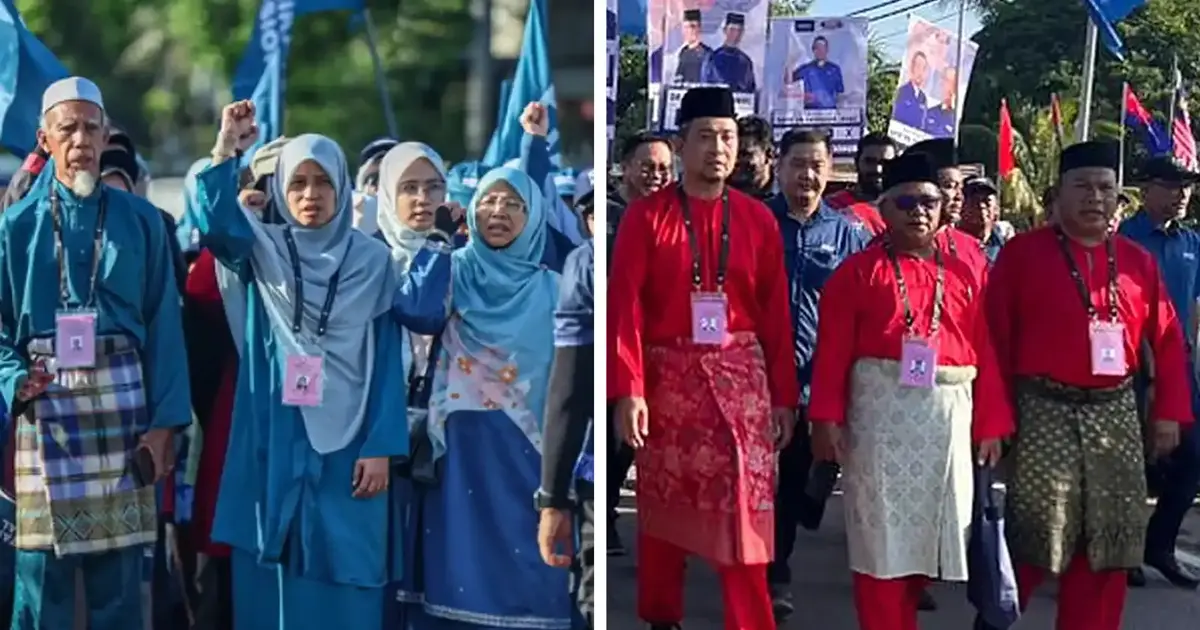
The fracturing of Perikatan Nasional into separate campaign operations by component parties PAS and Bersatu presents a significant challenge to the coalition's electoral viability in the forthcoming Johor state election, according to political observers tracking the dispute. The breakdown in unified messaging threatens to confuse voters and dilute the coalition's ability to present a coherent alternative to established political formations, analysts say, creating openings for rival blocs to capitalise on voter uncertainty.
When coalition partners campaign independently rather than under a unified banner, the result is typically a loss of organisational efficiency and strategic coherence. Voters accustomed to supporting a single slate of candidates find themselves navigating conflicting messaging, competing priorities, and ambiguous positioning on key policy issues. This fragmentation becomes particularly damaging in state-level contests where campaigns are relatively compressed and resources must stretch across multiple constituencies simultaneously. The situation in Johor mirrors historical patterns observed elsewhere in Malaysian politics, where internal coalition ruptures have consistently weakened electoral performance even when underlying support bases remained loyal.
The implications extend beyond immediate electoral mathematics. Perikatan Nasional emerged as a significant force in Malaysian politics following the 2020 general election and subsequent political transitions, positioning itself as a credible counterweight to both Barisan Nasional and Pakatan Harapan. However, maintaining coalition discipline requires consistent alignment between member parties on strategic direction, candidate selection, and campaign focus. When those alignments break down, the entire coalition infrastructure becomes compromised, from grassroots volunteer coordination to media strategy and resource allocation.
Voters responding to competing appeals from coalition partners face genuine confusion about which candidates genuinely represent their interests and which policy positions should be prioritised. This uncertainty typically translates to reduced turnout among coalition supporters, as undecided voters defer decisions or abandon participation altogether. In state elections with proportionally smaller electorates than national polls, such marginal shifts in voter behaviour can determine outcomes in numerous constituencies, potentially transforming what internal polling suggests could be a competitive result into a decisive defeat.
The credibility damage extends to perceptions of leadership competence within the coalition. Voters evaluating which parties deserve their support consider not only policy positions but also organisational capacity and internal discipline. Coalitions that visibly struggle to manage internal disagreements send negative signals about whether their leadership can effectively govern once elected. This perception problem proves particularly acute for Perikatan Nasional, which has yet to establish the institutional depth and voter loyalty enjoyed by longer-established coalitions that have managed multiple state and federal election cycles.
For Malaysian voters in Johor specifically, the split campaign dynamic introduces practical complications during the voting period. Constituency-level representation becomes muddled when voters cannot identify a clearly preferred candidate list, and efforts to mobilise supporters become confused between competing campaign mechanisms. The state's electoral geography, with its mix of urban, semi-urban, and rural constituencies, means that campaign efficiency directly affects which areas receive adequate candidate exposure and which regions become neglected due to stretched resources and divided attention.
The situation also creates opportunities for opposition coalitions to frame Perikatan Nasional as internally incoherent and unfit for governance. Campaign messaging from rival blocs can emphasise the fragmentation as evidence of poor political management and inability to maintain partnerships—criticisms that resonate with voters concerned about governmental stability and policy continuity. Such attacks prove particularly effective when reinforced by visual evidence of separate campaign operations, competing rallies, and conflicting statements from coalition partners supposedly working toward shared objectives.
Historical precedent suggests that coalitions can recover from internal disputes if they manage reunification before voting day, but the window for such reconciliation narrows significantly as election campaigns progress. Early campaign phases remain fluid, allowing for last-minute adjustments to messaging and coordination, but once candidates are formally announced and localised campaigns commence, reversing course becomes increasingly difficult and carries political costs for parties seen as inconsistent or unreliable. The timing of this split therefore matters considerably for Perikatan Nasional's prospects.
Analysts note that voter confidence, once eroded, proves difficult to rebuild during compressed campaign cycles. Swing voters and undecided supporters require sustained positive messaging and clear reasons to overcome initial doubts, yet divided campaigns struggle to provide such reassurance. Instead, fragmentation reinforces perceptions of weakness and internal dysfunction, creating momentum that opposing coalitions can exploit through targeted messaging in swing constituencies. For Johor's mixed political landscape, where several constituencies remain genuinely competitive, such momentum shifts can prove decisive.
The technical aspects of separate campaigns also present logistical challenges often underestimated by party leadership. Duplicate administrative structures, competing resource allocation, inconsistent volunteer training, and fragmented media buying all increase costs while reducing effectiveness. Funds that could be concentrated on persuading genuinely undecided voters instead become dispersed across organisational redundancy and internal competition. In a state election context where campaigns operate within defined financial constraints, such inefficiency directly translates to reduced competitive capacity against better-coordinated opposition forces.
For Perikatan Nasional's long-term viability as a coalition force in Malaysian politics, the Johor outcome carries significance beyond immediate seat counts. If fragmented campaigning produces disappointing results, it reinforces doubts among component party leaderships about coalition viability and strengthens arguments for pursuing independent or alternative coalition arrangements. Conversely, demonstrating capacity to overcome internal divisions and compete effectively despite challenges could strengthen coalition bonds for subsequent elections. The Johor campaign thus functions as a test case for whether Perikatan Nasional possesses sufficient institutional coherence to function as a sustained political force or whether it remains vulnerable to further fragmentation when internal pressures intensify.

