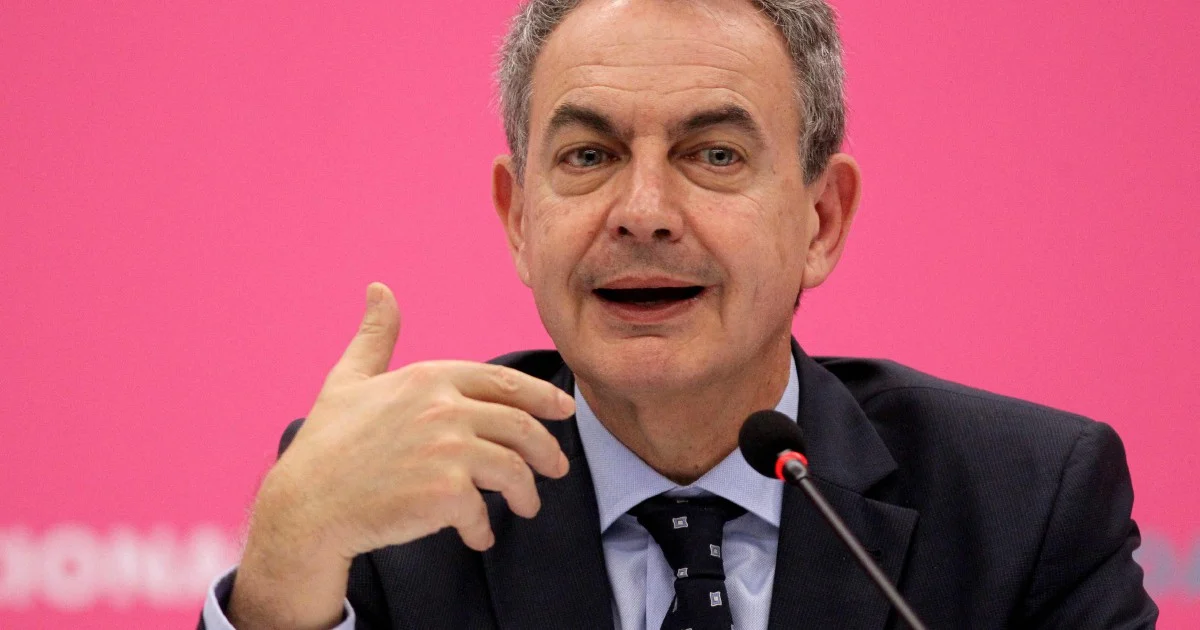
Spain's political establishment faces one of its gravest moments as former prime minister Jose Luis Rodriguez Zapatero appears before the courts on Wednesday to face questioning over alleged influence peddling. The two-day judicial hearing marks a historic turning point for the Socialist Party, which has governed Spain since 2018, as it grapples with multiple corruption allegations that threaten to undermine public confidence in leftist politics at a critical juncture.
The charges against Zapatero, who led the Spanish government from 2004 to 2011, represent uncharted constitutional territory for the country. Never before has a former Spanish premier faced direct court proceedings of this magnitude on graft-related allegations. The inquiry targets his alleged role in facilitating illicit financial dealings, specifically centring on accusations that he leveraged his political influence to benefit private interests. Such investigations carry symbolic weight beyond the individual defendant, signalling the judiciary's willingness to scrutinise even the highest echelons of national power.
The timing of these proceedings poses acute difficulties for Prime Minister Pedro Sánchez's administration. Spain's socialist government has historically positioned itself as a reformist alternative to centre-right politics, yet finds itself increasingly entangled in allegations that corrode that brand. The Zapatero case arrives as the nation navigates economic recovery post-pandemic, requiring political stability and public trust. Instead, successive corruption revelations have fractured the government's moral authority, complicating its legislative agenda.
Zapatero's court appearance follows a pattern of escalating graft accusations within Spanish politics. The Socialist Party has faced parallel investigations involving senior figures, creating an impression of systemic institutional decay rather than isolated missteps. These developments contrast sharply with Spain's international reputation for democratic resilience since the transition from dictatorship in the 1970s. For regional observers, particularly in Southeast Asia where governance quality directly impacts investment confidence, Spain's struggle offers cautionary lessons about how corruption allegations erode political legitimacy regardless of a nation's democratic maturity.
The influence peddling allegations against Zapatero specifically concern his actions both during and after his premiership. Prosecutors argue he utilised connections and political capital to advance private business interests in exchange for undisclosed benefits. The investigation has expanded beyond Zapatero to encompass associates and intermediaries, suggesting a coordinated scheme rather than spontaneous wrongdoing. This broader network raises questions about whether systemic institutional weaknesses enabled such conduct, or whether particular individuals exploited their positions.
Spain's judiciary has demonstrated increasing independence in pursuing high-profile corruption cases, a development that strengthens democratic accountability but simultaneously creates political turbulence. The Socialist Party's response to Zapatero's predicament will test whether the left genuinely embraces institutional transparency or merely advocates it when opposing parties face allegations. This distinction matters for Spanish voters and international observers assessing the government's commitment to genuine reform.
The Zapatero inquiry occurs amid broader European conversations about corruption and accountability among political elites. Across the European Union, numerous former ministers and prime ministers face legal scrutiny, reflecting either heightened institutional rigour or a systemic vulnerability that transcends national borders. For Spain specifically, the cases represent a reckoning with the assumption that establishment figures occupy a category beyond meaningful legal jeopardy.
Regional implications extend to European governance standards and soft power projection. Nations in Southeast Asia and beyond benchmark their own institutions against European models, particularly regarding judicial independence and anti-corruption frameworks. Spain's handling of Zapatero's case will factor into international perceptions of whether developed democracies genuinely hold leaders accountable or merely create theatrical displays of justice.
The two-day hearing will involve direct testimony from Zapatero and examination of evidence compiled during the investigation. The proceedings remain legally complex, potentially extending through multiple phases before concluding. Legal experts anticipate the case will establish precedents for how Spanish courts balance respect for former executives' dignity against rigorous investigation of serious allegations.
For Sánchez's government, the challenge lies in maintaining political stability while respecting judicial independence. Any perception that the administration attempts to interfere with the Zapatero inquiry would compound the corruption narrative rather than contain it. Conversely, passive acceptance of proceedings against a fellow socialist potentially exposes the party to accusations of internal betrayal. This political bind reflects the inherent tension between institutional loyalty and principled governance.
The broader societal reaction to Zapatero's court appearance will shape whether Spain experiences this moment as a democratic strengthening—where the judiciary functions independently and no one remains above law—or as a political tragedy reflecting institutional decay. Public sentiment will partly determine whether the case catalyses meaningful reform or merely registers as another dispiriting scandal eroding faith in democratic institutions. For Spanish citizens and observers internationally, these hearings represent a crucial test of whether the rule of law genuinely applies universally or merely selectively.


%22%2F%3E%3C%2Fpattern%3E%3C%2Fdefs%3E%3Crect%20width%3D%22100%25%22%20height%3D%22100%25%22%20fill%3D%22url(%23ph40buhg)%22%2F%3E%3Crect%20width%3D%22100%25%22%20height%3D%22100%25%22%20fill%3D%22url(%23ph40buhp)%22%2F%3E%3Ctext%20x%3D%2250%25%22%20y%3D%2250%25%22%20text-anchor%3D%22middle%22%20dominant-baseline%3D%22central%22%20fill%3D%22rgba(255%2C255%2C255%2C0.95)%22%20font-family%3D%22Georgia%2C%20'Times%20New%20Roman'%2C%20serif%22%20font-weight%3D%22700%22%20font-size%3D%22320%22%20letter-spacing%3D%22-0.02em%22%3EGRS%3C%2Ftext%3E%3C%2Fsvg%3E)