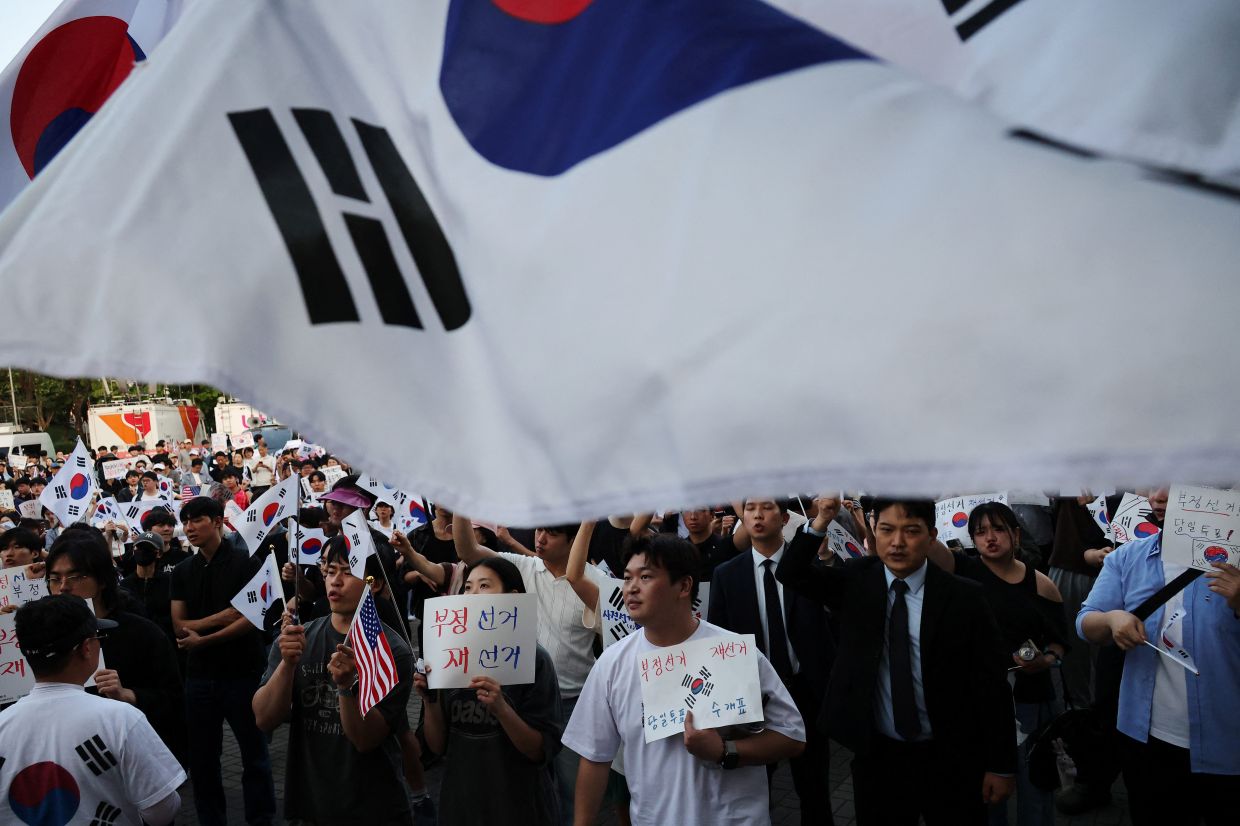
South Korean President Lee Jae Myung has issued a carefully calibrated plea for restraint amid growing protests over the troubled June 3 local elections, acknowledging legitimate concerns about administrative failures while drawing a firm boundary against what he characterises as baseless conspiracy theories about election rigging. His intervention reflects the delicate political balance the nation's leadership must maintain as public frustration over voting irregularities persists, particularly at protest sites around Seoul's Olympic Park where ballot processing took place.
In a statement posted on social media platform X on June 15, Lee emphasised that while citizens have every right to express political grievances, such demonstrations must not cross into territory that undermines the fundamental rights of others. The comment came in response to reports that various sporting organisations operating from facilities within Olympic Park had experienced significant operational disruptions as protesters blockaded entrances to the complex, preventing staff and officials from accessing their offices. This particular consequence of the demonstrations proved consequential for national sporting interests, as the disruptions impaired administrative functions essential for coordinating South Korean athletes' participation in international competitions.
The demonstrations have remained notably focused on the handball arena within Olympic Park, which served as the central vote-counting facility during the June 3 elections and subsequently housed the ballot boxes in question. This physical anchoring of protest activity at the specific location where electoral irregularities occurred has given the movement a concrete focal point, distinguishing it from more diffuse political demonstrations. For Lee, the ongoing gatherings represent both a legitimate expression of democratic concern and, potentially, an example of protest activity that may require calibration to maintain social stability.
Lee's public remarks followed a day of deliberation during which he had already issued stronger criticism of the National Election Commission's management of the elections, describing their performance as a profound institutional failure that had violated voters' fundamental democratic rights. Speaking via video link during an overseas visit to the Vatican, he acknowledged the gravity of the situation from the perspective of electoral administration and democratic governance. Yet simultaneously, he sought to insulate his comments from association with more extreme interpretations gaining traction among some segments of the protesting public.
The underlying controversy erupted from documented shortages of ballot papers and various other administrative lapses during voting day itself, which forced temporary suspensions and delays at numerous polling stations across the country. These operational failures represented a genuine affront to the democratic process, potentially disenfranchising citizens and raising legitimate questions about institutional competence. Lee's acknowledgment of these concerns carried weight, as it validated public frustration without requiring voters to accept alternative explanations for the problems that had occurred.
However, Lee deliberately separated legitimate criticism of electoral administration from what he termed baseless conspiracy narratives alleging deliberate election manipulation. This distinction proved crucial for his political messaging, as it allowed him to appear responsive to public discontent while simultaneously distancing himself from more destabilising claims about systemic fraud. He pointed to the actions of some protesters as evidence that the demonstration movement was being exploited by political forces seeking to weaponise legitimate concerns into broader attacks on electoral integrity.
Prosecutorial action against protesters provided concrete examples for Lee's warnings about escalating misconduct. He cited instances where individuals had threatened police officers, conducted unauthorised searches and inspections of facilities, physically obstructed access to work areas, and actively impeded official duties. These actions, he argued, represented a categorical crossing of acceptable boundaries and warranted legal accountability. By framing protest misconduct in legalistic terms, Lee positioned enforcement actions not as suppression of dissent but rather as necessary maintenance of rule-of-law principles.
Simultaneously, Lee called upon multiple governmental bodies to accelerate their investigations and fact-finding efforts. He specifically urged the National Election Commission to provide complete cooperation with parliamentary investigations, which he indicated could commence within the week. Additionally, he pressed joint investigation teams comprising prosecutors and police to intensify their work in determining responsibility across the electoral system. This multi-institutional approach reflected an attempt to demonstrate governmental commitment to accountability while maintaining distinction between investigating administrative failures and entertaining fraud theories.
The president's framing emphasised that resolving this crisis required channelling legitimate democratic grievances toward constructive institutional reform rather than allowing them to fester as unresolved resentment. He stressed the necessity of transparent fact-finding processes that would enable comprehensive understanding of what went wrong and how similar failures could be prevented in future elections. This orientation toward future-focused solutions attempted to transform the election crisis from a moment of democratic erosion into an opportunity for systemic improvement.
For Malaysian and Southeast Asian observers, South Korea's handling of this electoral controversy offers instructive lessons about managing the intersection of administrative failure, public protest, and democratic legitimacy. The incident demonstrates the political risks when electoral institutions fail in their basic functions, as such failures inevitably provoke demands for explanation and accountability. Lee's careful navigation between validating legitimate concerns and rejecting broader claims of systemic manipulation illustrates the rhetorical challenges facing democratic leaders when institutional credibility has been damaged yet electoral integrity itself remains fundamentally sound.
The broader implications extend to how regional democracies can maintain public confidence in electoral systems following administrative shortcomings. Rather than dismissing voter concerns as baseless or alternatively accepting unsubstantiated claims of manipulation, Lee's approach attempted to establish a middle position grounded in transparent investigation and institutional reform. This approach may prove increasingly relevant across Southeast Asia as democratic systems mature and public expectations for electoral administration continue rising.
Ultimately, Lee's intervention sought to establish boundaries for acceptable political expression while committing to thorough institutional accountability. Whether this calibration succeeds depends on whether investigation processes deliver credible findings that satisfactorily address public concerns while maintaining democratic norms around protest and dissent. The coming weeks of parliamentary investigations and prosecutorial proceedings will substantially determine whether South Korea successfully converts an electoral failure into a reinforcement of democratic accountability or whether lingering suspicions persist.

%22%2F%3E%3C%2Fpattern%3E%3C%2Fdefs%3E%3Crect%20width%3D%22100%25%22%20height%3D%22100%25%22%20fill%3D%22url(%23ph40buhg)%22%2F%3E%3Crect%20width%3D%22100%25%22%20height%3D%22100%25%22%20fill%3D%22url(%23ph40buhp)%22%2F%3E%3Ctext%20x%3D%2250%25%22%20y%3D%2250%25%22%20text-anchor%3D%22middle%22%20dominant-baseline%3D%22central%22%20fill%3D%22rgba(255%2C255%2C255%2C0.95)%22%20font-family%3D%22Georgia%2C%20'Times%20New%20Roman'%2C%20serif%22%20font-weight%3D%22700%22%20font-size%3D%22320%22%20letter-spacing%3D%22-0.02em%22%3EGRS%3C%2Ftext%3E%3C%2Fsvg%3E)