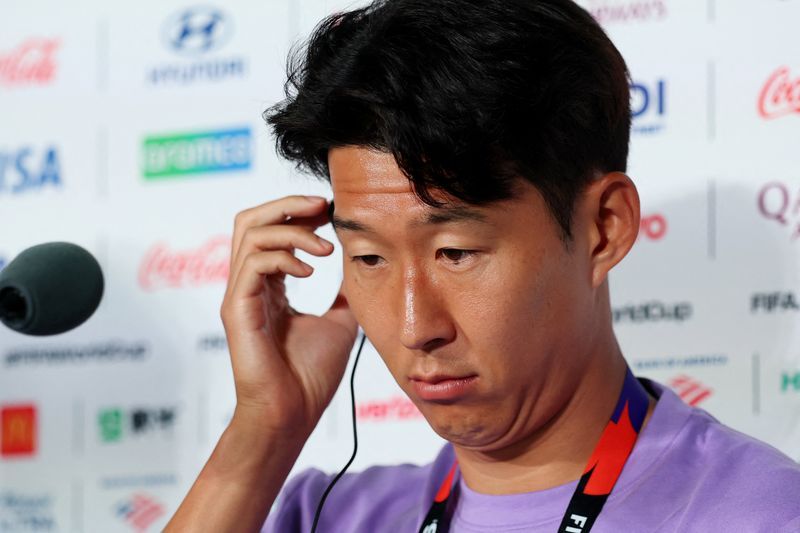
The South Korean national football team has taken the unusual step of boycotting non-mandatory media interactions during the World Cup tournament, responding to an incident in which domestic journalists were allegedly caught on a live microphone making derisive comments about captain Son Heung-min's military service obligations. The incident occurred at the squad's Guadalajara base camp while Son trained separately from his teammates, marking a rare moment of friction between the national programme and its domestic media contingent.
The Korea Football Association issued a formal statement expressing regret over what it described as inappropriate remarks made by certain media personnel during the team's training sessions. The KFA emphasised its commitment to international representation while acknowledging the emotional toll the leaked conversations had inflicted upon the squad. The statement underscored the players' dedication to repaying public support and national expectations, positioning the media incident as a distraction from these core objectives.
Military service occupies a uniquely sensitive position within South Korean society and culture. All able-bodied South Korean men are required to complete approximately 21 months of mandatory military service, a cornerstone of the nation's defence strategy against North Korea. This requirement applies across professions and social classes, making it a shared civic duty that shapes the developmental trajectory of young men nationwide. The centrality of this obligation means that public perception of military service is deeply intertwined with national identity and patriotic sentiment.
Athletes in South Korea, however, occupy a privileged position within this system. Those who achieve gold medals at the Asian Games or secure Olympic medals become eligible for military service exemptions, a recognition of their contribution to national prestige and international standing. Son Heung-min and his teammates secured this exemption after capturing gold at the 2018 Asian Games, an achievement that transformed their status within the military service framework and aligned them with previous sporting champions who have earned similar recognition.
Despite his exemption, Son voluntarily undertook a three-week intensive military training programme in 2020, a decision that speaks to his character and sense of national responsibility. The training regimen was rigorous, exposing him to tear gas exposure, live-fire exercises, and punishing 30-kilometre hiking marches across demanding terrain. The Tottenham Hotspur forward completed this voluntary stint during the COVID-19 pandemic when the English Premier League had temporarily suspended operations, allowing him dedicated time to fulfil what he evidently viewed as a patriotic obligation beyond his legal requirements.
The KFA's formal response extended beyond mere acknowledgement of the incident, appealing to media outlets to exercise greater consideration and demonstrate responsible attitudes toward the national squad. This plea reflects broader tensions between sports organisations seeking to protect player welfare and mental states, and the media's legitimate role in reporting on public figures and sporting events. The federation framed its request within the context of creating a healthier media environment that would benefit all stakeholders in South Korean football.
The KFA has committed to prioritising squad protection and working toward establishing constructive relationships with media organisations going forward. This commitment suggests that the federation views the incident not as an isolated occurrence but as symptomatic of broader challenges in how domestic media interact with the national team. The statement carries an implicit recognition that media environments significantly influence player psychology, particularly during high-pressure international tournaments where mental resilience directly translates to performance outcomes.
While the squad maintains the authority to decline voluntary media interviews, FIFA's tournament regulations mandate certain media obligations that participating teams cannot avoid. This constraint means the South Korean delegation must eventually resume formal media engagements despite the current tensions and hurt feelings. The requirement underscores how international sporting governance intersects with national team management, creating situations where federations must balance player protection with compliance to football's governing body.
The situation reflects deeper complexities within South Korean society regarding military service discourse. Comments that might appear innocuous in other cultural contexts carry substantial weight in a nation where military obligation remains an emotionally and politically charged topic. The fact that journalists were caught on a hot microphone making such remarks suggests a casual attitude that sharply contrasts with the gravity many South Koreans attach to military service discussions. For players dedicating themselves to national representation, perceived mockery of military service from domestic media representatives constitutes a betrayal of expected solidarity.
For Malaysian and Southeast Asian readers, the incident illuminates how different nations navigate the intersection of sports, military obligations, and media freedom. While Malaysia does not impose universal military conscription, the case demonstrates how mandatory national service systems in neighbouring countries create unique sensitivities that differ markedly from Western media environments. Understanding these cultural and institutional differences remains essential for journalists and sports observers across the region.
The broader implications extend to how national football teams manage domestic media relationships while competing on international stages. South Korea's squad faces pressure to maintain focus and cohesion precisely when internal tensions with domestic media threaten psychological stability. The temporary boycott, while drawing attention to the offensive remarks, also risks complicating the team's media strategy during a tournament where engagement and positive narrative control matter substantially.
Looking forward, the resolution of this tension will likely require dialogue between the KFA and media organisations to establish clearer expectations around professional conduct at team training facilities. The incident serves as a cautionary reminder that behind-the-scenes conversations involving public figures carry real consequences, particularly when recorded and subsequently leaked. For South Korean football and its relationship with domestic media, rebuilding trust and establishing mutual respect will prove essential as the national programme continues its development and pursuit of international success.

%22%2F%3E%3C%2Fpattern%3E%3C%2Fdefs%3E%3Crect%20width%3D%22100%25%22%20height%3D%22100%25%22%20fill%3D%22url(%23ph40buhg)%22%2F%3E%3Crect%20width%3D%22100%25%22%20height%3D%22100%25%22%20fill%3D%22url(%23ph40buhp)%22%2F%3E%3Ctext%20x%3D%2250%25%22%20y%3D%2250%25%22%20text-anchor%3D%22middle%22%20dominant-baseline%3D%22central%22%20fill%3D%22rgba(255%2C255%2C255%2C0.95)%22%20font-family%3D%22Georgia%2C%20'Times%20New%20Roman'%2C%20serif%22%20font-weight%3D%22700%22%20font-size%3D%22320%22%20letter-spacing%3D%22-0.02em%22%3EGRS%3C%2Ftext%3E%3C%2Fsvg%3E)