Since the Federal Government rolled out its targeted diesel subsidy programme across Sabah, Sarawak, and Labuan from July 1 onwards, a new support mechanism has emerged to protect small businesses from mounting operational expenses. The Domestic Trade and Cost of Living Ministry has announced that micro-enterprises registered as partnerships or sole proprietorships will receive monthly allocations of 300 litres through fleet card systems. This adjustment represents an important expansion of the scheme's reach, recognising that many small operators had previously struggled to qualify for assistance under their personal names.
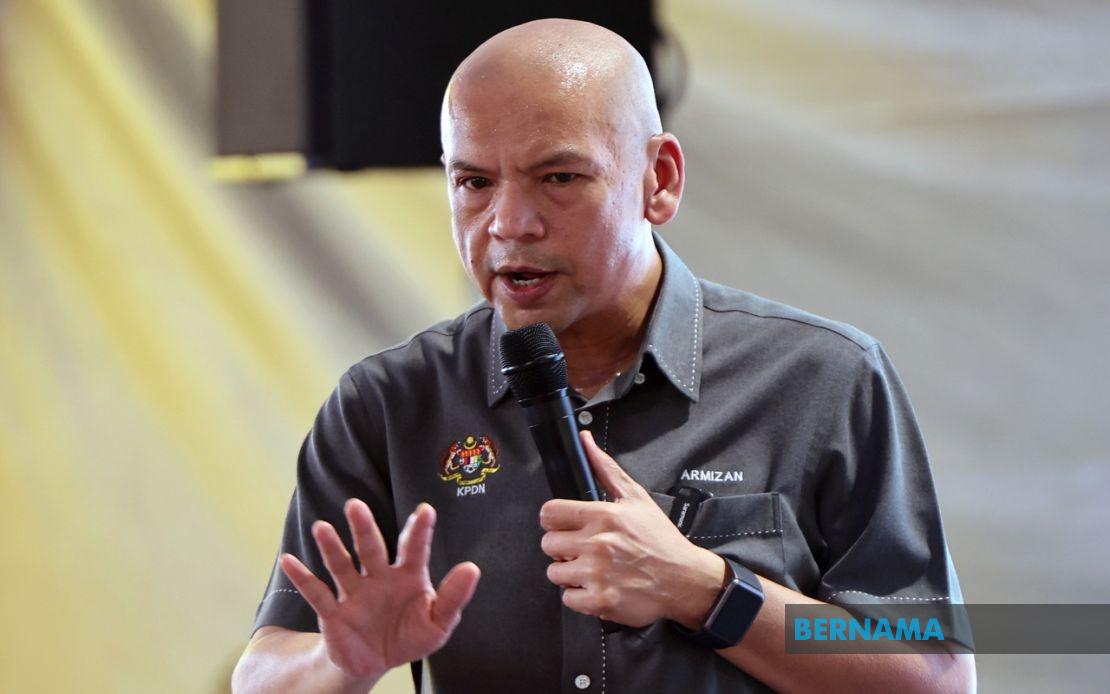
Minister Datuk Armizan Mohd Ali explained that this corrective intervention was developed by his ministry and subsequently endorsed by the Federal Cabinet. The decision addresses a significant gap in the original subsidy framework, which had established eligibility criteria primarily targeting two distinct sectors: public transport operators and merchants engaged in the distribution of goods and essential consumer items. Small companies using vehicles for their own business operations fell outside these two categories, creating a burden for micro-entrepreneurs who lacked the organisational structure of larger commercial entities. By permitting registrations under company names rather than insisting on individual applications, the government has created a practical pathway for this overlooked segment.
The flexibility embedded in this approach carries substantial implications for Malaysia's small and medium enterprise ecosystem, particularly in Sabah and Sarawak where geographic challenges and infrastructure constraints already inflate transport costs. Fleet card distribution offers administrative simplicity compared to traditional subsidy verification systems, reducing bureaucratic friction that might otherwise deter eligible applicants. The 300-litre allocation, while modest on an absolute basis, provides meaningful relief for operators running small delivery fleets, construction crews, or trade service businesses that depend on diesel-powered vehicles. For many proprietors in these regions, this translates to a tangible monthly cost reduction that can improve cash flow and competitiveness.
Armizan emphasised that the Federal Government maintains receptiveness to further refinements as the scheme matures across the three targeted territories. However, any additional modifications must navigate a deliberate balancing act between three competing imperatives. First among these is the cost impact on household and business budgets—the fundamental rationale for implementing targeted subsidies rather than blanket fuel price controls. Second stands the persistent challenge of preventing subsidy leakage, a chronic issue in Malaysia's previous universal subsidy era when fuel smuggling and arbitrage exploited price differentials with neighbouring jurisdictions. Third sits the government's own fiscal sustainability, since open-ended subsidy commitments can rapidly consume budget allocations needed elsewhere.
To strengthen operational capacity in remote and interior districts of Sabah and Sarawak, the ministry plans to mobilise state-level administrative agencies to manage registrations and verify applicants meet established criteria. This decentralised approach acknowledges that federal bureaucrats based in peninsula cities cannot effectively manage verification tasks across scattered communities accessible only by river or unpaved roads. By delegating responsibility to state bodies already embedded within these regions, the government improves verification accuracy while reducing delays that might otherwise frustrate eligible applicants. The strategy also signals respect for state administration and local knowledge, a politically astute consideration in territories where federal oversight historically generated sensitivities.
Beyond the subsidy announcement, Armizan spoke of the MADANI Foster Village initiative, under which his ministry allocated RM500,000 to Kampung Sekalong in Menumbok to finance five distinct development projects. This programme reflects a broader governmental strategy to narrow the widening gap between urban and rural living standards that characterises contemporary Malaysia. Rather than focusing exclusively on headline infrastructure like highways or shopping centres, the initiative targets fundamental amenities that rural residents often lack—reliable roads, functioning utilities, drainage systems, and community gathering spaces. These investments may appear modest in absolute terms, yet they address genuine deficits affecting daily life in villages where basic services remain inconsistent.
The Kampung Sekalong projects encompass construction of an open multipurpose community hall, village road upgrades, installation and repair of culverts to address water management, deployment of solar lighting systems, and creation of a distinctive landmark to establish local identity. Implementation timelines suggest completion within two to three months, indicating determination to deliver tangible results rapidly rather than allowing projects to languish indefinitely in planning stages. This accelerated schedule reflects lessons learned from previous rural development programmes that suffered from chronic delays, cost overruns, and incomplete delivery. The concentrated scope and compressed timeline suggest focused project management rather than unfocused attempts to address every village shortcoming simultaneously.
This represents the third MADANI Foster Village that the ministry has sponsored, following earlier initiatives in Mukim Kaiduan of Papar last year and Mukim Tikam Batu in Kedah. The programme's geographic distribution across multiple states and administrative regions indicates systematic rather than ad hoc implementation. By establishing a replicable model and deploying it across different contexts, the government creates frameworks for scaling rural development—a critical consideration given Malaysia's numerous underserved communities. The accumulated experience from earlier villages presumably informs decision-making for subsequent sites, allowing methodological refinement and efficiency improvements as the programme matures.
The convergence of the targeted diesel subsidy expansion and the MADANI Foster Village investment reflects a governing philosophy that recognises rural and small-business constituencies require deliberate policy attention. Without such interventions, market forces alone would concentrate prosperity in major urban centres while rural regions and small entrepreneurs struggle with structural disadvantages. Diesel subsidies directly reduce transport costs facing firms that depend on road or river movement of goods, while village infrastructure projects address the fundamental amenities necessary for economic activity and dignified living. Together, these initiatives acknowledge that geographical remoteness and enterprise size create legitimate disadvantages warranting policy correction, even as policymakers attempt to avoid the fiscal distortions and subsidy leakages that plagued Malaysia's earlier universal subsidy regime.

