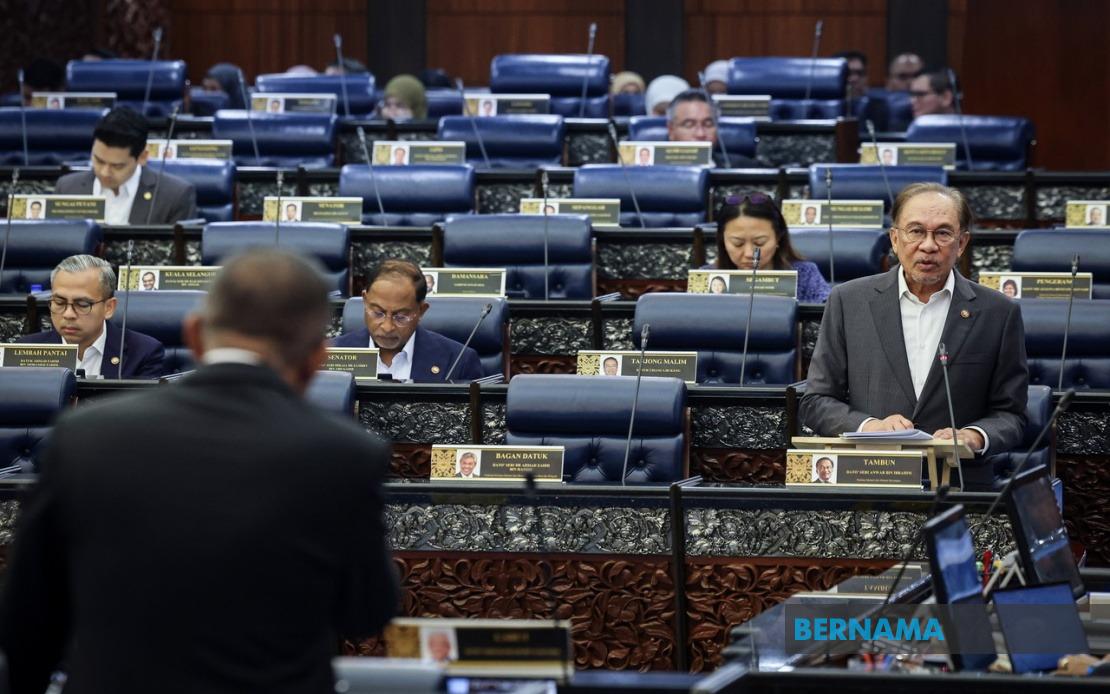
Prime Minister Datuk Seri Anwar Ibrahim has announced that Syarikat Jaminan Pembiayaan Perbiagaan (SJPP) approved RM4.9 billion in financing facilities for over 6,000 micro, small and medium enterprises during the first six months of 2026, underscoring the government's commitment to bolstering the SME sector amid a complex global economic landscape.
The SJPP, a wholly owned subsidiary of the Ministry of Finance, serves as a critical conduit for channelling credit to Malaysia's entrepreneurial backbone. Speaking during Minister's Question Time in Parliament, Anwar—who holds both the Prime Minister and Finance Minister portfolios—stressed that these approvals form part of a comprehensive strategy aimed at reducing barriers to capital access, lowering operational burdens, and ensuring the long-term viability of small business operations across the country.
The announcement comes in response to parliamentary queries from Lee Chuan How, the People's Hope coalition representative for Ipoh Timor, concerning the government's awareness of headwinds facing Malaysia's business community, particularly owner-operators navigating an increasingly unpredictable international trade environment. The timing reflects persistent concerns that small enterprises, despite their outsized contribution to employment and gross domestic product, continue to face structural disadvantages in securing conventional bank financing.
Beyond the H1 2026 approval tranche, the government has committed more than RM15 billion in aggregate lending and guarantee products specifically designed to address working capital shortages among MSMEs, the Prime Minister elaborated. This substantial injection of public-backed credit facilities demonstrates the MADANI administration's prioritisation of entrepreneurial sustainability as a cornerstone of economic resilience and inclusive growth strategies.
A particularly noteworthy component within the broader financing framework targets Bumiputera-owned enterprises, which account for RM5 billion of the total RM15 billion commitment. This allocation acknowledges the particular vulnerability of indigenous Malaysian business owners to financing gaps and reflects longstanding policy objectives to broaden economic participation among this demographic. The carving out of dedicated capital pools for Bumiputera businesses reflects recognition that generic financing schemes may inadvertently overlook the specific structural barriers faced by this cohort.
The SJPP mechanism represents one of several policy levers available to government for de-risking small business lending. By providing loan guarantees and approved lending facilities, the organisation effectively compensates financial institutions for perceived credit risks associated with smaller, less-formalised enterprises that might otherwise struggle to meet conventional bank underwriting standards. This intermediary function has proven particularly valuable in markets like Malaysia, where information asymmetries and collateral constraints frequently constrain credit flows to deserving borrowers.
Regionally, Malaysia's MSME financing approach mirrors initiatives undertaken by peer economies grappling with similar challenges. Thailand, Indonesia, and Singapore have all implemented government-backed credit schemes targeting small enterprises, though the depth, breadth, and effectiveness of these interventions vary considerably. Malaysia's commitment of RM15 billion places it within the upper range of regional effort, though the practical impact depends critically on deployment speed and the extent to which funds reach intended beneficiaries.
For Malaysian entrepreneurs navigating the current macroeconomic backdrop—characterised by persistent inflation, elevated interest rates, and geopolitical uncertainties affecting trade flows—access to government-guaranteed financing represents a tangible lifeline. The RM4.9 billion approval in H1 2026 suggests that demand for these products remains robust, though whether the funding quantum proves sufficient to address genuine capital shortages remains an open question requiring ongoing assessment.
The government's emphasis on easing business costs alongside expanded financing availability points toward a recognition that credit availability alone cannot substitute for broader structural reforms. Regulatory simplification, tax rationalisation, and infrastructure investments complement financing initiatives in creating an environment conducive to MSME growth and formalisation. Whether the policy package coheres into a genuinely transformative agenda or remains fragmented across competing departmental agendas will substantially determine outcomes for Malaysia's entrepreneurial community over the medium term.

