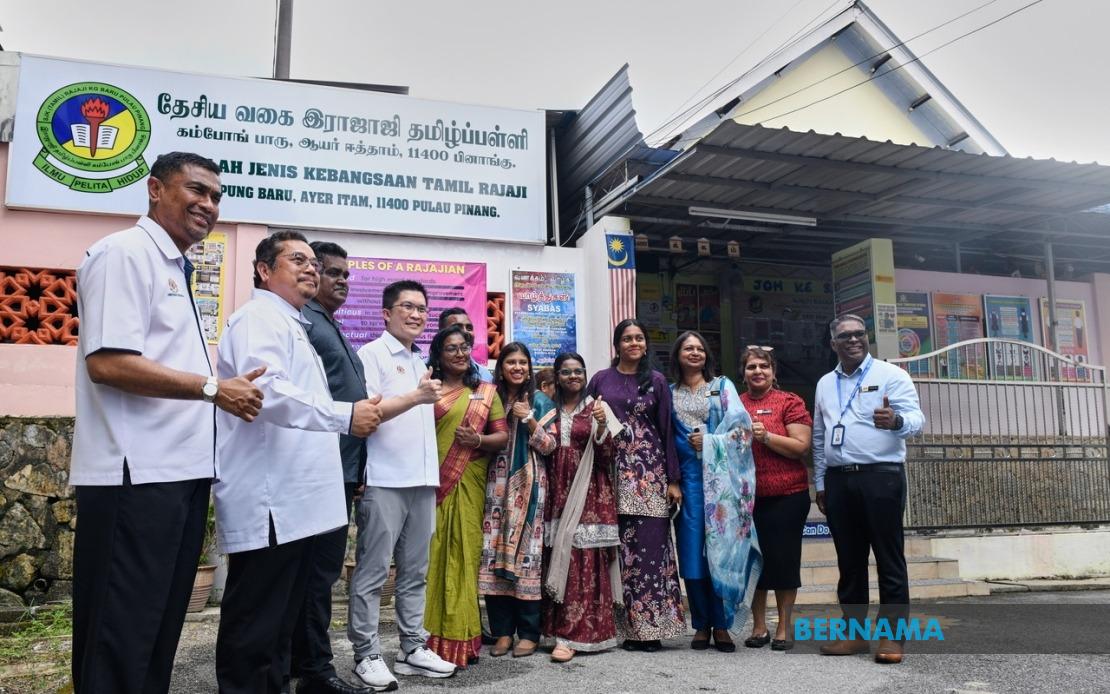
The Education Ministry has given the green light for a RM8 million reconstruction project that will provide relief to SJKT Rajaji, a Tamil-medium primary school in George Town that has struggled with overcrowding and inadequate facilities for years. Deputy Education Minister Wong Kah Woh made the announcement after presenting the official approval letter, signalling a significant step forward in improving educational infrastructure for the Tamil-speaking community in Penang.
SJKT Rajaji, which has operated in its current location for 76 years, currently serves approximately 100 pupils within confines that educational officials and school administrators have long recognised as unsuitable for modern learning. The constrained physical environment has become a persistent challenge, limiting the school's ability to provide adequate classroom space, recreational facilities, and specialised learning areas that contemporary education demands. The relocation represents an overdue remedy to these longstanding infrastructure deficiencies.
The new campus will be situated in Farlim, within the Bandar Baru Ayer Itam development area, roughly 500 metres from the school's existing premises. The Penang state government previously approved a 2.3-acre parcel of land for this purpose in 2022, providing sufficient space for comprehensive school facilities. This expanded footprint will enable the school to develop modern teaching spaces, sports facilities, and recreational areas that align with contemporary educational best practices.
Construction timelines suggest the project will unfold over 18 months, with the school anticipated to commence operations at the new location by the 2029 academic session at the latest. This extended timeline allows for thorough planning and quality execution, though it also means students and staff will continue navigating the existing space constraints for several more years. The Education Ministry completed its evaluation process in 2024 after the school's board of governors submitted a formal application, with approval contingent on resolving outstanding coordination matters with local municipal authorities.
A distinctive feature of this development is its funding mechanism. The entire RM8 million project is being financed by a private developer as part of its corporate social responsibility initiatives, representing a public-private collaboration that has become increasingly important in Malaysian educational development. This arrangement alleviates pressure on state government budgets while allowing corporate entities to contribute meaningfully to community development and social welfare.
Datak Seri S. Sundarajoo, chairman of the Penang State Housing and Environment Committee and the Penang Tamil Schools Special Committee, contextualised this approval within broader efforts to strengthen Tamil-medium education throughout the state. Penang operates 28 Tamil national-type schools, many of which have faced similar infrastructure challenges stemming from decades of rapid urban development and insufficient public investment in educational facilities.
The development trajectory for Tamil schools in Penang reflects an evolving policy emphasis on equitable educational provision across different language mediums. Beyond SJKT Rajaji, multiple Tamil schools are simultaneously undergoing facility enhancements and infrastructure improvements. Sundarajoo indicated that groundbreaking ceremonies for at least three additional SJKT projects are scheduled within the current year, while previously stalled initiatives at SJKT Sungai Bakap and SJKT Juru are being revitalised and advanced through dedicated planning processes.
This coordinated expansion programme signals official recognition that Tamil-medium schools have historically received disproportionately lower infrastructure investment compared to their Malay and English-medium counterparts. The systematic approach to addressing facility deficiencies across multiple institutions suggests a more comprehensive policy commitment rather than isolated interventions. For Malaysian Tamil communities, particularly in Penang where Tamil-language education maintains significant cultural resonance, these developments carry symbolic and practical importance.
The implications extend beyond individual school improvements to broader questions of educational equity and resource distribution within Malaysia's multicultural education system. Tamil national schools educate substantial student populations and represent important institutional anchors within Tamil-speaking communities, yet they have frequently operated from premises that lag behind infrastructure standards available to schools serving larger demographic groups. SJKT Rajaji's modernisation contributes incrementally toward addressing this systemic imbalance.
For parents and students at SJKT Rajaji, the approved project offers tangible prospects for enhanced learning environments within the coming years. The relocation will enable age-appropriate classroom configurations, dedicated facilities for specialised subjects, and recreational spaces conducive to holistic child development. The expanded campus will also potentially accommodate modest enrolment growth, moving beyond the current capacity constraints that may discourage prospective families from enrolling children.
Sundarajoo emphasised that implementing these developments without imposing additional financial burdens on state resources through careful public-private partnerships and developer sponsorship reflects pragmatic governance. As Malaysian states navigate budgetary constraints, such collaborative approaches offer pathways for infrastructure advancement that might otherwise remain unfunded or indefinitely deferred.
The SJKT Rajaji project exemplifies how sustained advocacy by school management, community organisations, and sympathetic state officials can eventually yield tangible outcomes, even when institutional momentum moves slowly. The 76-year timeline from the school's establishment to meaningful facility modernisation underscores the patience required within Malaysian educational development contexts. Nonetheless, the project's approval and funded status represent substantial progress toward ensuring that students in Tamil-medium schools benefit from facilities comparable to those available in better-resourced educational institutions.

%22%2F%3E%3C%2Fpattern%3E%3C%2Fdefs%3E%3Crect%20width%3D%22100%25%22%20height%3D%22100%25%22%20fill%3D%22url(%23ph40buhg)%22%2F%3E%3Crect%20width%3D%22100%25%22%20height%3D%22100%25%22%20fill%3D%22url(%23ph40buhp)%22%2F%3E%3Ctext%20x%3D%2250%25%22%20y%3D%2250%25%22%20text-anchor%3D%22middle%22%20dominant-baseline%3D%22central%22%20fill%3D%22rgba(255%2C255%2C255%2C0.95)%22%20font-family%3D%22Georgia%2C%20'Times%20New%20Roman'%2C%20serif%22%20font-weight%3D%22700%22%20font-size%3D%22320%22%20letter-spacing%3D%22-0.02em%22%3EGRS%3C%2Ftext%3E%3C%2Fsvg%3E)