A Singaporean national has been arrested in Medan on suspicion of masterminding an illicit vape production operation that generated substantial revenues through the distribution of counterfeit branded products. The suspect, identified only by the initials TM, was apprehended on May 17 at a hotel in the North Sumatran capital, where authorities say he was coordinating the logistics of raw material shipments for the enterprise. Indonesian law enforcement and anti-narcotics officials stated that the operation generated at least 10 billion rupiah—equivalent to approximately US$565,000—in proceeds, marking it as a significant cross-border narcotics enterprise.
The vape ring operated with a hybrid structure that exploited jurisdictional boundaries across Southeast Asia. TM, who maintained his operational base in Thailand, established a working partnership with an Indonesian woman identified as MWQ to handle the physical production and distribution logistics within Medan. The two individuals coordinated the manufacturing and packaging of vape products at a secured facility located in Kota Medan, the commercial district of the city. Authorities apprehended MWQ on the same day as her Singaporean counterpart, disrupting what appeared to be a carefully compartmentalized operation designed to insulate senior figures from direct exposure to production activities.
The production facility itself revealed a sophisticated operational infrastructure that went well beyond typical clandestine manufacturing sites. The residence, leased at a cost between five million and seven million rupiah monthly, was equipped with multi-layer security systems incorporating facial recognition and fingerprint authentication technology. Such security measures suggest the operators were keenly aware of law enforcement capabilities and designed their facility to withstand surveillance and infiltration attempts. The physical infrastructure investment indicates this was not an ad-hoc venture but rather a deliberate, well-resourced criminal enterprise operating with considerable operational discipline.
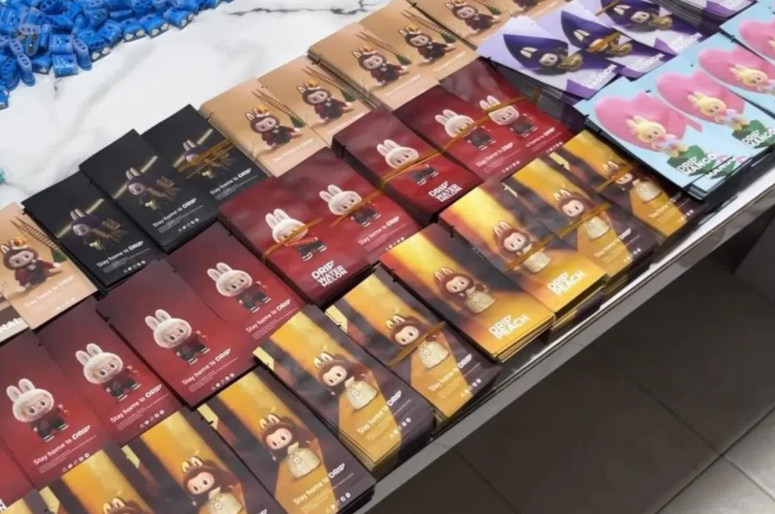
What distinguished this vape ring from other illicit drug operations was its sophisticated marketing strategy utilising collectible toy branding. The gang packaged their vape products using imagery and branding associated with Labubu, the popular elf-like plush toy collectibles that command significant cultural cachet particularly among younger consumers in Southeast Asia. Authorities seized over 10,500 vape packages bearing Labubu branding during raids, suggesting the group had manufactured inventory on an industrial scale. This approach represented a deliberate attempt to exploit brand recognition and cultural familiarity to facilitate distribution and obscure the illicit nature of the products among target demographics.
The operational structure extended beyond the two arrested individuals to encompass a broader distribution network. A third suspect who collaborated with TM in marketing the vapes for circulation within Medan remained at large at the time of the announcement, indicating that the enforcement action had disrupted but not fully dismantled the entire operation. The existence of a dedicated marketing specialist suggests the operation had evolved beyond simple production and sales into a more sophisticated business model with differentiated roles and responsibilities—a hallmark of mature criminal enterprises.
The supply chain traced back to China, with TM regularly arranging shipments of raw materials from the country to the Medan facility via his Thailand-based operations hub. This triangular arrangement across multiple countries provided operational redundancy and made it significantly more difficult for law enforcement to interdict the supply chain at any single point. The use of Thailand as a transshipment hub also aligned TM with a broader regional pattern where that country has become a crucial node in Southeast Asian drug trafficking networks, offering relative operational advantages including porous borders and established criminal infrastructure.
Financial obfuscation formed a critical component of the operation's security architecture. The gang employed cryptocurrency in their transactions, a practice that has become increasingly common in regional narcotics operations seeking to evade conventional financial surveillance mechanisms. By routing proceeds through digital currencies rather than traditional banking channels, the group attempted to create opacity in fund flows that would complicate investigative tracking and asset seizure efforts. The reported 10 billion rupiah in profits since 2025 suggests the operation achieved substantial financial scale despite relatively recent establishment, indicating rapid market penetration and successful distribution networks.
The seizure of physical assets during the raids provided tangible evidence of the operation's material scope. Authorities recovered 862 vape cartridge tubes, multiple vape bottles, and the aforementioned 10,500 packages bearing Labuab branding. These figures suggest the facility maintained substantial inventory levels, consistent with an operation that had already established reliable distribution channels and was preparing for continued expansion. The quantity of seized branded packaging indicated that production capacity exceeded immediate distribution requirements, pointing toward distribution ambitions extending beyond Medan into broader North Sumatran or Indonesian markets.
The arrest underscores evolving patterns in Southeast Asian drug trafficking where traditional narcotics production has increasingly given way to more sophisticated pharmaceutical and chemical product manufacturing. Vape operations represent a lower-risk, higher-margin enterprise compared to traditional drug production, with more ambiguous legal status in many jurisdictions and lower enforcement prioritisation in some areas. The operation's reliance on cross-border coordination, cryptocurrency, advanced security technology, and branded marketing illustrates how criminal enterprises have become increasingly professionalised and technologically sophisticated throughout the region.
For Malaysian authorities and regional law enforcement agencies, the case presents several instructive lessons. The use of Thailand as an operational hub suggests that vape production networks may be expanding throughout the region, potentially establishing supply routes into Malaysian markets where demand among younger consumers remains substantial. The deployment of collectible toy branding to mask illicit products represents an innovative marketing technique that could be replicated across other product categories and markets. Malaysian law enforcement will likely increase scrutiny of vape products bearing toy branding or other culturally resonant imagery, particularly those sourced from regional production facilities or transiting through established trafficking corridors.


%22%2F%3E%3C%2Fpattern%3E%3C%2Fdefs%3E%3Crect%20width%3D%22100%25%22%20height%3D%22100%25%22%20fill%3D%22url(%23ph40buhg)%22%2F%3E%3Crect%20width%3D%22100%25%22%20height%3D%22100%25%22%20fill%3D%22url(%23ph40buhp)%22%2F%3E%3Ctext%20x%3D%2250%25%22%20y%3D%2250%25%22%20text-anchor%3D%22middle%22%20dominant-baseline%3D%22central%22%20fill%3D%22rgba(255%2C255%2C255%2C0.95)%22%20font-family%3D%22Georgia%2C%20'Times%20New%20Roman'%2C%20serif%22%20font-weight%3D%22700%22%20font-size%3D%22320%22%20letter-spacing%3D%22-0.02em%22%3EGRS%3C%2Ftext%3E%3C%2Fsvg%3E)