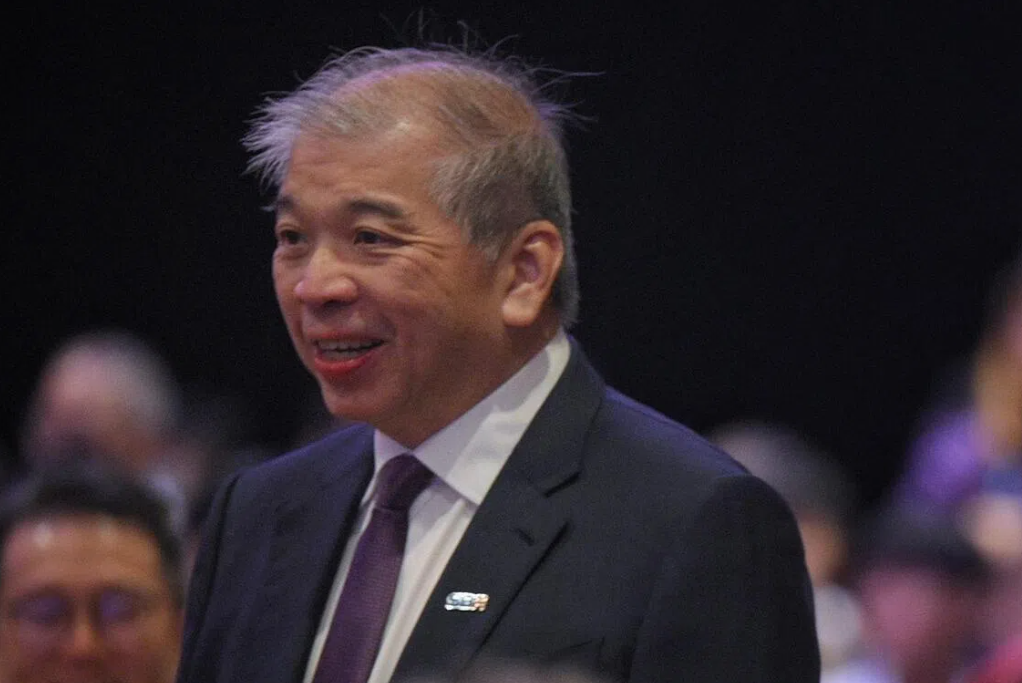
Two separate civil lawsuits filed in a California federal court have thrust Singapore shipping magnate Teo Siong Seng into a major legal battle stemming from allegations of an international container industry price-fixing cartel. The class-action suits, lodged in the District Court for the Northern District of California in early June, represent a significant escalation beyond the criminal charges already brought by the US Department of Justice, opening a parallel legal front where American companies seek direct compensation for alleged damages.
The civil claims originate from the criminal indictment unsealed in May, which targeted five major manufacturers of shipping containers that collectively produce approximately 95 percent of the world's standard dry containers. According to the allegations, executives at these firms orchestrated a coordinated scheme to restrict container supply deliberately, thereby inflating prices across global markets. The two private lawsuits, filed separately by US manufacturing firm C.A. Spalding Company on June 2 and transportation company Daybreak Express on June 9, each seek to recover millions of dollars these American businesses contend they lost as a result of the alleged conspiracy.
Teo, who serves as chief executive of Singamas Container Holdings, faces allegations alongside executives from China International Marine Containers (CIMC), Shanghai Universal Logistics Equipment, and CXIC Group Containers. The indictment documents reveal the sophistication of the alleged scheme, detailing how participating manufacturers coordinated production limitations across their operations. Most strikingly, investigators discovered that the conspirators installed 87 surveillance cameras across 49 container production lines at their facilities, ostensibly to ensure that no company violated the negotiated output restrictions. Such monitoring infrastructure suggests a level of coordination extending beyond informal agreements to formal enforcement mechanisms embedded within production facilities themselves.
The financial impact of the alleged price manipulation has been substantial and measurable. During the period from 2019 to 2021, the price of a standard 20-foot shipping container more than doubled, escalating from approximately US$1,600 to US$3,500. This dramatic increase occurred during a period when global supply chains were under considerable stress, meaning the cost impacts rippled through manufacturing and logistics operations worldwide. For CIMC, the financial benefits were extraordinary—the company's container manufacturing profits surged from about 137 million yuan in 2019 to 1.99 billion yuan in 2020, then skyrocketed to 11.3 billion yuan in 2021. Singamas similarly benefited, transforming a loss of approximately US$110 million in 2019 into a profit of about US$186.8 million by 2021.
The civil lawsuits carry particularly severe potential consequences through their pursuit of treble damages, meaning liable defendants could face penalties equivalent to three times the actual losses proved in court. This provision, designed to punish wrongdoing and deter future violations, dramatically multiplies the financial exposure for the named executives and their companies. Court records obtained through PACER, the US electronic court filing system, indicate that summonses were issued on June 8 and 11, requiring the defendants to respond formally to the allegations within three weeks or face default judgments.
Beyond Teo, the named individuals include several senior Chinese executives from the implicated manufacturers. Mai Boliang, formerly president and chief executive of CIMC before ascending to chairman in August 2020, and Huang Tianhua, CIMC's vice-president, were both identified. Additional respondents include Wan Yongbo, general manager of CIMC's Operation Management Centre; Li Qianmin, general manager of Shanghai Universal Logistics Equipment; and Zhang Yuqiang, chief executive of CXIC Group Containers. Another defendant is Vick Ma, Singamas's marketing director and a Chinese national currently facing extradition to the United States after his arrest in France in April.
The allegations carry profound implications for Singapore's business community, as Teo held prominent positions in the city-state's economic establishment. Before stepping back from his responsibilities, the 71-year-old served as executive chairman of Pacific International Lines, a major regional shipping company. His leadership roles extended into Singapore's institutional architecture—he chaired the Singapore Business Federation, participated in the Singapore Economic Resilience Taskforce, sat on the board of Enterprise Singapore, and served as pro-chancellor at the National University of Singapore. These positions reflected his standing within Singapore's business elite and his influence over the country's economic policy discussions.
Responding to the indictment, Teo proactively withdrew from multiple roles to manage the legal situation, issuing a carefully worded statement on May 28 indicating he had "proactively decided to take these leaves of absence to afford myself sufficient time to attend to this matter, and for the best interests of the aforementioned organisations." Notably, he declined to comment specifically on the civil lawsuits when questioned about them. His tenure as Singapore Business Federation chairman, which began in May 2025 following his election, became particularly notable for its brevity; he announced he would not seek re-election when his term concludes on June 24, having served only about one month in the role.
Teo's appointment to the SBF chair had itself been notable, coming after the previous chairman Lim Ming Yan stepped down early to assume the chairmanship of Singapore's Changi Airport Group. This leadership transition now appears overshadowed by the emerging legal crisis. Teo's previous tenure as SBF chairman from 2014 to 2020, during which he served three consecutive two-year terms, had established him as a significant figure in Singapore's business governance. His current predicament thus represents not merely a personal legal challenge but potentially a major episode in Singapore's business leadership landscape.
The container shipping sector itself holds particular significance for Southeast Asia, given the region's dependence on maritime trade and its status as one of the world's major transshipment hubs. Malaysia, as a trading nation with substantial container traffic through ports such as Port Klang and Port of Tanjung Pelepas, would have been affected by the alleged price inflation. Any disruption to the region's major shipping firms or complications to container supply chains could reverberate through Malaysian manufacturing and export sectors. The investigation and ongoing litigation thus extend beyond the immediate defendants to implicate the broader infrastructure supporting regional commerce.

%22%2F%3E%3C%2Fpattern%3E%3C%2Fdefs%3E%3Crect%20width%3D%22100%25%22%20height%3D%22100%25%22%20fill%3D%22url(%23ph40buhg)%22%2F%3E%3Crect%20width%3D%22100%25%22%20height%3D%22100%25%22%20fill%3D%22url(%23ph40buhp)%22%2F%3E%3Ctext%20x%3D%2250%25%22%20y%3D%2250%25%22%20text-anchor%3D%22middle%22%20dominant-baseline%3D%22central%22%20fill%3D%22rgba(255%2C255%2C255%2C0.95)%22%20font-family%3D%22Georgia%2C%20'Times%20New%20Roman'%2C%20serif%22%20font-weight%3D%22700%22%20font-size%3D%22320%22%20letter-spacing%3D%22-0.02em%22%3EGRS%3C%2Ftext%3E%3C%2Fsvg%3E)