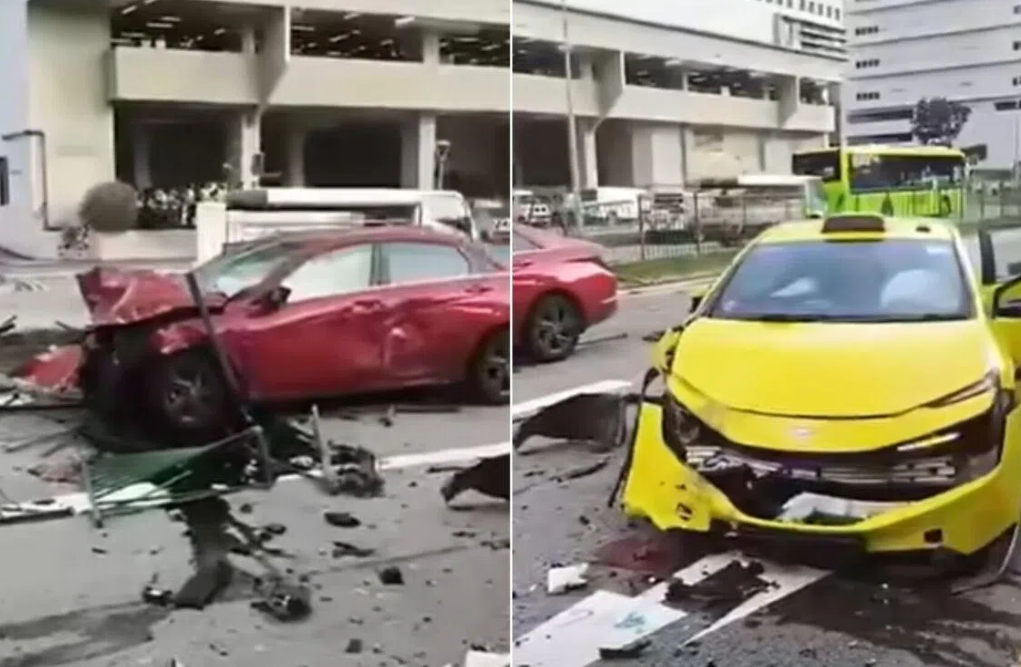
A Singapore man stands accused of operating a vehicle while impaired by methamphetamine in an incident that left two people injured when his car collided with a taxi in Kallang earlier this month. Mohamed Firdouz Mohamed Akram, 36, was charged on June 19 with a series of traffic and drug-related offences stemming from the June 17 collision, marking another case highlighting the dangers of drug-impaired driving in the city-state.
The incident unfolded in the early morning hours along Kallang Bahru when Firdouz allegedly operated his vehicle without maintaining proper control, resulting in a collision with an occupied taxi. The 60-year-old taxi driver sustained chest pains from the impact, while his 43-year-old passenger reported tailbone injuries. Both individuals required medical attention, with their injuries forming the basis of charges related to dangerous driving that caused bodily harm. The charges underscore the serious consequences when drug consumption compromises a driver's ability to safely operate a motor vehicle on public roads.
Court documents reveal that authorities suspected Firdouz had consumed Ice—a common street name for methamphetamine—before getting behind the wheel around 8 in the morning. The drug is known for its stimulant properties, which can lead to erratic behaviour, poor judgment, and impaired motor control. His alleged consumption of methamphetamine prior to driving forms a critical component of the prosecution's case, as investigators gathered evidence linking his drug use directly to the incident.
Firdouz faces additional charges beyond those related to the collision itself. He has been accused of driving without holding a valid Class 3 licence, suggesting his right to operate vehicles may have been suspended or revoked. Additionally, he faces two weapon possession charges that emerged during the investigation. These supplementary charges paint a picture of reckless disregard for traffic laws and public safety regulations.
The situation escalated immediately after the crash when Firdousz abandoned his vehicle at the scene and fled before police arrived. His decision to flee the accident prompted a rapid manhunt, with officers working to identify him through available evidence. Within five hours of the initial report, police successfully located and arrested him, demonstrating the efficiency of Singapore's investigative response to such incidents.
During the search of Firdouz's abandoned vehicle, authorities discovered alarming items that suggested a broader pattern of concerning behaviour. Police seized suspected drugs, drug-related paraphernalia, vaporisers, and a knuckleduster from the car. The presence of multiple drug-use devices and weapons in his vehicle indicates potential involvement in activities extending beyond the singular traffic incident. Further investigation uncovered that at approximately 1 pm on the same day, officers found two knives in Firdouz's possession at the Village Hotel Katong on Marine Parade Road, suggesting his activities continued even after the morning crash.
The accumulation of evidence paints a portrait of an individual operating outside legal boundaries on multiple fronts simultaneously. The combination of drug use, weapon possession, driving without proper licensing, and fleeing a crime scene demonstrates a pattern of behaviour that authorities will likely highlight when seeking appropriate penalties. Each charge carries its own potential consequences, and the cumulative effect of these offences positions Firdouz to face substantial legal repercussions.
Singapore maintains stringent penalties for drug-impaired driving, reflecting the jurisdiction's zero-tolerance approach to road safety threats. Those convicted of operating a vehicle while under the influence of drugs face potential imprisonment of up to one year, financial fines reaching S$10,000, or both. The specific circumstances of Firdouz's case—involving actual injuries to other road users—elevate the severity of his situation further, as driving dangerously while causing bodily harm carries jail terms extending to one year alongside fines ranging from S$2,000 to S$10,000.
This incident carries particular relevance for Malaysia and Southeast Asia, where drug abuse and its intersection with traffic safety remain growing concerns. The case demonstrates how methamphetamine use can rapidly escalate from personal consumption to public endangerment, affecting innocent bystanders sharing the road. Malaysian authorities have similarly grappled with rising methamphetamine use and its correlation with reckless driving, making Singapore's prosecution approach instructive for regional law enforcement agencies developing their own deterrent strategies.
Firdouz's court case is scheduled for another mention on July 17, when authorities will present additional evidence and prosecutors will outline their case against the multiple charges. The judicial proceedings will likely attract attention from traffic safety advocates and drug policy specialists who monitor how courts balance rehabilitation considerations against public protection imperatives. The outcome may influence how regional authorities approach similar cases involving drug-impaired driving that results in injury to third parties.
The Kallang crash underscores the unpredictable consequences of drug use behind the wheel. While Firdouz's case involves charges still subject to legal determination, the facts suggest a situation where poor decision-making cascaded into serious consequences for innocent people. The incident serves as a cautionary reminder that methamphetamine and other drugs fundamentally compromise the cognitive and motor functions essential for safe driving, putting every other road user at risk.