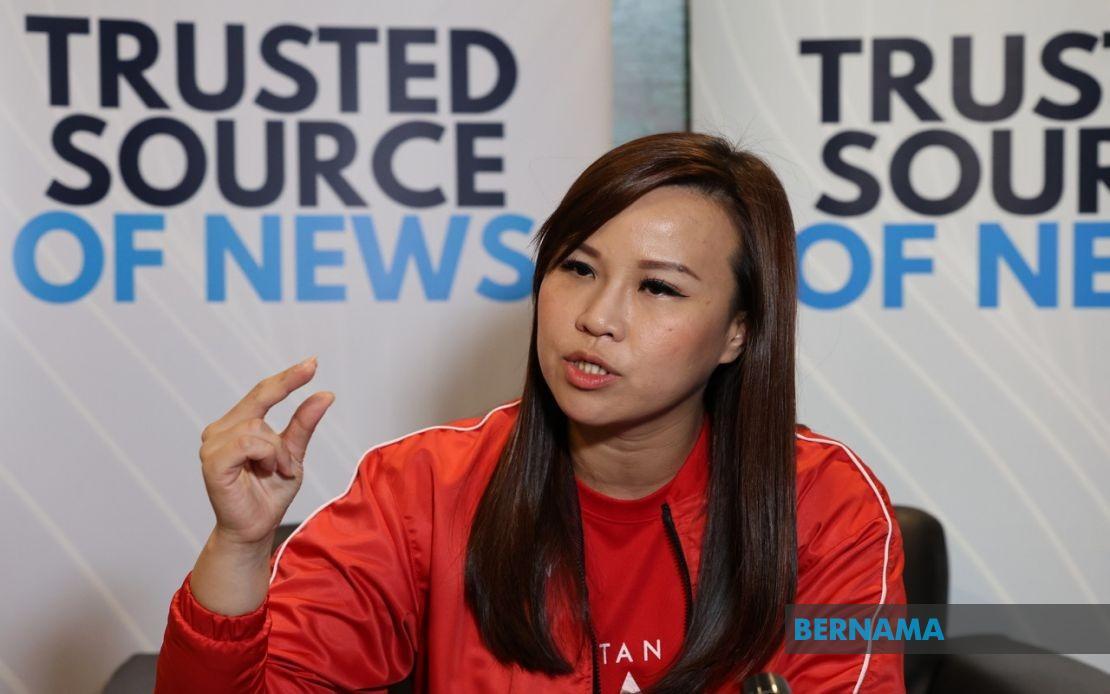
Sharon Teo Siew Hui is stepping into Johor's political arena with a roadmap shaped by years spent in the inner circle of one of Malaysia's most revered leaders. The 36-year-old Pakatan Harapan candidate for the Permas state seat credits her work as a special officer to the late Datuk Seri Salahuddin Ayub with instilling the foundational principles that now anchor her political philosophy. Known affectionately as "Bapa Rahmah Malaysia," Salahuddin's approach to governance—rooted in accessibility, humility and inclusive service—has become the template Teo intends to apply within Permas, should voters grant her the mandate in the upcoming Johor State Election.
Teo's political awakening traces back to her voluntary work supporting Salahuddin before she formalized her commitment by joining Parti Amanah Negara in 2018. That decision, she says, flowed naturally from observing his character and witnessing firsthand the meticulous way he attended to the concerns of ordinary Malaysians. The late minister, who served as head of the Domestic Trade and Cost of Living portfolio, embodied a brand of politics that transcended racial and socioeconomic divides—a principle Teo has internalized deeply. Her years shadowing Salahuddin through multiple electoral cycles and state campaigns exposed her to the granular reality of representative work: that responding to grievances is merely the starting point, not the endpoint.
One anecdote crystallizes Teo's understanding of the standard Salahuddin set. She recalls watching him monitor constituent complaints late into the evening, dispatching WhatsApp messages close to midnight to verify whether problems had been genuinely resolved. This obsessive follow-through, she emphasizes, distinguished his approach from performative politics. Rather than collecting complaints as trophies of accessibility, Salahuddin weaponized administrative persistence as a tool for change. Teo has adopted this methodology as her guiding framework, recognizing that the gap between hearing a community's voice and acting on it represents the true measure of a representative's integrity.
Critics have labeled Teo a "parachute candidate"—the Malaysian political term for outsiders parachuted into constituencies without organic roots. She contests this characterization with reference to her documented trajectory within Amanah's organizational structure. Beginning as an ordinary party member, she progressed to Assistant Secretary of Amanah Johor, then to heading Amanah Johor Wanita Muda (WARDA). Concurrently, her frequent accompaniment of Salahuddin during Permas campaign visits and community forums created a reservoir of familiarity with the constituency's terrain and personalities. While her candidacy may lack the decadal groundswell some constituencies exhibit, Teo argues that her institutional climbing and prolonged exposure to Permas constitute legitimate preparation for the role.
Early canvassing data from Teo's first five days of campaigning has delivered encouraging signals. Conversations with voters across demographic segments have highlighted recurring infrastructure grievances: potholes scarring local roads, deteriorating back lanes behind commercial zones, chronic traffic congestion, and substandard public facilities. These complaints are neither novel nor exclusive to Permas, yet they reflect the texture of daily frustration that shapes voter perception of competence and care. Teo's documentation of these patterns suggests an intention to build a granular evidence base rather than rely on pre-existing assumptions about constituent needs—a methodological choice that mirrors Salahuddin's empirical approach to governance.
Young voters occupy a central place in Teo's strategic calculus. She has pledged particular outreach to first-time voters and school leavers, leveraging social media platforms and e-sports initiatives to penetrate digital spaces where younger cohorts congregate. This represents an implicit acknowledgment that the transactional relationships older generations forged with political representatives—built on infrastructure projects and direct patronage—resonate less powerfully with voters whose connection to politics is mediated by algorithms and online communities. By meeting young citizens where they congregate digitally while maintaining traditional door-to-door engagement, Teo is attempting to construct a coalition that spans generational divides.
Teo's first-hundred-days agenda projects a deliberate administrative methodology. Priority one involves establishing PermasKu, a one-stop centre designed to centralize and monitor public complaints from intake through resolution. This institutional innovation operationalizes the Salahuddin principle of relentless follow-through by embedding it within a formal structure rather than relying solely on individual discipline. A comprehensive infrastructure audit constitutes the second plank, intended to map deterioration patterns and identify intervention priorities based on impact and urgency rather than political convenience. Third, she commits to direct, ongoing community engagement aimed at constructing action plans grounded in observed reality rather than administrative convenience.
Permas represents a genuinely contested battleground in the Johor electoral landscape. The incumbent, Baharudin Mohamed Taib of Barisan Nasional, carries a 7,926-vote majority from the 2022 election—a comfortable but not insurmountable margin. Three challengers will fragment the opposition vote: Dr Zamil Najwah representing Parti Bersama Malaysia, and T. Vela standing as the Perikatan Nasional nominee. In a four-way contest where the incumbent benefited from a unified BN ticket, splits among opposition and alternative-coalition contenders could prove decisive. Teo's campaign strategy—emphasizing constituent service over partisan messaging—may be partially calculated to transcend the normal opposition-versus-government binary that typically structures Malaysian electoral competition.
The broader significance of Teo's candidacy extends beyond Permas's immediate boundaries. Her explicit attempt to carry forward the Salahuddin legacy speaks to a generational transition moment within progressive Malaysian politics. Salahuddin's sudden death left a void in Amanah's leadership architecture; several of his protégés are now seeking electoral mandates of their own, attempting to translate mentorship into independent political capital. Whether that model succeeds—whether voters credit Teo for proximity to a beloved late leader or instead view her as attempting to commercially exploit his memory—will illuminate how effectively personal political brands can be transferred between individuals in the absence of dynastic structures that characterize UMNO and other establishment parties.
The Johor State Election, scheduled for later in July 2023, arrives at a moment when Pakatan Harapan is attempting to rebuild credibility after its post-2018 governance challenges and coalition instability. State-level contests offer opportunity for opposition parties to rebuild grassroots momentum and recapture voter confidence through local performance narratives. Teo's platform—anchored in accessible, service-oriented governance rather than grand ideological pronouncements—represents a conscious choice to compete on the terrain where BN traditionally maintains advantage: delivery of local benefits and maintenance of constituent relationships. If her campaign succeeds in redefining what constituent service means within contemporary Malaysian politics, the implications could extend well beyond Permas.

