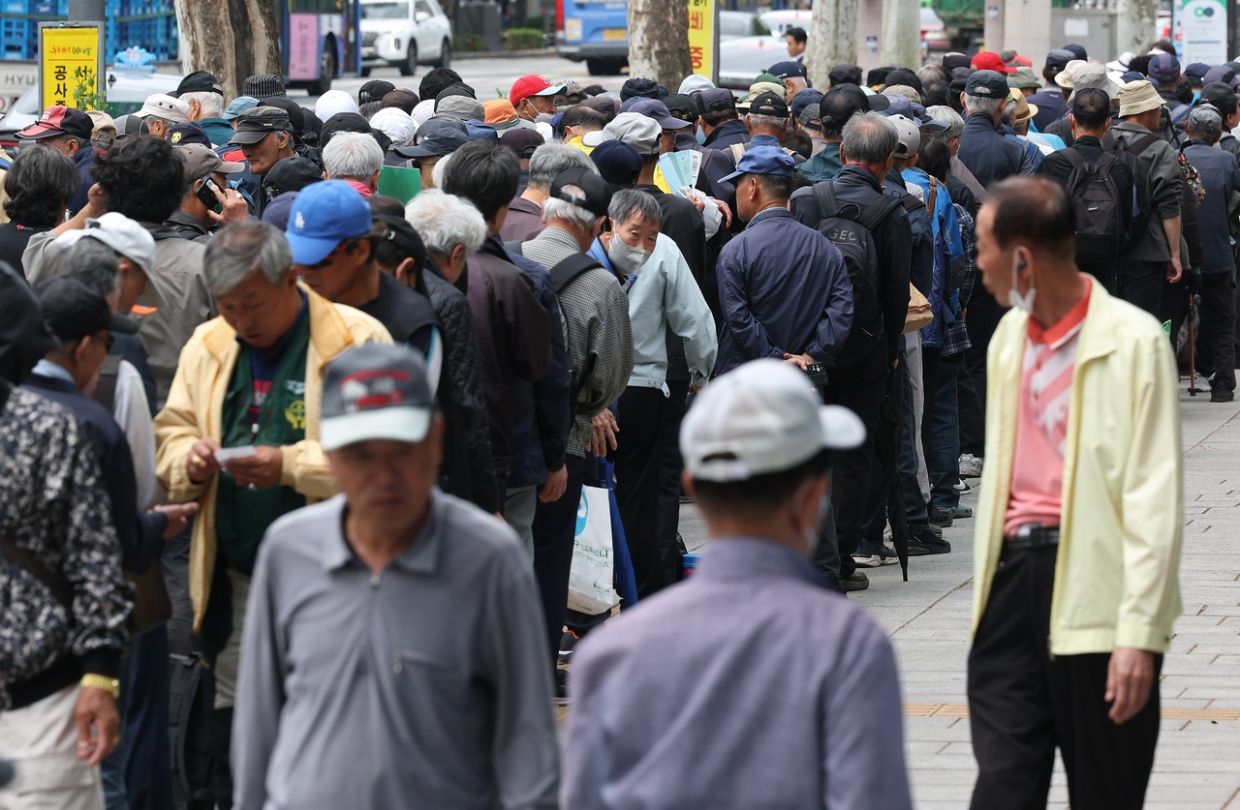
South Korea's capital city is grappling with a critical policy question: whether it can afford to extend transportation subsidies to an ageing population that already benefits from free subway access. Seoul Metropolitan Council's transportation committee has advanced a proposal to introduce free or reduced-cost bus fares for residents aged 70 and older, marking a significant expansion of existing senior benefits. The measure now proceeds toward a full council vote, but the decision sits at the intersection of social policy aspirations and sobering financial realities that increasingly characterise urban governance across East Asia.
The proposal originated as an election campaign pledge from Seoul Mayor Oh Se-hoon and comes at a time when nearly one-quarter of the city's population has reached senior citizen status. Currently, Seoul provides free subway access to those aged 65 and above, a system that has functioned for decades but creates an inequitable situation for older residents who depend on bus networks rather than rapid transit systems. The ordinance would apply only to city and neighbourhood buses, deliberately excluding express and intercity services to contain costs. However, this distinction highlights a critical gap in the current system: seniors living in outer districts or those with mobility constraints that favour bus travel face genuine hardship compared to their counterparts near subway corridors.
The financial projections paint a sobering picture of long-term commitments. Seoul's municipal secretariat estimates that implementing universal free bus rides for all residents aged 70 and above would require approximately 104.7 billion won in the inaugural year, assuming 2027 launch. Yet this figure becomes substantially more daunting when viewed across a medium-term horizon. As Seoul's population aged 70 and older expands from roughly 1.27 million currently to a projected 1.63 million by 2031, the annual cost could rise to 127.5 billion won. Over a five-year implementation period, total expenditure could reach nearly 579 billion won—a commitment that would fundamentally reshape the city's budget priorities and constrain resources available for other municipal services or infrastructure investments.
This proposal arrives against a backdrop of escalating pressures on Seoul's existing transportation system. The city already channels more than 450 billion won annually to compensate private bus operators for operating losses, effectively subsidising fares across the board through public compensation mechanisms. Simultaneously, Seoul Metro has repeatedly flagged that free rides for seniors, disabled persons, and national merit recipients generate cumulative annual losses exceeding 364 billion won, with 2025 reaching 448.8 billion won alone. The transit authority has persistently appealed to the national government to assume greater responsibility for these politically mandated benefits. Adding another major subsidy layer would intensify this fiscal squeeze unless accompanied by structural reforms or significantly expanded revenue sources.
Regional precedent suggests that other South Korean cities have already embarked on similar policy trajectories. Daegu launched free senior bus rides in 2023 and plans to gradually lower the eligibility threshold from 75 to 70 by 2028, effectively creating an incremental pathway toward full implementation. Daejeon already provides free bus rides to residents aged 70 and above, while Incheon announced plans to introduce comparable benefits for those aged 75 and above this year. These examples demonstrate both the political viability of such programmes and the willingness of municipal governments to absorb substantial costs in pursuit of voter support, yet they also illustrate how rapidly such commitments can multiply across provincial jurisdictions, creating competitive pressures for benefit expansion at each administrative level.
Policymakers face a fundamental structural challenge that extends beyond simple budgeting arithmetic. Recent court rulings affecting wage calculations in South Korea's transport sector are expected to increase labour costs substantially across the bus industry, adding inflationary pressure to any subsidy programme's long-term trajectory. Once introduced as a permanent benefit, transportation subsidies acquire political momentum that makes reversal or modification extraordinarily difficult, as policy experts have warned. Sohn Jong-pil from the Fiscal Reform Institute cautions that cash-type welfare programmes become institutionally entrenched, making it nearly impossible for subsequent administrations to scale back benefits even when fiscal conditions deteriorate. This path dependency concern resonates particularly in Seoul, where demographic trends suggest sustained growth in the elderly population for decades ahead.
Critics also question the logical consistency of Seoul's position on transportation support. The city government argues simultaneously that it cannot afford Seoul Metro's current subsidy burden while proposing another major benefit expansion. This apparent contradiction reflects the political impossibility of raising fares on vulnerable populations while simultaneously claiming fiscal constraints. However, policy experts suggest that the solution lies not in expanding subsidies but in strengthening the governance and accountability mechanisms of the semi-public bus system itself. Without comprehensive reforms addressing operational efficiency, administrative transparency, and commercial sustainability, simply adding new benefit layers merely postpones structural problems while consuming scarce municipal resources.
Proponents of the bus subsidy scheme argue that cost projections may significantly overstate the actual fiscal burden by assuming universal implementation. The ordinance, critically, does not mandate unlimited free rides for all seniors aged 70 and above. Instead, it establishes a legal framework granting Seoul discretion over implementation parameters. Policymakers could limit eligibility to low-income seniors, cap the number of subsidised journeys per person, restrict benefits to off-peak travel periods, or provide partial rather than complete fare discounts. This flexibility represents a significant distinction between establishing legal authority for a programme and immediately implementing its most expensive iteration. A city official characterised the ordinance as creating institutional foundations rather than triggering immediate universal free rides, suggesting a phased approach might balance equity concerns with fiscal prudence.
The broader Southeast Asian context matters for understanding Seoul's predicament. Rapid ageing affects not only South Korea but increasingly Thailand, Vietnam, and Malaysia as they experience demographic transitions compressed into shorter timeframes than those faced by earlier-developing nations. Seoul's struggle to fund transportation benefits for seniors provides a cautionary case study for regional peer cities considering similar policy expansions. The political pressure to provide visible senior benefits intensifies as electoral competition focuses on elderly voter preferences, yet the compounding fiscal costs risk crowding out investments in healthcare, preventive services, or labour market integration programmes that might address ageing more comprehensively. Seoul's decision will likely influence policy discussions across East and Southeast Asia regarding how to balance demographic realities with fiscal sustainability.
Looking forward, Seoul's path depends on whether the council approves the ordinance and, critically, what implementation parameters subsequent decision-making processes establish. The June vote represents a political decision point, but the genuine test arrives when city administrators must specify eligibility criteria, benefit levels, and funding mechanisms. This transition from principle to practice will reveal whether Seoul genuinely intends comprehensive coverage or pursues a more targeted approach that acknowledges fiscal constraints. The decision also carries implications for how South Korean municipal governments manage their relationship with rapidly ageing populations generally, establishing precedents that cascade through public policy for decades ahead. In this sense, Seoul's senior bus subsidy debate transcends transportation policy to engage fundamental questions about how cities govern fiscal limits while meeting the legitimate needs of ageing populations.