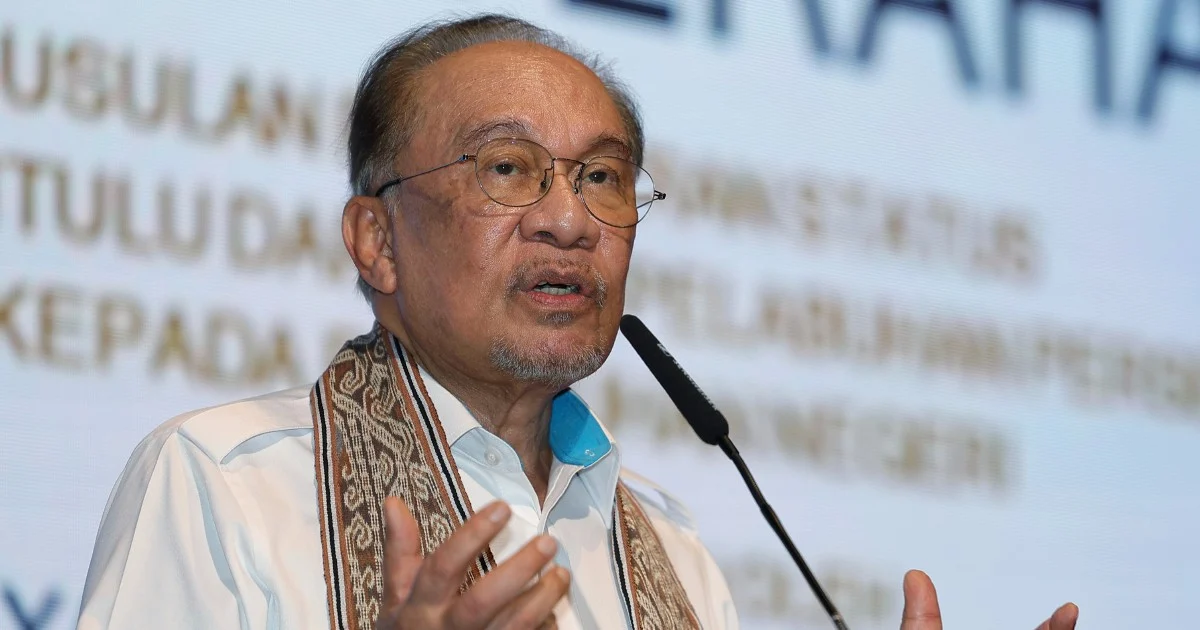
Prime Minister Datuk Seri Anwar Ibrahim has signalled that ongoing negotiations between Malaysia's national oil company Petronas and Sarawak's state oil firm Petros are advancing in a positive direction. The remarks, made during a visit to Kuching, suggest that discussions between the two major petroleum operators are gaining traction after months of deliberations.
The talks between Petronas and Petros represent a critical juncture in Malaysia's energy sector governance. These negotiations touch on fundamental questions about resource management, federal-state relations, and the structure of Malaysia's oil and gas industry. For Malaysia's broader economic interests, the outcome of these discussions could have substantial implications for energy security, government revenues, and the country's competitiveness in regional energy markets.
Sarawak's oil and gas resources have long been a point of significant interest to the federal government and the state administration alike. Petros, as the state's designated entity for managing petroleum affairs, operates under a distinct mandate from the federal Petronas structure. The relationship between these two organisations has historically involved considerable complexity, reflecting the constitutional arrangements that govern resource distribution and management between Kuala Lumpur and Sarawak.
The nature of negotiations between federal and state oil entities carries weight beyond the immediate parties involved. Investors, both domestic and international, monitor such discussions closely as they influence the regulatory environment, licensing frameworks, and revenue-sharing arrangements that shape commercial decisions. Foreign energy companies operating in Malaysian waters or considering new projects evaluate the clarity and stability of these state-level relationships when assessing investment risks.
Anwar's characterisation of the talks as moving in a positive direction represents a deliberate signal of government intent to resolve outstanding differences. Public statements from senior leadership on sensitive bilateral matters typically reflect substantive progress behind closed doors, or at minimum, a commitment to advancing the process. This messaging may also be intended to reassure stakeholders—including state authorities, energy companies, and financial markets—that the government is actively engaged in resolving complex issues.
The timing of these remarks underscores the priority placed on energy sector coordination. Malaysia has long sought to optimise its hydrocarbon resources amid global energy transitions and the increasing complexity of managing overlapping territorial claims and resource interests. An effective working relationship between Petronas and Petros could streamline decision-making, reduce regulatory friction, and enhance the sector's overall productivity and return on investment.
For Sarawak specifically, the outcome of these negotiations could influence the state's fiscal prospects and its degree of autonomy in petroleum management. States with significant hydrocarbon reserves often view their petroleum resources as critical to economic independence and development capacity. Clear agreements between state and federal oil entities can either enhance or constrain these ambitions, depending on the terms negotiated.
Southeast Asia more broadly has been attentive to Malaysia's energy sector developments. The region's energy security, investment flows, and technology partnerships depend partly on Malaysia's ability to maintain stable, profitable oil and gas operations. Disruptions or uncertainty in state-level petroleum governance can have ripple effects across regional supply chains and energy cooperation initiatives.
The specific terms under discussion between Petronas and Petros remain publicly undisclosed, but such negotiations typically encompass operational boundaries, revenue allocation, joint venture structures, and coordination mechanisms on development projects and exploration rights. Getting alignment on these technical and financial matters requires careful calibration of competing interests and detailed problem-solving.
Anwar's recent mention of progress also reflects the government's effort to demonstrate effective stewardship of complex federal arrangements. In a country with multiple levels of governance and significant natural resource stakes, the ability to manage inter-agency negotiations successfully is viewed as a marker of administrative competence and national economic management.
The broader context includes Malaysia's need to sustain its role as a significant energy producer and exporter amid global shifts toward renewable energy and changing commodity prices. A Petronas-Petros framework that functions smoothly and encourages efficient resource development could strengthen the country's position in these changing circumstances, enabling Malaysia to maximise returns from its petroleum assets during what may be a transitional period for the global energy sector.
While Anwar's positive assessment provides grounds for cautious optimism, the complexities inherent in federal-state petroleum arrangements mean that translating progress at the negotiating table into formal agreements and successful implementation remains a work in progress. Future announcements or concrete outcomes will offer clearer evidence of whether these preliminary positive signals translate into substantive breakthroughs.
%22%2F%3E%3C%2Fpattern%3E%3C%2Fdefs%3E%3Crect%20width%3D%22100%25%22%20height%3D%22100%25%22%20fill%3D%22url(%23ph4j62ug)%22%2F%3E%3Crect%20width%3D%22100%25%22%20height%3D%22100%25%22%20fill%3D%22url(%23ph4j62up)%22%2F%3E%3Ctext%20x%3D%2250%25%22%20y%3D%2250%25%22%20text-anchor%3D%22middle%22%20dominant-baseline%3D%22central%22%20fill%3D%22rgba(255%2C255%2C255%2C0.95)%22%20font-family%3D%22Georgia%2C%20'Times%20New%20Roman'%2C%20serif%22%20font-weight%3D%22700%22%20font-size%3D%22320%22%20letter-spacing%3D%22-0.02em%22%3EIran%3C%2Ftext%3E%3C%2Fsvg%3E)