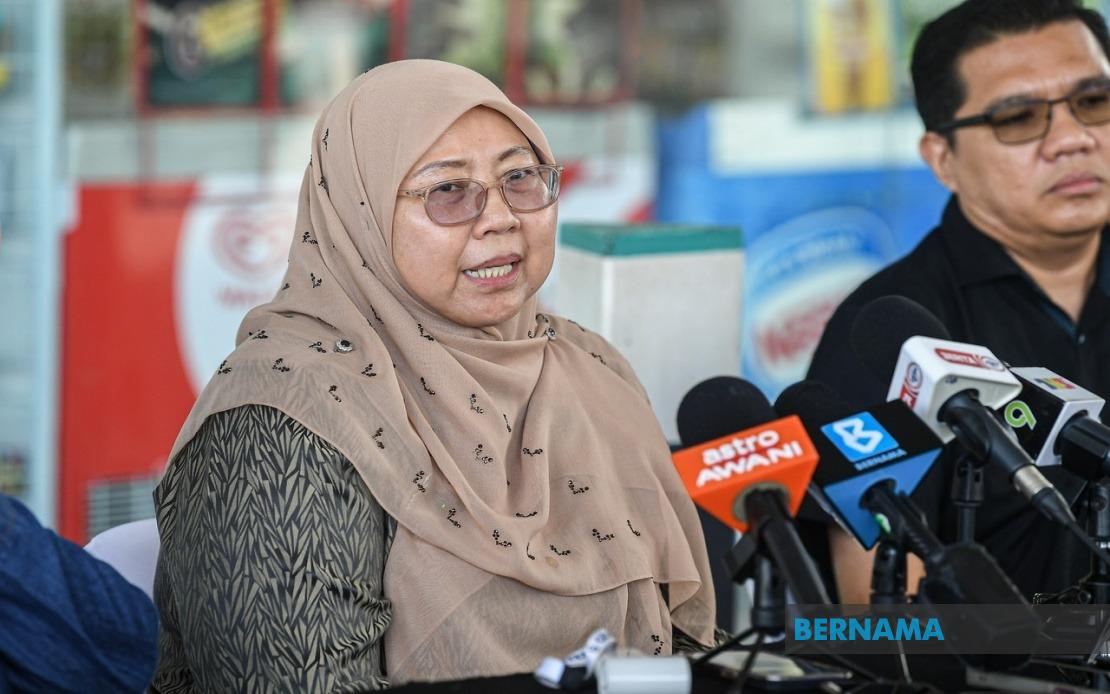
The Pakatan Harapan coalition continues its Johor state election campaign without disruption despite a series of minor sabotage incidents targeting campaign materials, according to senior party officials. PKR secretary-general Datuk Fuziah Salleh acknowledged that vandals have targeted the party's physical presence on the ground, destroying posters, damaging billboards, and burning flags at various locations across the state. However, she downplayed the significance of these disruptions, characterising them as isolated episodes that have failed to slow the ruling coalition's push to retain control of the state government.
Fuziah, who also serves as Deputy Minister of Domestic Trade and Cost of Living, made the remarks during a press conference in Johor Bahru on July 2. The timing of her comments reflected the coalition's confidence as campaigning entered its final stretch before the July 11 polling date. The party leadership's decision to address the sabotage incidents publicly underscores the competitive nature of the Johor contest, where the federal government's electoral fortunes remain tied to strong state-level performance. By framing these incidents as minor irritants rather than serious obstacles, Fuziah sought to project an image of organisational resilience and grassroots momentum that could reassure supporters and volunteers.
The actual scope of these vandalism incidents remains unclear from the statements provided, but their occurrence highlights the intensity of electoral competition in Malaysia's second-most-developed state. Such incidents have become increasingly common features of modern Malaysian campaigns, reflecting the passion that elections generate among supporters across the political spectrum. Whether these acts represent organised efforts by opposing camps or spontaneous expressions of political frustration remains unspecified, though the pattern of poster destruction and flag burning suggests coordinated activity. For voters concerned about the conduct of elections, the existence of such incidents raises questions about the political environment and the maturity of campaign discourse in Malaysia.
What distinguishes this election cycle is the aggressive ground campaign being executed by Pakatan Harapan candidates themselves. According to Fuziah, campaign activities have intensified dramatically, with individual candidates maintaining schedules that span from dawn to midnight. The claim that candidates are participating in up to ten separate programmes each day reflects a labour-intensive approach to electoral politics, one that emphasises direct voter contact and community engagement. This intensity of activity suggests that PH is treating the Johor election as a critical battleground, investing substantial resources and personnel effort to maintain its hold on state government at a time when its federal position depends partly on strong state-level performance.
Initial voter feedback, at least according to party assessments, has favoured the coalition significantly. Fuziah reported particularly positive responses from younger voters and first-time voters, demographic groups that have shown increasing fluidity in Malaysian electoral politics. If accurate, such polling trends would benefit a federal government seeking to consolidate support among voters who came of age after the 2018 political transition. Youth engagement has become a priority for all major coalitions in Malaysia, recognising that younger voters often prove more willing to shift allegiances than older cohorts committed to long-standing partisan identities. The reported enthusiasm among these groups could prove decisive in constituencies with large proportions of young voters.
A notable moment in Fuziah's statements involved clarification regarding candidate pledges announced by aspirants in the Skudai and Perlis state seats. When these candidates had unveiled what they termed a manifesto, party leadership felt compelled to emphasise that such local commitments did not constitute the official PH manifesto for the election. This distinction matters because manifestos represent binding policy frameworks that shape public expectations of government performance, while candidate pledges operate at a more localised level and focus on specific constituency concerns. By drawing this line, party officials sought to control the narrative around PH's policy positioning, ensuring that local promises made by individual candidates did not inadvertently constrain the state government's flexibility should the coalition win.
The issues that candidates had pledged to address—including waste management problems and other municipal concerns—occupy a space between national policy and purely parochial politics. Fuziah's characterisation of such matters as falling outside the scope of a state-level manifesto reflects a particular understanding of what constitutes governance at different levels. From a voter perspective, however, the distinction between a manifesto promise and a candidate pledge may matter less than the actual delivery of services. If elected representatives fail to address waste collection problems and other local irritants, voters are likely to hold them accountable regardless of whether those issues appeared in official manifestos or informal candidate pledges. This suggests that the semantic distinction Fuziah drew, while politically useful for party management, may carry limited significance for electoral outcomes.
The timing of PH's official manifesto announcement, scheduled for July 3, one day after Fuziah's remarks, indicated careful orchestration of the campaign narrative. Rather than allowing disparate candidate announcements to define public understanding of the coalition's platform, party leadership moved to centralise the policy message. This approach reflects lessons learned from previous electoral cycles, where uncontrolled messaging from local candidates sometimes undermined broader strategic communications. By maintaining discipline over when and how major policy announcements appear, the central campaign apparatus can ensure that media coverage aligns with party priorities and that early momentum around specific issues builds support for the coalition's overall vision.
The electoral landscape for the Johor state election encompasses 172 candidates across multiple state constituencies, each representing either PH, its rivals, or independent candidacies. This number suggests a reasonably competitive election where every seat matters for determining which coalition will govern. Johor's political importance extends beyond its local significance, as the state's electoral performance carries implications for national politics. A strong PH showing would reinforce the federal coalition's legitimacy, while significant losses would raise questions about the durability of the ruling arrangement that governs Malaysia at the national level. For this reason, both the coalition government and opposition forces have mobilised resources and attention toward the state, making it a genuine test of political support in an economically important and populous Malaysian state.
The schedule for the election—early voting on July 7 followed by general polling on July 11—compresses the final campaign period into just days remaining at the point when Fuziah made her comments. This compressed timeline places premium value on candidate visibility and voter contact programmes, explaining the intense daily schedules that party officials touted. In Malaysian electoral campaigns, the final week often determines outcomes, as late-deciding voters and persuadable supporters make final choices. The ground organisation that PH has assembled, according to internal assessments, should position it favourably during this crucial period. Whether this optimism proves justified will become apparent once voting concludes and the actual results are tallied, determining not only Johor's governance but also reinforcing or challenging the stability of Malaysia's current federal political arrangement.

