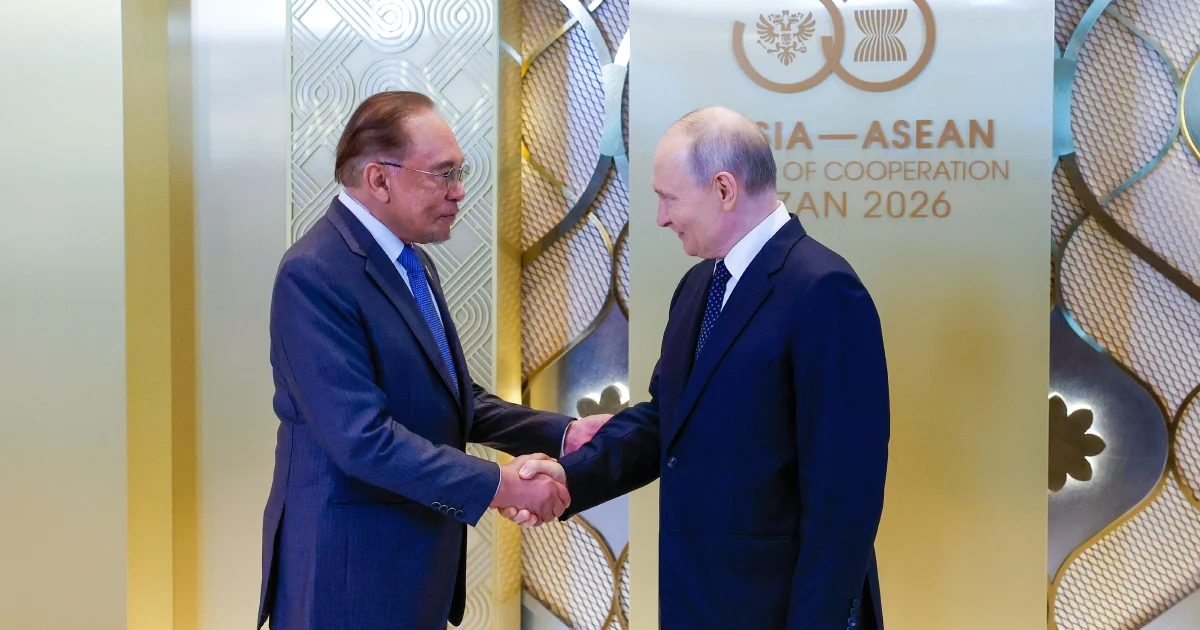
Prime Minister Datuk Seri Anwar Ibrahim has announced that Malaysia has secured commitments from Russia to provide extended energy supplies, underpinning the nation's strategy to establish resilient relationships with major energy-producing countries. The assurance comes as Kuala Lumpur pursues a multipronged approach to energy security by cultivating ties across the globe's leading energy powers, reducing dependence on any single supplier and strengthening the country's position in an increasingly competitive international energy landscape.
The pledge from Moscow reflects a broader shift in Malaysia's energy diplomacy, particularly as regional players grapple with volatile global markets and geopolitical tensions that regularly disrupt traditional supply chains. By locking in agreements with diverse producers spanning different continents and political systems, Malaysia is attempting to insulate itself from the demand shocks and supply disruptions that have plagued energy markets over recent years. This diversification strategy aligns with the government's emphasis on pragmatic foreign policy, positioning the nation as a reliable economic partner willing to engage constructively with all major powers.
Energy security has become increasingly central to Malaysia's economic planning and development ambitions. The nation's manufacturing sector, port facilities, and growing industrial base all depend on steady, affordable energy supplies to remain competitive. Domestic production, particularly from the Petronas-operated fields in the South China Sea and peninsular regions, can only partially meet rising demand, making international sourcing essential. The Russian commitment therefore addresses a genuine structural need within the Malaysian economy, particularly as the country seeks to maintain industrial growth while managing the twin challenges of population expansion and rising living standards.
The timing of the energy pledge carries significance within Malaysia's broader foreign policy context. Despite maintaining strong ties with Western countries, Kuala Lumpur has consistently emphasized non-alignment and the importance of engaging with diverse international partners across ideological divides. This approach reflects Malaysia's position as a Muslim-majority nation with substantial economic interests that transcend traditional Cold War alignments. The Russian engagement demonstrates continued commitment to this principle, signaling that Malaysia intends to remain a neutral arbiter in great power competitions rather than align exclusively with any single bloc.
Regional dynamics surrounding energy security have intensified as Southeast Asia experiences rapid economic growth and industrialization. Competition for access to reliable energy supplies has become fiercer, with other regional players similarly seeking long-term agreements with major producers. Malaysia's success in securing Russian commitments provides leverage in these regional negotiations and reinforces Kuala Lumpur's standing as a significant energy consumer worthy of preferential supply agreements. The arrangement may also position Malaysia as a potential energy distribution hub for Southeast Asia, adding value-added services to crude supplies.
For Russia, the Malaysian partnership serves strategic purposes extending beyond simple commodity economics. Maintaining energy relationships with growing Asian economies helps Moscow diversify its customer base and reduce vulnerability to Western sanctions and trade restrictions. Malaysia, as a large Muslim-majority nation with influence across the Islamic world, also provides Russia with a diplomatic channel into networks that have traditionally remained outside Moscow's immediate sphere of influence. Energy cooperation thus becomes a vehicle for broader geopolitical engagement.
The energy supply arrangement reflects practical necessities rather than ideological alignment. Malaysia requires substantial energy imports to fuel its economic engine, while Russia possesses vast hydrocarbon reserves and infrastructure capable of serving Asian markets. Liquefied natural gas and crude oil deliveries from Russia through established maritime routes represent commercial transactions fundamentally shaped by economic fundamentals and geographical proximity to markets. The agreement sidesteps the need for new infrastructure investments that would render other supply sources uncompetitive.
Domestically, the energy security commitment addresses concerns within Malaysia's industrial and business communities about future supply reliability and pricing stability. Manufacturing sectors dependent on consistent energy access view long-term supply agreements as essential insurance against market volatility. The Russian pledge therefore reassures investors and business operators that the government has secured adequate energy infrastructure to support continued economic expansion. This confidence translates into investment decisions, employment creation, and productivity gains across the economy.
The announcement also reflects Malaysia's experience managing energy transitions. As the nation gradually incorporates renewable sources and explores alternative fuels, maintaining reliable access to conventional energy sources during the transition period remains critical. Fossil fuels will continue powering Malaysia's economy for decades, and securing diverse suppliers ensures that this transition proceeds without disrupting economic growth or displacing workers in established energy sectors. The Russian partnership thus fits within a comprehensive energy strategy rather than representing an exclusive commitment to hydrocarbon reliance.
Malaysia's energy diplomacy carries implications for regional energy markets and Southeast Asian geopolitics more broadly. Successful bilateral arrangements with major suppliers by one regional player often stimulate similar agreements by neighboring countries, reshaping the competitive landscape. Thailand, Vietnam, and Indonesia similarly seek preferential access to energy supplies, meaning Malaysia's Russian engagement may trigger regional responses or alternative partnership formations. The cumulative effect shapes energy price dynamics and supply security across the entire region.