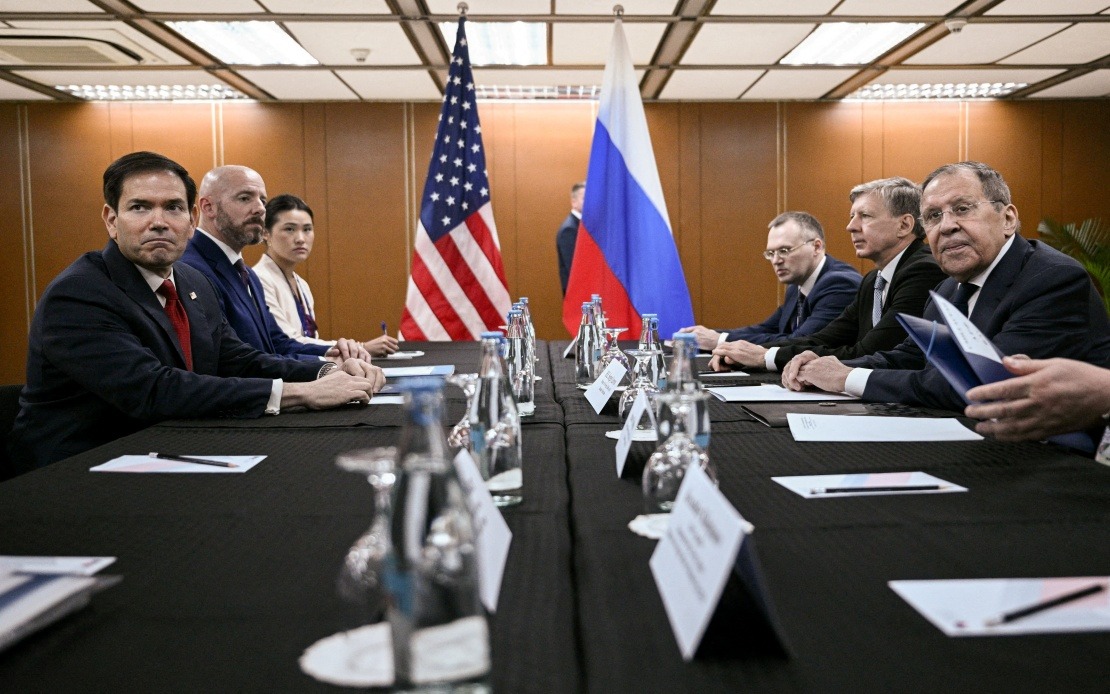
In a significant diplomatic development, Russia's Foreign Minister Sergey Lavrov and United States Secretary of State Marco Rubio have signalled their commitment to preserving lines of communication between Moscow and Washington, despite the considerable geopolitical tensions that have characterised their relationship in recent years. The agreement to continue contacts between the foreign ministries, announced following their meeting in Manila, represents a potentially stabilising moment in US-Russia relations at a time when direct dialogue remains critically important for managing global security issues.
The Manila encounter marks one of the few substantive diplomatic engagements between senior Russian and American officials at the foreign ministry level. The commitment to maintain these channels, particularly within the framework of international organisations where both nations maintain permanent or regular representation, underscores recognition from both sides that complete severance of diplomatic ties would be counterproductive. For Southeast Asian observers, such stability in US-Russia relations carries implications for regional security architectures and the management of global supply chains that remain vulnerable to geopolitical disruption.
Among the practical matters addressed during the meeting was the normalisation of working conditions for diplomatic missions maintained by each country on the other's soil. This aspect of their discussion suggests both nations are attempting to address bureaucratic and operational challenges that have accumulated during periods of heightened tension. Improving the day-to-day functioning of embassies and consulates, while perhaps mundane in appearance, represents an essential foundation for sustained diplomatic engagement and reduces the likelihood of misunderstandings escalating into larger confrontations.
Particularly noteworthy was the mutual welcome extended to the resumption of full-scale cooperation between Roscosmos, Russia's state space agency, and NASA, the United States space administration. Space collaboration has historically served as a domain where US-Russia cooperation has persisted even during cold war periods, offering a precedent for compartmentalised engagement on issues of mutual scientific and strategic interest. The renewal of this partnership carries significance beyond the technical realm, signalling that both powers recognise the value of maintaining collaborative mechanisms in sectors where competition is less ideologically charged.
The agreement also encompassed encouragement for expanded interparliamentary exchanges between Russian and American legislators, alongside efforts to revitalise cultural ties that have atrophied during periods of diplomatic coolness. Such people-to-people and institutional connections often provide the social foundation necessary for political relationships to weather periods of tension. For Malaysia and the broader Southeast Asian region, the preservation of these softer dimensions of US-Russia relations contributes to a less volatile global environment in which regional powers can pursue their own strategic interests with somewhat greater predictability.
The Manila setting itself merits consideration, as it underscores the importance of neutral ground in international diplomacy. The Philippines, as a Southeast Asian nation with its own complex relationships with both the United States and increasingly with Russia and China, provided an appropriate venue for these conversations. This choice reflects how regional capitals have increasingly become sites for significant bilateral and multilateral diplomatic engagement, elevating the role of Southeast Asian nations as platforms for global power negotiations.
From a Malaysian perspective, the maintenance of structured dialogue between Washington and Moscow holds several implications. Malaysia, as a non-aligned nation with expanding trade relationships across the global spectrum, benefits from a less fractious international environment. Escalating US-Russia tensions can force countries to choose sides in ways that compromise their economic interests and foreign policy flexibility. By contrast, diplomatic engagement that produces agreements on continued contact creates space for smaller nations to maintain balanced relationships with both major powers without triggering pressure to align exclusively with one camp.
The timing of this agreement also reflects broader shifts in global attention and priorities. Both the United States and Russia have competing interests elsewhere—the US focused on Indo-Pacific security dynamics and containing Chinese influence, while Russia manages its European flank and Middle Eastern interests. The practical agreement to maintain channels of communication allows both powers to manage their competition within defined parameters rather than allowing it to spiral unpredictably. This structured approach to rivalry reduces the likelihood of accident or miscalculation that could have devastating regional consequences.
However, observers should note that agreements to maintain diplomatic contact, while necessary, remain fundamentally limited in scope. They establish the mechanism for dialogue but do not resolve the underlying strategic conflicts between the two powers. The agreement to continue contacts through international organisations means both nations will engage through forums such as the United Nations and its various specialised agencies, though such multilateral settings often constrain the depth and candour possible in bilateral discussions. The practical challenge of normalising diplomatic mission conditions also suggests that previous tensions had created enough friction to warrant deliberate attention to these operational matters.
The resumption of Roscosmos-NASA cooperation represents the most concrete outcome with direct implications for non-space sectors. Space programme collaboration typically involves technology transfer, joint research initiatives, and shared access to facilities. By reopening this channel, both nations acknowledge that scientific advancement transcends political conflict. For developing nations like Malaysia that aspire to greater space capabilities—whether for communications, earth observation, or potential future exploration—the continued openness of international space cooperation remains important for accessing knowledge and partnership opportunities that might otherwise become restricted by Cold War-style divisions.
Moving forward, the real test of these agreements will be their implementation and durability. Diplomatic statements affirming continued contacts prove most valuable when they translate into actual engagement when crises emerge or when negotiations on substantive issues become necessary. The inclusion of interparliamentary exchanges and cultural initiatives suggests both nations recognise that sustainable diplomatic relationships require more than government-to-government contacts; they demand engagement across multiple societal levels that gradually rebuild trust and mutual understanding.
For Southeast Asia broadly, and Malaysia specifically, this development represents a modest positive signal in global relations. While the underlying geopolitical competition between the United States and Russia will undoubtedly continue, the demonstrated willingness to structure that competition through ongoing dialogue rather than confrontation creates a more stable environment for regional development. Southeast Asian nations have consistently advocated for peaceful resolution of disputes and maintenance of open channels of communication across ideological divides—principles that the Lavrov-Rubio agreement, however limited in scope, reflects.

