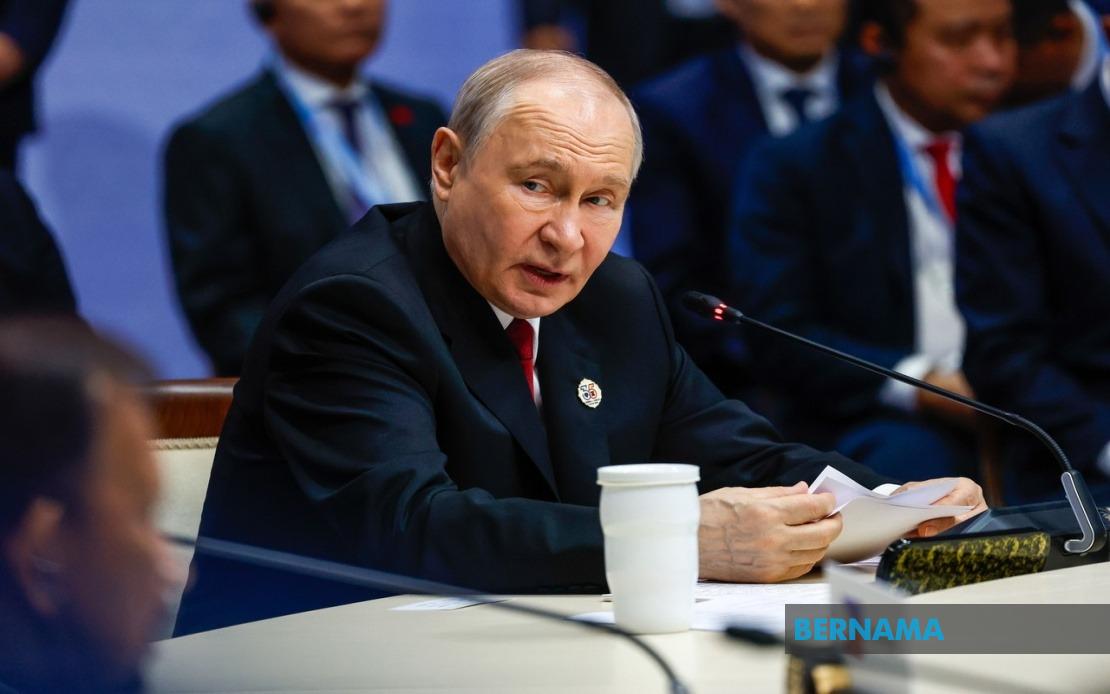
Russian President Vladimir Putin has emphasised the strategic importance of Moscow's three-and-a-half-decade partnership with ASEAN, characterising the bilateral relationship as a critical stabilising influence across the Asia-Pacific region during a period of heightened geopolitical volatility. Speaking at the opening of a special commemorative summit in Kazan, Putin underscored how the relationship has matured from initial contact through formal dialogue partnership status to a comprehensive strategic alliance, reflecting the deepening commitment both sides have maintained in political, economic and cultural spheres.
The formal establishment of Russia-ASEAN relations traces back to 1991 in Kuala Lumpur, followed by Moscow's elevation to full Dialogue Partner status in 1996. The relationship reached its current Strategic Partnership designation in 2018, marking a significant evolution in how the two parties approach shared interests and regional challenges. This progression reveals a deliberate effort by both Russia and ASEAN to move beyond traditional engagement mechanisms toward institutionalised cooperation frameworks designed to withstand political fluctuations and external pressures.
According to Putin, the partnership now operates through an extensive institutional architecture comprising multiple bilateral and multilateral mechanisms spanning diverse sectors. The collaborative framework encompasses security arrangements, trade and investment initiatives, energy cooperation, agricultural partnerships, digital transformation projects, scientific and technological exchanges, tourism development, and people-to-people cultural programmes. This breadth of engagement distinguishes the Russia-ASEAN relationship from more narrowly-focused partnerships, enabling both parties to pursue mutual benefits across economic, security and humanitarian dimensions simultaneously.
For Malaysia and other ASEAN members, Russia's reassertion of commitment to the relationship holds particular significance given Southeast Asia's delicate position between competing great-power interests. The region has sought to maintain strategic autonomy whilst managing increasing pressure from various powers seeking to expand their influence. Russia's participation in ASEAN dialogue mechanisms, coupled with its substantial capabilities in energy resources, technological expertise, agricultural production and higher education provision, offers ASEAN governments additional options for diversifying partnerships and reducing dependency on any single major power.
The Commemorative Summit, attended by Malaysian Prime Minister Datuk Seri Anwar Ibrahim and other senior ASEAN leaders including Philippine President Ferdinand Marcos Jr in his capacity as current ASEAN Chair, provided a platform for reviewing concrete achievements whilst charting future priorities. Putin emphasised that the partnership rests upon universally recognised international law principles and mutual interest, suggesting that even amid broader geopolitical contestation, both sides maintain a shared commitment to rules-based engagement. This framing carries implications for how ASEAN navigates its position as the association increasingly assumes roles as a neutral forum for managing regional disputes.
The timing of this summit reflects broader strategic considerations affecting the Asia-Pacific. Russia has consistently positioned itself as seeking balanced regional security architecture and equal cooperation frameworks that resist hegemonic arrangements. For ASEAN nations concerned about preserving strategic space and preventing any single power from dominating regional affairs, Russia's emphasis on these principles aligns with collective ASEAN interests in maintaining the region's centrality in regional affairs. However, the extent to which Russia can meaningfully contribute to regional stability whilst facing international sanctions and Western pressure remains a complex question requiring careful navigation by ASEAN governments.
Trade and investment cooperation features prominently in Russia-ASEAN discussions, particularly as both parties confront economic uncertainties and seek to expand mutually beneficial commercial relationships. Beyond traditional energy exports where Russia possesses clear comparative advantages, the partnership encompasses food security cooperation at a time when global agricultural disruptions have heightened concerns across Southeast Asia. Energy security represents another critical area, with ASEAN nations requiring diversified supply sources and Russia possessing substantial hydrocarbon reserves and technical expertise in resource development and infrastructure.
Digital transformation and scientific collaboration have emerged as increasingly important elements of the partnership. As ASEAN economies pursue digitalisation strategies to enhance competitiveness and productivity, Russian expertise in certain technological domains offers complementary capabilities. Similarly, cooperation in higher education and scientific research enables knowledge exchanges and human capital development, fostering long-term relationships extending beyond governmental interactions to institutional and individual levels. These softer dimensions of partnership often provide resilience when political relations face strains.
The summit's focus on reviewing 35 years of accumulated cooperation whilst projecting future directions suggests both parties view their relationship as durable rather than transactional. Russian officials have consistently identified ASEAN as a key partner in their broader Asia-Pacific strategy, whilst ASEAN collectively acknowledges Russia's significance as a dialogue partner offering distinct capabilities and perspectives. For Malaysia specifically, which hosts substantial Russian commercial interests and cultural communities, maintaining constructive engagement with Moscow whilst balancing other strategic partnerships remains an ongoing diplomatic imperative.
Yet the relationship operates within constraining parameters. Western sanctions against Russia complicate certain forms of economic and technological cooperation, whilst Russia's military actions in Europe generate scrutiny from some ASEAN members. ASEAN's traditional commitment to non-alignment and consensus-based decision-making requires that partnerships accommodate diverse member perspectives and values. This necessitates Russia demonstrating that cooperation with ASEAN strengthens the region's stability and prosperity rather than entangling members in geopolitical competitions.
Looking ahead, the Russia-ASEAN partnership appears positioned to deepen cooperation in practical domains where mutual interests clearly align, such as energy, agriculture and technology. However, the relationship will inevitably remain subject to broader international currents and the capacity of both parties to demonstrate concrete benefits flowing from their collaboration. For Malaysia and other ASEAN members, Russia's commitment to the regional dialogue framework represents a valuable component of a diversified engagement strategy, though sustainable partnership ultimately depends on Russia's ability to contribute meaningfully to regional peace, prosperity and stability.

%22%2F%3E%3C%2Fpattern%3E%3C%2Fdefs%3E%3Crect%20width%3D%22100%25%22%20height%3D%22100%25%22%20fill%3D%22url(%23ph40buhg)%22%2F%3E%3Crect%20width%3D%22100%25%22%20height%3D%22100%25%22%20fill%3D%22url(%23ph40buhp)%22%2F%3E%3Ctext%20x%3D%2250%25%22%20y%3D%2250%25%22%20text-anchor%3D%22middle%22%20dominant-baseline%3D%22central%22%20fill%3D%22rgba(255%2C255%2C255%2C0.95)%22%20font-family%3D%22Georgia%2C%20'Times%20New%20Roman'%2C%20serif%22%20font-weight%3D%22700%22%20font-size%3D%22320%22%20letter-spacing%3D%22-0.02em%22%3EGRS%3C%2Ftext%3E%3C%2Fsvg%3E)