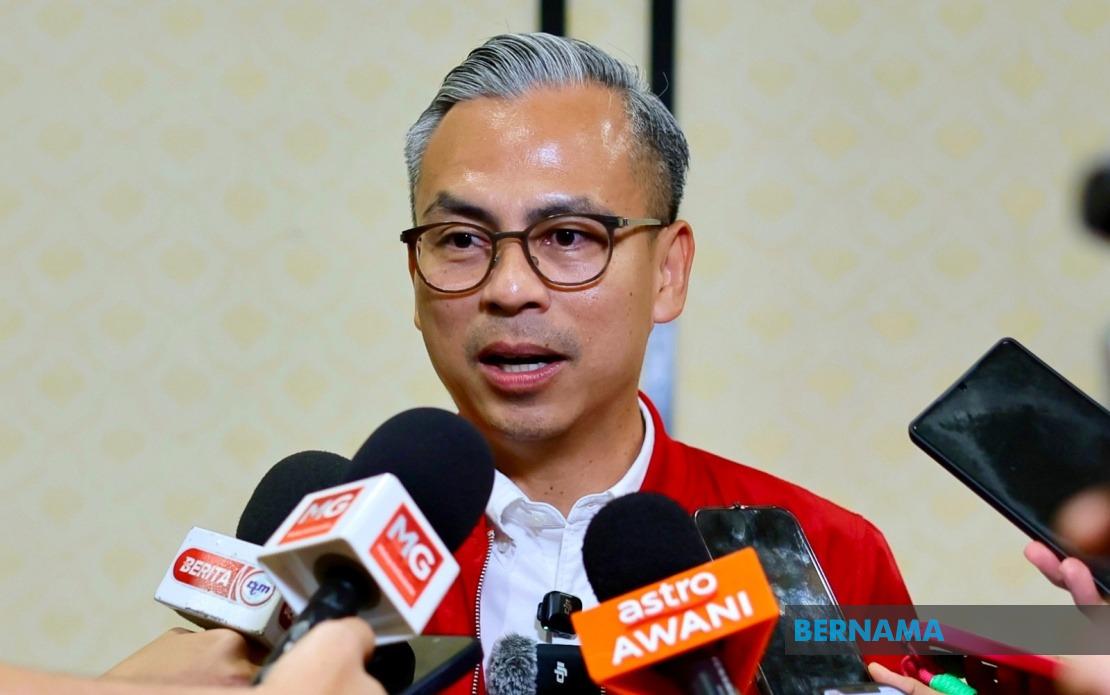
The Malaysian government has signalled its willingness to facilitate high-level political dialogue in the lead-up to Johor's state election, with Communications Minister Datuk Fahmi Fadzil announcing that Radio Televisyen Malaysia will make its platforms available for a potential live debate between the two main candidates contesting the Menteri Besar position. The offer, made public during a campaign event in Muar, underscores efforts by the Pakatan Harapan-led administration to promote substantive public discourse on governance and development ahead of the July 11 polling day.
Fahmi's proposal extends an olive branch to Johor's incumbent Menteri Besar, Datuk Onn Hafiz of Barisan Nasional, to engage directly with Pakatan Harapan's candidate Dr Maszlee Malik in a structured conversation broadcast live on RTM TV1. The Communications Director framed the initiative not as a platform for political theatre or adversarial point-scoring, but rather as an opportunity for the state's two leading contenders to articulate their respective visions for Johor's economic development, infrastructure improvements, and long-term growth trajectory. By emphasizing the focus on developmental issues rather than partisan grievances, Fahmi sought to elevate the conversation beyond typical electoral mudslinging.
The government's initiative responds to earlier suggestions from certain quarters that Pakatan Harapan should first announce its Menteri Besar candidate before participating in any debate format. Rather than accepting this precondition, Fahmi reframed the discussion to suggest that Dr Maszlee's readiness to engage substantively with voters—he has already held interactive sessions with 41 youths to discuss the state's aspirations—demonstrates the kind of forward-thinking leadership Johor requires. This positioning allows Pakatan Harapan to present its candidate as willing to defend his ideas in real-time conversation, a quality Fahmi characterized as essential for any leader seeking to advance the state.
The Communications Minister emphasized that accepting diverse viewpoints and responding professionally to criticism represents a fundamental requirement for effective state leadership. In the Malaysian political context, where leaders often face intense scrutiny from multiple constituencies, the ability to engage constructively across ideological lines carries particular weight. Fahmi's remarks subtly suggested that a leader's willingness to debate publicly signals confidence in their policy positions and respect for the democratic process. The implicit message to Onn Hafiz was that declining such an engagement might be interpreted unfavorably by voters assessing leadership qualities.
Operationally, Fahmi indicated substantial flexibility regarding the debate's logistics. The dialogue could be scheduled at any mutually convenient time and venue—whether in Johor Bahru or elsewhere in the state—provided both camps agreed to participate. This flexibility signals genuine interest in facilitating the exchange rather than imposing conditions likely to prove unacceptable. The offer to utilize RTM's resources, which as a state broadcaster carries national reach and credibility, underscores the seriousness with which the government treats the proposal and its desire to ensure maximum public visibility for the discussion.
Dr Maszlee Malik finds himself competing in a crowded five-way race for the Puteri Wangsa state seat, where he faces Barisan Nasional's Teow Chia Ling, Nicholas Paul Vincent from Parti Bersama Malaysia, MUDA's Rashifa Aljunied, and independent candidate Wang Wee Seong. The multi-cornered contest reflects Johor's increasingly fragmented political landscape, where traditional two-party competition has given way to more complex electoral mathematics. In this environment, a high-profile televised dialogue could significantly boost Maszlee's profile among undecided voters weighing their options across multiple candidates and parties.
Meanwhile, in the Machap state constituency, Onn Hafiz faces a more straightforward contest against Pakatan Harapan's Nor Hafiz Roslan, creating a direct two-candidate showdown. This simpler arithmetic makes the Machap race a more traditional test of strength between government and opposition forces in Johor. The contrast between these two races—one highly fragmented, the other binary—illustrates the diverse electoral dynamics within the state and the varying strategic considerations different candidates must navigate.
The timing of Fahmi's announcement carries significance given that early voting has been scheduled for July 7, with the main election on July 11. With less than two weeks between the announcement and polling day, any debate would need to be organized and executed with considerable urgency. The compressed timeline heightens the pressure on both camps to make rapid decisions regarding participation, potentially forcing them to commit publicly one way or another. For Pakatan Harapan, which has strategically highlighted its transparency and willingness to engage with voters, declining a debate offer could prove politically damaging if the onus appears to shift to their side.
Fahmi's broader appeal to young voters took on additional urgency given the mid-month polling date. He acknowledged potential logistical challenges voters might face in turning out during this period and urged them to prioritize their civic responsibility despite any inconveniences. The appeal reflected recognition that youth participation, particularly in a state election, cannot be assumed and requires active encouragement from political leaders. Youth voting patterns in Johor could prove decisive, particularly in closely contested seats where turnout margins often determine outcomes.
The Johor state election represents a significant test for Pakatan Harapan's continued viability in one of Malaysia's largest and most strategically important states. The federal government's visible engagement through Fahmi's public offer of broadcast facilities demonstrates how much political weight the administration places on the outcome. Beyond the immediate contest for Menteri Besar, the election will signal voter sentiment regarding the federal administration's performance and the relative strength of coalition partners within Pakatan Harapan.
For the broader Malaysian political narrative, such debate initiatives reflect evolving expectations about political discourse standards. The emphasis on substantive policy discussion rather than personal attacks or partisan rhetoric suggests an emergent consensus that voters increasingly demand substantive engagement from their leaders. Whether Onn Hafiz accepts or declines the RTM platform will carry symbolic weight about leadership styles and openness to public scrutiny, potentially influencing voter perceptions independent of the specific policy positions discussed.
The Johor election ultimately represents more than a single state contest; it will help shape perceptions of political momentum heading into Malaysia's next general election cycle. An RTM-hosted debate, if materialized, could provide valuable data points about how each candidate connects with voters on substantive issues and whether either demonstrates particular strength in articulating development vision. For Malaysian voters and analysts monitoring Johor's political trajectory, the next ten days will prove crucial in determining whether this offer translates into actual public dialogue or remains an unrealized gesture.

