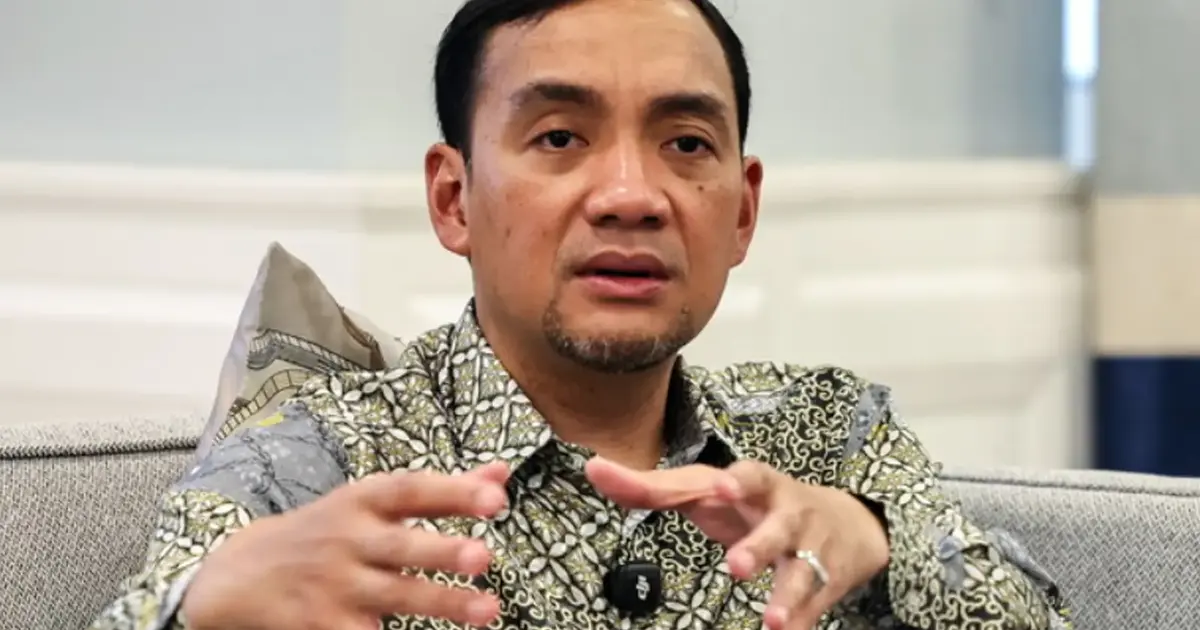
Johor Menteri Besar Onn Hafiz Salleh has made clear that being a high-profile political figure or having substantial public backing offers no assurance of ascending to the state's highest administrative office, stressing instead that the consent and confidence of the palace remains the indispensable factor in determining who will lead Johor's government.
This statement carries considerable weight within Malaysia's constitutional framework, where the institution of royalty occupies a foundational position in state governance. Unlike purely democratic systems where electoral results or party strength alone determine executive appointments, the Malaysian structure grants the Ruler discretionary authority in selecting the menteri besar. Onn Hafiz's remarks serve as a candid acknowledgment of this constitutional reality and a reminder to political actors that institutional approval operates as an essential prerequisite that cannot be circumvented through grassroots support or media prominence.
The comment appears particularly relevant in the context of Malaysian politics, where the relationship between party strength, public perception, and constitutional powers has frequently generated tension. Political figures who have garnered substantial backing from their parties or enjoyed favourable media coverage have occasionally found their ambitions stalled or redirected by the Ruler's decision. Johor, as one of Malaysia's most significant and traditionally influential states, has witnessed complex succession dynamics, and Onn Hafiz's statement underscores that these decisions ultimately rest with the palace rather than with party machinery or public opinion.
In the Malaysian constitutional system, the Ruler of Johor retains considerable authority over executive appointments within the state. While the menteri besar must command the confidence of the state legislative assembly to function effectively, the formal process of appointment and dismissal vests in the hands of the Ruler. This arrangement, enshrined in the Malaysian Constitution and the Johor State Constitution, reflects the continued centrality of the monarchy in the nation's governance architecture. Onn Hafiz's articulation of this principle suggests a broader conversation about how power actually flows within Malaysia's institutional landscape, as opposed to how it might appear to operate through party structures and electoral processes alone.
The menteri besar's statement also carries implications for succession planning within Johor's political establishment and potentially influences how aspiring politicians calculate their advancement strategies. Rather than assuming that visibility, ministerial experience, or party position automatically translates into higher office, this reminder emphasises that cultivating the Ruler's trust and maintaining good standing with the palace becomes equally or more important than accumulating party seniority or public recognition. This recalibration of incentives shapes the behaviour and priorities of state-level politicians who harbour ambitions for executive positions.
For Southeast Asian observers of Malaysian politics, Onn Hafiz's statement illuminates the continuing role of constitutional monarchy within a modern democratic framework. While Malaysia operates with democratic institutions including legislatures and regular elections, the monarchical element introduces dimensions of patronage, discretionary authority, and institutional hierarchy that distinguish it from purely representative systems. This balance between democratic forms and hereditary authority has long characterised Malaysian governance, and Onn Hafiz's remarks helpfully clarify how these elements interact in practice.
The timing of this statement may also warrant consideration. Discussions about menteri besar selection and succession typically emerge during periods of political transition, emerging tensions within ruling coalitions, or speculation about future leadership changes. By publicly articulating that royal consent supersedes other considerations, Onn Hafiz may be signalling to his party colleagues and political competitors that certain transitions or aspirations require palace approval before they can materialise. This represents a form of political messaging that operates through constitutional principles rather than through direct party announcements.
Within Johor specifically, the state has historically maintained a reputation for political stability and institutional continuity, partly because the state's political actors have generally respected the Ruler's prerogative and worked within established protocols rather than challenging them. Onn Hafiz's explicit restatement of this principle reinforces the framework that has undergirded Johor's political culture. By emphasising the palace's decisive role, he acknowledges and reinforces the arrangements that have characterised Johor's governance.
For politicians navigating the complex landscape of Malaysian state politics, the menteri besar's words constitute an important clarification. Regardless of party faction, electoral support, or public visibility, those seeking or holding executive positions must maintain proper standing with the palace. This requirement coexists alongside and sometimes supersedes party considerations, legislative majorities, or public approval ratings. Understanding this hierarchy proves essential for anyone involved in state-level politics, particularly in a state as significant as Johor.
Onn Hafiz's statement also reflects the mature institutional awareness expected of someone holding the office of menteri besar. Rather than suggesting that current arrangements should change or that his own position depends primarily on party support or popular backing, he articulates how Malaysia's system actually functions. This directness serves to educate the broader public about constitutional realities and may help forestall unrealistic expectations about how leadership decisions are made within Malaysia's federal structure. The statement reinforces that Malaysia's approach to governance remains distinctive within the region, blending democratic and monarchical elements in ways that require understanding from all participants.

%22%2F%3E%3C%2Fpattern%3E%3C%2Fdefs%3E%3Crect%20width%3D%22100%25%22%20height%3D%22100%25%22%20fill%3D%22url(%23ph40buhg)%22%2F%3E%3Crect%20width%3D%22100%25%22%20height%3D%22100%25%22%20fill%3D%22url(%23ph40buhp)%22%2F%3E%3Ctext%20x%3D%2250%25%22%20y%3D%2250%25%22%20text-anchor%3D%22middle%22%20dominant-baseline%3D%22central%22%20fill%3D%22rgba(255%2C255%2C255%2C0.95)%22%20font-family%3D%22Georgia%2C%20'Times%20New%20Roman'%2C%20serif%22%20font-weight%3D%22700%22%20font-size%3D%22320%22%20letter-spacing%3D%22-0.02em%22%3EGRS%3C%2Ftext%3E%3C%2Fsvg%3E)