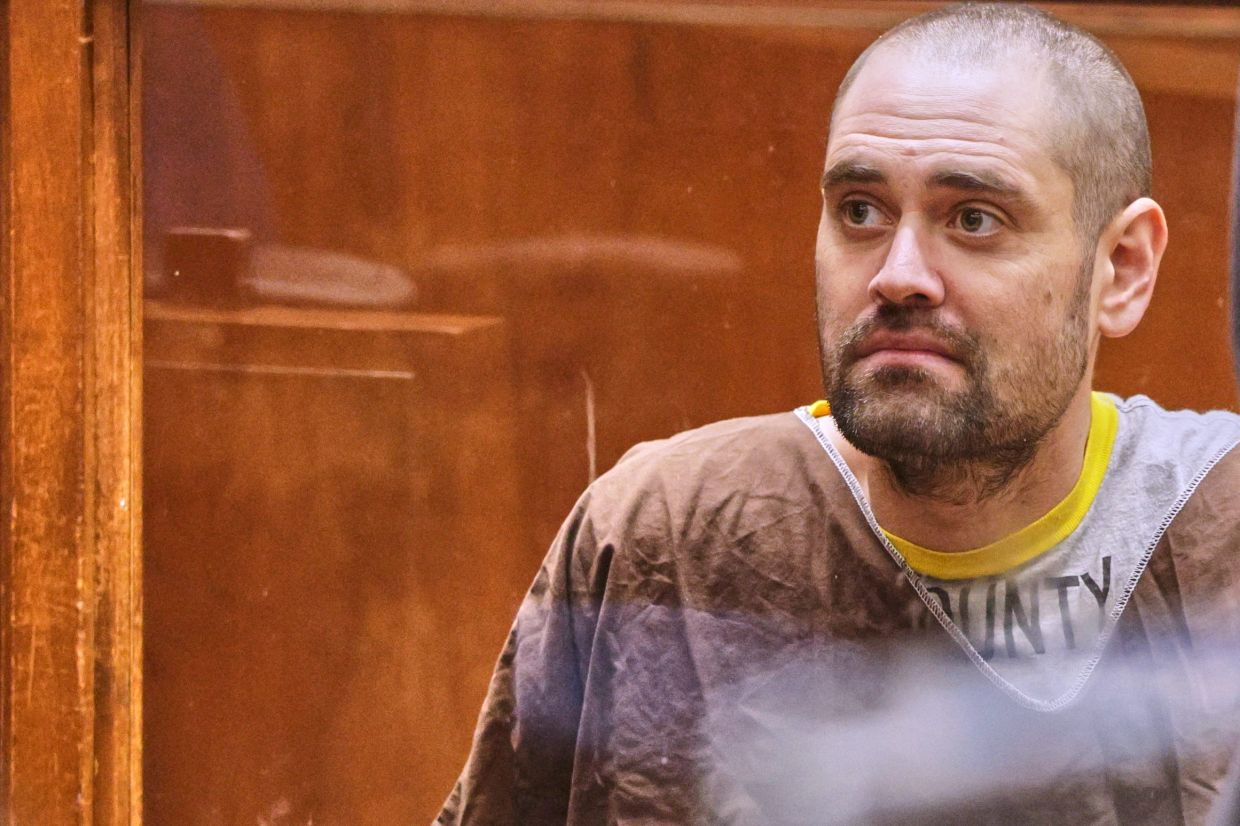
The 32-year-old son of legendary Hollywood director Rob Reiner has turned to the courts seeking access to a family trust worth at least $1.5 million, arguing that trustees are wrongfully withholding funds he is legally entitled to receive—funds he says are essential to mounting an adequate defence against charges that he killed both parents. The petition, filed Monday in Los Angeles County Superior Court by Nick Reiner's civil attorneys, represents his latest struggle to secure resources as his criminal case inches forward through the judicial system.
Nick Reiner faces two counts of murder stemming from the December 14 stabbing deaths of his parents in their Brentwood home. Though he has pleaded not guilty and maintains his innocence, the financial constraints surrounding his defence have become increasingly apparent. The petition emphasises that Nick remains presumed innocent under law and deserves access to his own lawfully held assets, regardless of the serious charges he confronts. "Nick loved his parents, and he is devastated by their deaths," the court filing states, while noting that factual questions about the deaths should not override his entitlement to trust resources.
The financial complications began almost immediately after his arrest. Nick initially retained prominent criminal defence attorney Alan Jackson, known for high-profile cases, but Jackson departed the case within weeks without publicly disclosing his reasons. Documents now reveal that Nick's siblings, Jake and Romy Reiner, had initially agreed to fund Jackson's representation but subsequently reversed that decision. In a declaration submitted with the current petition, Jackson indicated that his firm remains prepared to resume representation if the trust funds become available, suggesting that financial constraints directly caused his withdrawal.
Rob and Michele Reiner established separate trusts for each of their three children beyond the larger family trust. Nick's trust, created in 1993, contained explicit instructions stipulating that he receive fifty percent of the assets upon turning thirty and the remainder at thirty-five. According to the petition, Nick never received the funds due at age thirty, and the current trustee, attorney Paul R. Kanin, appointed in February, has consistently refused to release the money using what the filing characterises as shifting justifications and excuses. The trustee has cited concerns about Nick's competence, claims the petition argues bear no legitimate connection to a mandatory distribution scheduled by the trust document itself.
The withholding of these funds has created a cascade of difficulties for Nick's defence strategy. Beyond the immediate challenge of retaining experienced counsel, the trust money would also support his basic needs while incarcerated. Nick argues in the petition that he should receive not only the funds due at age thirty but also the remainder scheduled for age thirty-five, given the urgency of his circumstances and the financial reality that he currently lacks resources for adequate legal representation. The exact value of trust assets remains unclear, as Kanin has declined to disclose the precise amount, though the petition indicates the trust holds at least $1.5 million.
The trustee's position reflects the unusual and delicate position trustees occupy when beneficiaries face criminal charges. Some trustees adopt conservative stances, believing that financial matters must await resolution of criminal proceedings, while others argue that trust documents should be interpreted according to their original terms regardless of external circumstances. In this instance, the Reiners' explicit instructions about distribution timing at specific ages seemingly leave little discretionary authority, yet Kanin has consistently denied access.
Meanwhile, the underlying murder case moves with glacial pace. Nick is scheduled to appear in court for a pretrial hearing in September, more than eight months after his parents' deaths. District Attorney Nathan Hochman has stated that his office has not yet determined whether to pursue the death penalty, despite Nick's technical eligibility for capital punishment. The investigation has remained remarkably sealed; authorities have disclosed virtually nothing about possible motives, the evidence against Nick, or even basic details of how the murders occurred. A court order has classified most autopsy findings as confidential, leaving the public and potentially even Nick's defence team with minimal information about the precise circumstances of the deaths.
On the day he departed the case, Jackson made a notable public statement outside the courthouse, declaring firmly that "pursuant to the laws of California, Nick Reiner is not guilty of murder." This assertion from an experienced defence attorney, made as he was leaving the representation, carries implications that merit attention, suggesting at least some doubt about the prosecution's case or the strength of evidence. However, Jackson never elaborated on this position, and his sudden departure left Nick in legal limbo.
The family dynamic has only deepened the tragedy. Jake Reiner provided a detailed account to the media in April about the emotional devastation of losing both parents while his brother stands accused of their murders. He described the experience as "a living nightmare" that defies comprehension, capturing the extraordinary pain of a family fractured by death and suspicion simultaneously. The fact that other family members initially agreed to fund Nick's defence before reversing course suggests uncertainty about his culpability even among those closest to him.
For Malaysian and Southeast Asian observers, this case illustrates the intersection of wealth, family dynamics, and criminal justice in the American system. Trust disputes during criminal proceedings are relatively uncommon and raise fundamental questions about the rights of accused individuals to access their own assets for defence purposes. Unlike jurisdictions with more limited trust structures, the United States permits substantial private wealth transfers, creating situations where financial access becomes entangled with criminal liability. Nick Reiner's petition ultimately asks whether someone facing serious charges retains the basic right to utilise lawfully held family resources for legal defence, or whether trustees possess authority to impose conditions beyond what trust documents specify.

%22%2F%3E%3C%2Fpattern%3E%3C%2Fdefs%3E%3Crect%20width%3D%22100%25%22%20height%3D%22100%25%22%20fill%3D%22url(%23ph40buhg)%22%2F%3E%3Crect%20width%3D%22100%25%22%20height%3D%22100%25%22%20fill%3D%22url(%23ph40buhp)%22%2F%3E%3Ctext%20x%3D%2250%25%22%20y%3D%2250%25%22%20text-anchor%3D%22middle%22%20dominant-baseline%3D%22central%22%20fill%3D%22rgba(255%2C255%2C255%2C0.95)%22%20font-family%3D%22Georgia%2C%20'Times%20New%20Roman'%2C%20serif%22%20font-weight%3D%22700%22%20font-size%3D%22320%22%20letter-spacing%3D%22-0.02em%22%3EGRS%3C%2Ftext%3E%3C%2Fsvg%3E)