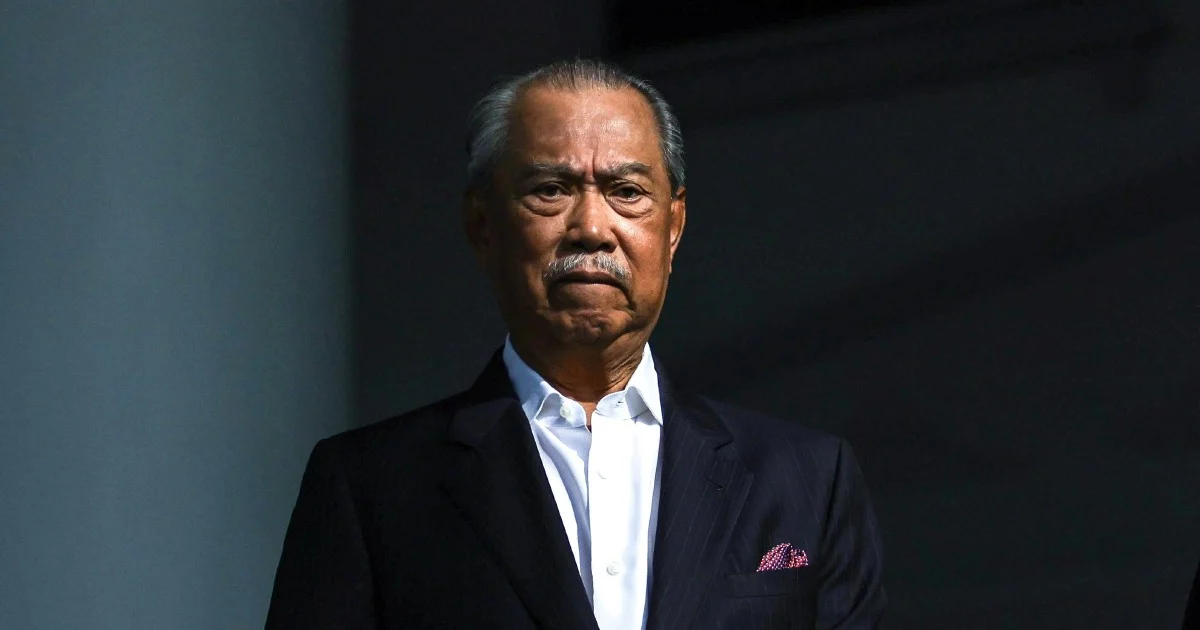
A Malaysian court has upheld an order to maintain a freeze on RM195 million in bank accounts associated with Bersatu, the Malay-centric political party that has been central to Malaysia's coalition-building dynamics since 2018. The judicial decision represents a significant development in an increasingly complex dispute over party assets and internal governance, with substantial implications for the organisation's operational capacity and financial management during a critical period of Malaysian politics.
The frozen funds remain inaccessible despite repeated legal challenges, reflecting the depth of factional tensions within Bersatu that have simmered throughout recent years. These divisions have manifested through competing claims over party leadership, ideological direction, and control of financial resources. The court's affirmation of the asset freeze demonstrates judicial unwillingness to intervene in the ongoing dispute without clearer resolution of underlying claims, leaving the party in a state of financial limbo that constrains its ability to fund operations, organise campaigns, and manage administrative functions.
For Malaysian observers, the situation illustrates how political fragmentation at the party level can create cascading complications for national governance. Bersatu has played a pivotal role in multiple government formations over recent years, making internal instability within the party resonant across broader political coalitions. The frozen accounts directly impact the party's capacity to maintain infrastructure, sustain staff, and mount electoral activities—consequences that ripple beyond the party itself into the coalitional arrangements it supports.
The specific circumstances precipitating the freeze stem from disputes involving competing factions that claim legitimacy within the party structure. These conflicts involve questions about proper procedures for leadership succession, legitimate representation of party members, and rightful custodianship of party assets accumulated over years of operation. The court's decision to maintain the freeze rather than adjudicate between competing claims suggests judicial caution about intervening prematurely in what remains an unresolved internal party matter.
From a regional perspective, Malaysia's handling of intra-party financial disputes reflects broader Southeast Asian challenges around party governance and asset management. Many regional parties struggle with unclear internal structures, competing leadership factions, and inadequate institutional mechanisms for resolving disputes. The Bersatu situation, played out in Malaysia's relatively developed legal system, illuminates problems that likely afflict numerous political organisations across Southeast Asia less visibly but with equally significant consequences.
The RM195 million figure itself warrants attention. This represents substantial accumulated resources—funds generated through membership contributions, business donations, and possibly state allocations received when party members held government positions. The scale of these frozen assets underscores how significantly political finance concentrates within Malaysian parties and how consequential control over such resources becomes during internal conflicts. Each contending faction views access to these funds as essential to advancing its vision for the party's future direction and governance.
Legal proceedings around the freeze have extended over an extended timeline, suggesting neither claimant has achieved decisive advantage through litigation. The court's decision to maintain the freeze rather than release funds to either faction effectively perpetuates the status quo indefinitely unless one side achieves a more definitive legal victory or the parties negotiate a settlement. This extended suspension complicates long-term planning for any faction claiming party leadership, as they cannot reliably deploy these resources for strategic initiatives.
The implications for Malaysian governance extend beyond Bersatu itself. When major political parties experience internal paralysis over asset control and leadership legitimacy, the capacity of larger coalitions to function coherently diminishes. Coalition partners may struggle to coordinate effectively when one member party is internally fractionalised and financially constrained. This can complicate parliamentary operations, cabinet coordination, and policy implementation across areas where Bersatu's participation is relevant.
Moreover, the situation raises questions about party regulatory frameworks in Malaysia. Existing party law does not clearly delineate procedures for resolving severe internal governance disputes, leaving courts to improvise solutions through asset freezes rather than institutional remedies. Policymakers might consider whether Malaysia's regulatory approach to party governance provides adequate mechanisms for managing internal conflicts while preserving party financial integrity and operational viability.
For ordinary party members, the frozen accounts represent more than an abstract financial matter. These resources theoretically belong to the party membership collectively. When competing leadership factions restrict access to accumulated assets, ordinary members lose visibility and voice in deployment of resources they collectively generated. This dynamic can deepen member alienation and complicate efforts to rebuild party unity.
The court's ruling also highlights how Malaysian law handles political disputes involving no clear external wrongdoing but rather genuine disagreement about legitimate authority. The judiciary's preferred solution—freezing assets rather than adjudicating claims—effectively sidesteps the underlying dispute while preventing either faction from consolidating advantage through financial control. This approach maintains judicial neutrality but does not resolve the fundamental questions driving the conflict.
As Malaysia continues navigating coalition politics and internal party management, the Bersatu situation serves as a cautionary example of how unresolved governance disputes can transform into extended financial paralysis. The frozen accounts will likely remain inaccessible until either one faction achieves clearer legal or political dominance, the parties negotiate substantive compromise, or new institutional frameworks provide mechanisms for legitimate resolution. Until then, the RM195 million remains trapped in judicial limbo, symbolising deeper questions about party governance and institutional resilience within Malaysia's political ecosystem.

%22%2F%3E%3C%2Fpattern%3E%3C%2Fdefs%3E%3Crect%20width%3D%22100%25%22%20height%3D%22100%25%22%20fill%3D%22url(%23ph40buhg)%22%2F%3E%3Crect%20width%3D%22100%25%22%20height%3D%22100%25%22%20fill%3D%22url(%23ph40buhp)%22%2F%3E%3Ctext%20x%3D%2250%25%22%20y%3D%2250%25%22%20text-anchor%3D%22middle%22%20dominant-baseline%3D%22central%22%20fill%3D%22rgba(255%2C255%2C255%2C0.95)%22%20font-family%3D%22Georgia%2C%20'Times%20New%20Roman'%2C%20serif%22%20font-weight%3D%22700%22%20font-size%3D%22320%22%20letter-spacing%3D%22-0.02em%22%3EGRS%3C%2Ftext%3E%3C%2Fsvg%3E)