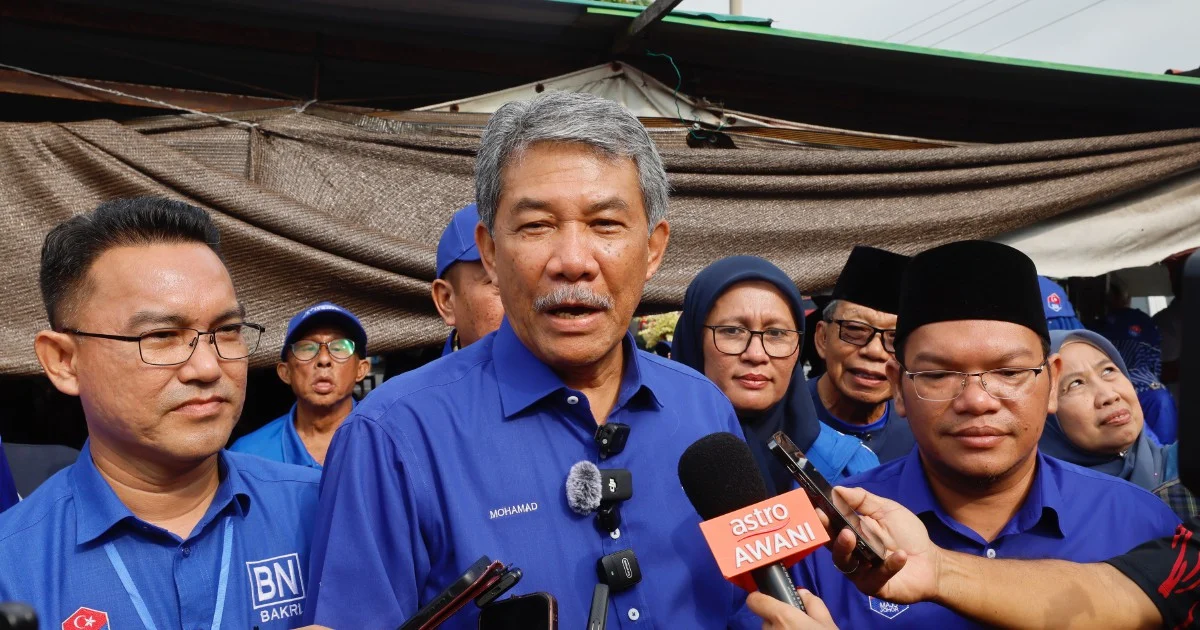
Datuk Seri Mohamad Hasan, the deputy chairman of Barisan Nasional, has escalated political tensions by issuing a pointed ultimatum to DAP leader Nga Kor Ming, urging him to step down over contentious statements regarding the Johor state election. Speaking in Muar, the prominent coalition figure delivered his rebuke at a time when Malaysia's political landscape remains fractious following recent electoral contests and ongoing coalition negotiations.
The exchange underscores the deepening friction between coalition partners and opposition figures, particularly as BN seeks to consolidate control in key strongholds. Johor has long been regarded as a critical state for national politics, serving as both a BN bastion and an arena where opposition parties have mounted increasingly competitive challenges. The electoral competition in the state has intensified scrutiny on governance and coalition stability, with both sides trading accusations over governance failures and political miscalculations.
Nga Kor Ming, a senior DAP figure and significant voice within the opposition coalition, had made remarks perceived as critical of the electoral process or results in Johor. Such statements from prominent opposition leaders typically trigger swift rejoinders from government-aligned figures keen to defend institutional credibility or coalition integrity. The timing of Mohamad Hasan's response reflects the broader pattern of political contestation where comments on electoral outcomes become flashpoints for larger strategic disputes.
For Malaysian observers, the confrontation exemplifies the entrenched polarization characterizing contemporary national politics. BN, as the dominant federal coalition, maintains organisational advantages and institutional leverage, yet faces persistent challenges from resurgent opposition blocs that have demonstrated capacity to mobilise support in urban and youth demographics. DAP, meanwhile, continues positioning itself as a reformist alternative, even as it grapples with managing expectations within multi-ethnic coalition frameworks.
The Johor context carries particular weight given the state's economic significance and its role as a bellwether for national political sentiment. Investment flows, infrastructure development, and bilateral relations with Singapore are all influenced by stable governance perception. Protracted political bickering risks undermining investor confidence and complicating longterm planning, concerns that extend beyond partisan considerations to affect broader economic performance across the region.
Mohamad Hasan's tenure as BN deputy chairman reflects his standing within the coalition hierarchy and his capacity to represent coalition interests in high-profile disputes. His intervention in this matter signals that BN leadership considers Nga's remarks sufficiently problematic to warrant public rebuttal from senior ranks. Such direct confrontations, while common in parliamentary democracies, carry implications for coalition cohesion and parliamentary functioning.
During the Muar appearance, Mohamad Hasan articulated the coalition's perspective that criticism of electoral outcomes, particularly when directed at Johor results, constitutes questioning of democratic legitimacy or institutional fairness. Coalition narratives typically emphasise that contested elections should be accepted by all participants regardless of outcome, positioning acceptance as a cornerstone of democratic maturity. Opposition figures countering this typically emphasise their right to scrutinise processes and outcomes without being characterised as anti-democratic.
The underlying dispute likely reflects disagreements over electoral administration, voter conduct, or result accuracy that appear regularly in Malaysian political discourse. Opposition parties frequently raise concerns regarding geographical representation advantages and incumbent resource deployment, while ruling coalitions defend electoral integrity and emphasise compliance with constitutional frameworks. These recurring debates shape how Malaysian voters perceive fairness and legitimacy in governance structures.
From a Southeast Asian perspective, Malaysia's political dynamics carry regional significance. The stability of ASEAN's third-largest economy depends partly on maintaining functional political institutions and peaceful power transitions. Excessive polarisation risks creating governance paralysis or institutional erosion that could affect regional cooperation frameworks and economic dynamism. Neighbouring countries monitor Malaysian political developments closely for signals regarding regional stability and bilateral relationship trajectories.
During his remarks in Muar, a traditional BN stronghold in Johor, Mohamad Hasan effectively deployed location strategy to underscore coalition confidence in its electoral performance. Stronghold visits typically serve dual purposes: reinforcing grassroots support while signalling to federal leadership that local constituencies remain secure. The public nature of his challenge to Nga similarly broadcasts BN's willingness to engage opposition figures confrontationally when necessary, projecting organisational strength.
The incident reflects how Malaysian politics increasingly operates through media-amplified confrontations rather than quieter institutional channels. Social media proliferation and news cycle demands reward dramatic pronouncements and personalised disputes, potentially overshadowing substantive policy discussions. Both BN and opposition coalitions have adapted their communication strategies accordingly, utilising public rebukes as strategic tools for consolidating supporter bases and signalling resolve.
Moving forward, whether Nga responds publicly, maintains strategic silence, or escalates the dispute will provide clues regarding DAP's broader tactical approach. Opposition parties must navigate balancing acts between criticising government performance and avoiding characterisation as obstructionist or anti-democratic. Similarly, coalition figures must weigh benefits of dominating news cycles against risks of appearing overly aggressive toward minority voices.
The controversy ultimately illustrates enduring tensions within Malaysia's competitive yet constrained political environment, where electoral outcomes remain contested terrain and institutional relationships remain characterised by suspicion and strategic positioning rather than collaborative consensus-building across ideological divides.

