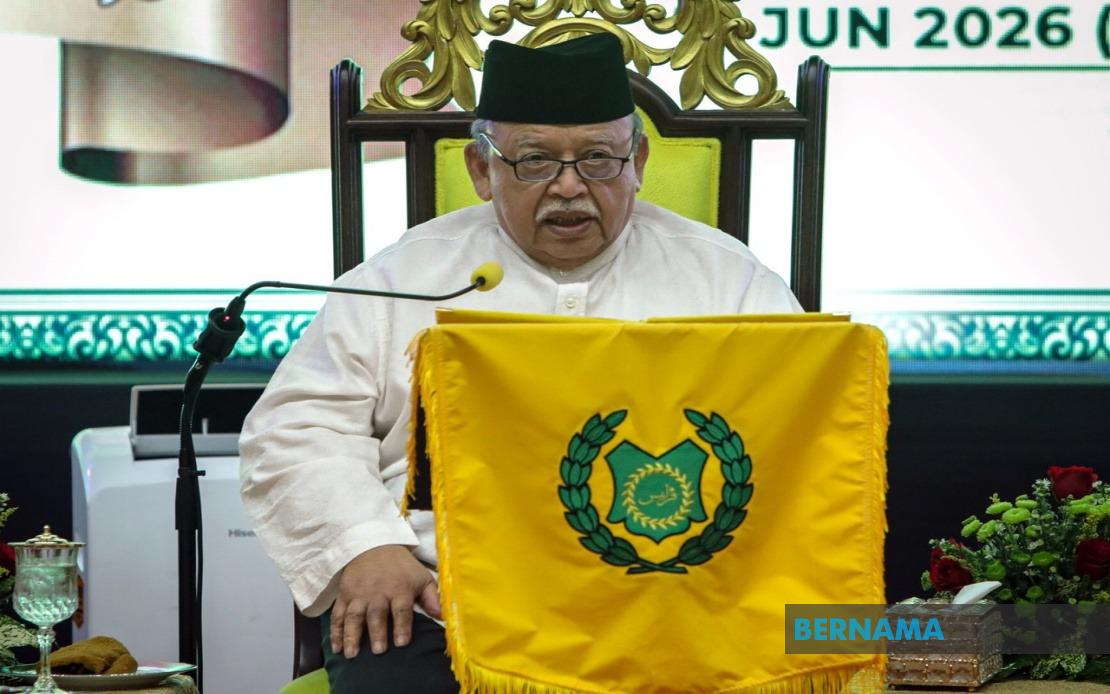
Tuanku Syed Sirajuddin Jamalullail, the Raja of Perlis, has issued a forceful appeal to residents across the state to conduct their duties with genuine commitment and moral conviction, whilst steadfastly opposing all manifestations of graft and dishonest practice. Speaking at the official opening of Perlis's state-level Maal Hijrah 1448H/2026M observance in Kangar on June 18, the Ruler articulated a vision of progress rooted not in buildings and infrastructure alone, but in the intellectual, moral and cultural foundations that sustain a civilised polity.
The Raja's remarks come at a significant juncture for Malaysia, where concerns about governance standards and public accountability remain prominent across federal and state administrations. By invoking the Islamic calendar's renewal ceremony as a platform for his message, Tuanku Syed Sirajuddin framed anti-corruption efforts as integral to the nation's spiritual and civic renewal, suggesting that ethical conduct represents a form of religious observance itself. This framing carries particular weight in Perlis, a state with a predominantly Muslim population for whom the Maal Hijrah celebration carries deep cultural resonance.
Central to the Ruler's vision is a reinterpretation of what constitutes genuine progress. Rather than equating national advancement with economic indicators or urban development, Tuanku Syed Sirajuddin insisted that meaningful societal transformation encompasses intellectual advancement, dignity of character, cultural vitality and philosophical maturity. This perspective challenges the conventional development paradigm often pursued across Malaysia, where gross domestic product growth and infrastructure megaprojects frequently dominate policy discourse. The Raja's formulation suggests that a state measuring itself purely by physical development whilst neglecting moral and institutional integrity remains fundamentally underdeveloped.
The Ruler emphasised that sustainable prosperity demands a population characterised by knowledge, integrity, civilised comportment and genuine unity. He presented these qualities not as optional refinements but as prerequisites for any state aspiring to authentic progress. The emphasis on knowledge acquisition positioned education and continuous learning as foundational to national resilience, whilst the insistence on integrity and civility targeted the institutional and interpersonal dimensions of governance and public life. By linking unity to these other factors, Tuanku Syed Sirajuddin suggested that social cohesion cannot emerge from coercion or rhetorical appeals alone, but must rest on shared commitment to values and ethical practice.
In articulating his vision of MADANI progress—referencing Malaysia's broader development framework—the Raja distinguished between material advancement and genuine human flourishing. This distinction carries implications for how policymakers evaluate success and allocate resources. A state pursuing MADANI principles as the Ruler defined them would prioritise institutional integrity, educational quality and cultural preservation alongside infrastructure expansion, potentially requiring significant recalibration of spending priorities and governance approaches across Malaysian administrations at all levels.
Tuanku Syed Sirajuddin called specifically for the cultivation of civilised values in quotidian life, stronger social bonds, intellectual pursuits, the maintenance of ethical standards and the execution of public and private duties with full accountability. This multifaceted prescription addresses governance corruption through the lens of institutional and personal responsibility, implying that systemic graft cannot be adequately addressed through enforcement mechanisms alone but requires a cultural shift towards internalised ethical commitment amongst both officials and citizens.
The Ruler's remarks on Islamic understanding merit particular attention for Malaysian audiences. He advocated for continued strengthening of authentic Islamic comprehension grounded in the Quran and Sunnah, coupled with preservation of a sophisticated and orderly political culture. This framing positions religious authenticity and mature democratic practice not as tensions but as complementary objectives, an important message in a nation sometimes characterised by polarisation between religious and secular constituencies. By coupling Islamic instruction with political maturity, Tuanku Syed Sirajuddin suggested that neither dimension should eclipse the other in national discourse or policymaking.
The Ruler urged empowerment of Perlis's population towards greater self-reliance and competitiveness, positioning these qualities as essential to confronting contemporary challenges. He identified technological transformation, artificial intelligence proliferation, social restructuring and international economic volatility as defining pressures facing the state and nation. His exhortation against remaining passive observers, instead calling for residents to become architects of ideas and agents of change, articulates an expansive view of civic participation that extends beyond voting or formal political engagement to encompass broader intellectual and entrepreneurial contributions.
The development priorities outlined by the Ruler encompass religious, political, economic and social domains, reflecting an integrated conception of progress that resists narrow sectoral focus. This holistic approach acknowledges that advancement in a single sphere without parallel development elsewhere produces instability and incomplete progress. For Malaysia's policymakers, such an integrated perspective suggests that economic growth divorced from political integrity, or infrastructure development uncoupled from social cohesion, ultimately undermines national interests.
Tuanku Syed Sirajuddin called for nurturing amongst Perlis residents the qualities of courage, intelligence and self-reliance as defining characteristics of the state's identity. These virtues, he suggested, form the foundation for constructing an improved future for subsequent generations. By explicitly connecting personal and collective virtue to intergenerational responsibility, the Ruler elevated anti-corruption efforts and institutional integrity beyond technical governance concerns to matters of profound moral consequence.
The ceremony also recognised exemplary public service through presentation of the Perlis Tokoh Maal Hijrah award to Datuk Izham Mahmud, a board member of Yayasan Tuanku Syed Putra. This recognition mechanism serves to publicly valorise contributions to societal welfare, sending a symbolic message about which individuals and behaviours merit state honour and emulation. For a polity sometimes fatigued by accounts of institutional failure and personal misconduct among public figures, such ceremonial acknowledgment of integrity may reinforce normative expectations.
The Raja's comprehensive articulation of a values-based development vision, delivered at a constitutionally significant moment in the Islamic calendar, represents an important intervention in Malaysian public discourse. By positioning integrity and anti-corruption sentiment as central rather than peripheral to state and national identity, and by connecting these commitments to religious observance and cultural authenticity, Tuanku Syed Sirajuddin has framed the struggle against graft and institutional decay as fundamental to Perlis's future and Malaysia's broader aspirations. His insistence that genuine progress transcends mere material accumulation offers a corrective framework for national policymaking that Southeast Asian observers and Malaysian citizens across the political spectrum might constructively engage with.

%22%2F%3E%3C%2Fpattern%3E%3C%2Fdefs%3E%3Crect%20width%3D%22100%25%22%20height%3D%22100%25%22%20fill%3D%22url(%23ph40buhg)%22%2F%3E%3Crect%20width%3D%22100%25%22%20height%3D%22100%25%22%20fill%3D%22url(%23ph40buhp)%22%2F%3E%3Ctext%20x%3D%2250%25%22%20y%3D%2250%25%22%20text-anchor%3D%22middle%22%20dominant-baseline%3D%22central%22%20fill%3D%22rgba(255%2C255%2C255%2C0.95)%22%20font-family%3D%22Georgia%2C%20'Times%20New%20Roman'%2C%20serif%22%20font-weight%3D%22700%22%20font-size%3D%22320%22%20letter-spacing%3D%22-0.02em%22%3EGRS%3C%2Ftext%3E%3C%2Fsvg%3E)