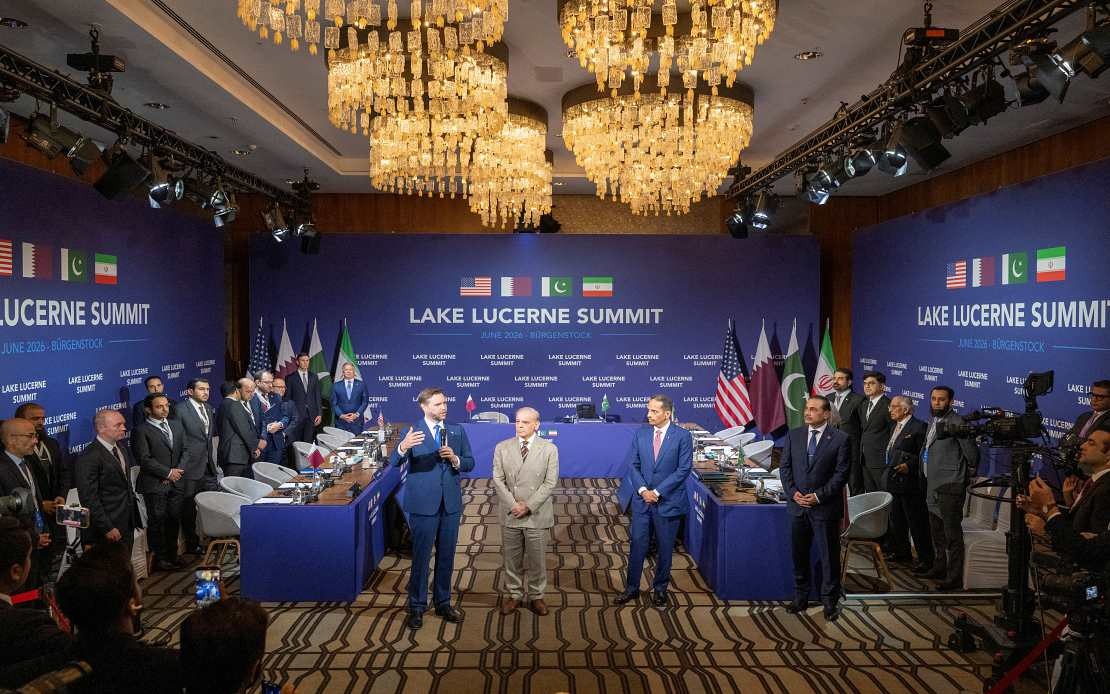
Diplomatic efforts to bridge the widening gulf between Washington and Tehran have entered a new, more structured phase following the commencement of talks at the Lake Lucerne Summit in Switzerland, according to joint remarks issued by Qatar and Pakistan, the primary intermediaries shepherding negotiations between the two adversaries. The opening session, which concluded early Monday, produced what mediators characterised as encouraging momentum, laying groundwork for an accelerated push toward resolution within the coming two months.
The establishment of an institutional framework represents a departure from previous diplomatic overtures, signalling both parties' commitment to a more systematic approach. Alongside the announcement of a dedicated mechanism for sustained technical discussions, negotiators have created a high-level oversight committee tasked with steering the broader political architecture of the mediation endeavour. This dual-track structure reflects recognition that nuclear and sanctions disputes require both technical expertise and political judgement to navigate successfully.
The high-level committee will receive regular briefings from lead negotiators and exercise supervisory authority over specialised working groups concentrating on distinct but interrelated challenges. These groups will examine the Iranian nuclear programme, unwind sanctions architecture, and develop dispute resolution procedures that can underpin implementation of the memorandum of understanding signed in the preceding week. This compartmentalisation of issues allows negotiators to develop detailed solutions in parallel rather than sequentially, potentially accelerating overall progress.
Mediating states have presented an ambitious yet ostensibly feasible roadmap committing parties to achieve a final agreement within sixty days. Such compression reflects recognition that momentum in international negotiations often dissipates when intervals between sessions lengthen, and that political windows of opportunity can narrow unexpectedly. The timeline also suggests confidence among mediators that fundamental positions have shifted sufficiently to permit rapid progress on specifics, provided technical discussions remain focused and political will remains steady.
Communication infrastructure established under the agreement extends beyond traditional diplomatic channels. A dedicated channel has been instituted specifically to manage incidents and prevent misunderstandings between parties, with particular attention to maritime safety in the Strait of Hormuz. This provision addresses a recurring flashpoint in US-Iran relations, where military vessels and commercial shipping have previously experienced tense encounters. Ensuring passage of merchant vessels remains unobstructed carries implications extending far beyond bilateral relations, given the Strait's centrality to global energy markets and its significance for Southeast Asian economies dependent on reliable oil supplies.
For Malaysia and other Association of Southeast Asian Nations members, developments in US-Iran relations carry substantial weight. The region's shipping corridors intersect with maritime routes affected by tensions in the Persian Gulf, and any escalation in US-Iran hostilities could threaten trade patterns critical to regional prosperity. Malaysian ports and shipping companies maintain extensive operations across global trade networks, making regional stability in the Middle East directly relevant to Malaysian economic interests.
The role of Qatar and Pakistan as mediators reflects their distinct advantages in bridge-building between Washington and Tehran. Qatar maintains diplomatic channels with Iran whilst hosting substantial US military infrastructure, positioning it uniquely to facilitate dialogue. Pakistan's geopolitical positioning and historical relationships across the Islamic world provide complementary leverage. Their joint stewardship suggests confidence among multiple stakeholders that negotiation remains viable despite years of confrontation and acrimony.
The memorandum of understanding referenced in negotiators' statements apparently establishes baseline principles from which current discussions proceed. The fact that such a document was signed prior to the Lake Lucerne Summit indicates preliminary groundwork had already achieved consensus on fundamental propositions, permitting discussions to advance to implementation details and dispute-resolution mechanisms. This layered approach—foundational agreement followed by institutional development—represents a more deliberate methodology than attempts at single comprehensive settlements.
Within Southeast Asia, the outcome carries implications for regional security architectures. Nations balancing relationships between Washington and Tehran, or maintaining significant Iranian trade relationships alongside security partnerships with the United States, benefit from any reduction in bilateral antagonism. The prospect of sanctions relief for Iran could reshape regional trade patterns, affecting supply chains and investment flows throughout the broader Asian marketplace.
The designation of technical working groups focused specifically on nuclear issues and sanctions demonstrates negotiators' intent to separate verification and compliance questions from broader political considerations. This compartmentalisation can reduce emotional dimensions of negotiations whilst permitting experts to identify practical solutions grounded in technical realities rather than ideological positions. Success in technical domains often generates momentum conducive to breakthrough on politically sensitive matters.
The sixty-day timeline creates measurable accountability and prevents indefinite negotiation without concrete progress. Parties publicly committing to such deadlines face domestic political pressure to deliver results, which can paradoxically strengthen negotiators' hands when arguing for concessions to sceptical stakeholders at home. For regional observers, clear timelines provide clarity regarding when developments might materially alter security calculations or trade considerations across Southeast Asia.
Previous negotiating cycles involving Iran and international partners have frequently extended far beyond initial projections, yet accelerated schedules occasionally emerge when political will genuinely aligns with diplomatic capability. The confidence displayed by mediators in this instance—reflected in their willingness to announce both progress and timelines—suggests assessment that conditions permitting genuine breakthrough have crystallised, distinguishing current efforts from earlier initiatives that ultimately disappointed.
Malaysian policymakers monitoring these developments face an evolving calculus regarding regional positioning and economic strategy. Outcomes in Switzerland carry consequences extending across maritime security, energy markets, and international commerce, warranting sustained attention to negotiations' progression toward the projected sixty-day resolution point.