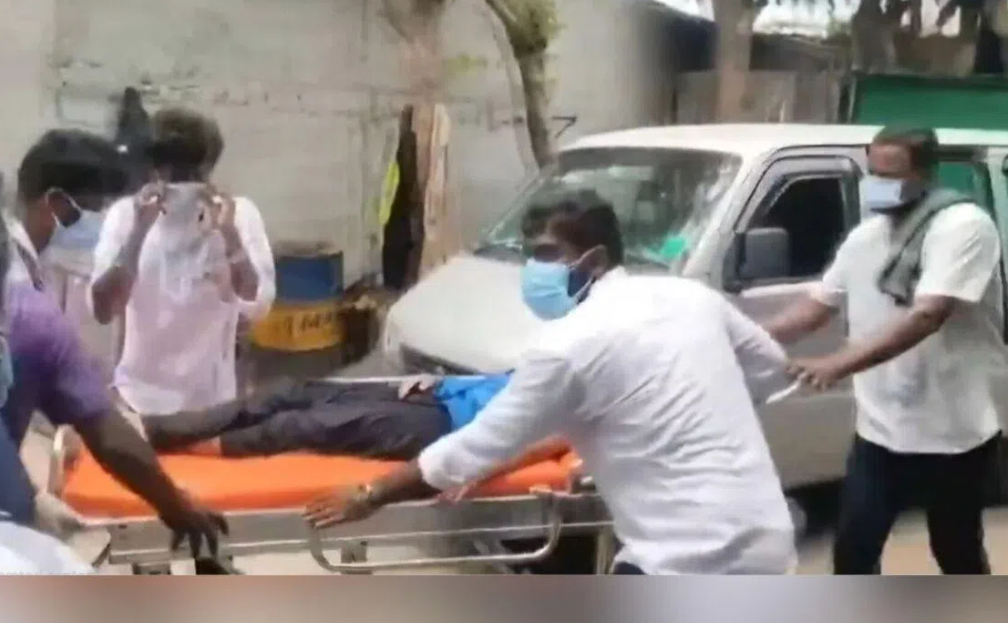
A seafood export processing plant in Tamil Nadu's Thiruvallur district became the site of a fatal industrial disaster on Sunday when a suspected ammonia gas leak killed at least six workers and sent dozens more to hospital in critical condition. The tragedy unfolded at a facility near Periyapalayam village where approximately 120 migrant labourers, predominantly women from the eastern states of Assam, Odisha and Jharkhand, were working when the leak occurred. The incident has reignited concerns about worker safety standards in India's seafood processing industry, which relies heavily on vulnerable migrant labour from impoverished regions.
Investigators believe the ammonia discharge originated from the plant's refrigeration or processing system, quickly permeating through the facility and overwhelming workers with minimal time to escape. Ammonia, a colourless gas widely used in industrial refrigeration, becomes lethal in high concentrations and causes severe damage to the respiratory system, eyes and mucous membranes. The speed at which the gas dispersed across the workspace trapped numerous employees who had no immediate access to safety equipment or designated evacuation routes, exacerbating casualties and injuries.
Workers caught in the gas exposure experienced acute and harrowing symptoms that indicated the severity of their poisoning. Survivors reported intense breathing difficulties that left many gasping for air, combined with vertigo and burning sensations across exposed skin and respiratory passages. The most severely affected individuals exhibited alarming signs including haemorrhaging from the mouth and nasal passages, a clinical indicator of profound chemical damage to internal tissues. Eyewitness accounts describe scenes of chaos as panicked workers fled the facility, with some collapsing mid-escape and requiring immediate assistance from colleagues.
The immediate aftermath saw swift mobilisation of emergency services, with police units, ambulances and medical teams converging on the site to initiate rescue operations. Local authorities coordinated the rapid transport of affected workers to nearby hospitals, where medical staff confronted an overwhelming influx of poisoning cases requiring intensive care and respiratory support. Officials reported that several patients remain in critical condition, fighting respiratory failure and complications stemming from direct chemical exposure. The scale of hospitalisation—dozens requiring treatment—has strained local healthcare resources and prompted appeals for additional medical support from state authorities.
Tamil Nadu Chief Minister C. Joseph Vijay responded to the disaster by issuing directives to ensure comprehensive medical care for all affected workers and their families. Recognising the severity of the incident and potential systemic failures, Vijay ordered the establishment of a three-member inquiry committee tasked with conducting a thorough investigation into the catastrophic leak. The committee has been granted an exceptionally tight timeframe, instructed to submit detailed findings within 24 hours—a compressed schedule indicating the political pressure surrounding the incident and public expectations for accountability.
The investigation mandate extends beyond identifying the immediate technical cause of the leak. The inquiry committee is expected to scrutinise the facility's safety protocols, maintenance schedules and documented compliance records to determine whether negligence or regulatory violations contributed to the disaster. Industrial safety experts will likely examine whether proper safety equipment, warning systems and emergency protocols were in place, and whether workers received adequate training in hazard recognition and evacuation procedures. The committee's remit also encompasses assessing whether the facility had conducted required risk assessments and whether any prior warnings or inspection reports had flagged refrigeration system vulnerabilities.
Police have formally registered a case in relation to the incident, initiating criminal investigations that may result in charges against plant management or owners depending on findings of culpability. Simultaneously, regulatory authorities are evaluating potential breaches of industrial safety legislation and workplace protection standards. Such investigations typically examine whether companies obtained necessary safety certifications, maintained equipment to manufacturer specifications and complied with guidelines established by state labour departments. The parallel criminal and administrative inquiries will likely determine whether management decisions prioritised cost reduction over worker safety.
The tragedy highlights structural vulnerabilities in India's seafood export sector, which generates significant foreign exchange but operates under intense competitive pressure from international markets. Processing units competing for contracts often cut corners on safety infrastructure and maintenance to reduce operational costs. Migrant workers, frequently isolated from their home communities and unaware of their legal rights, represent a vulnerable workforce with minimal leverage to demand safe working conditions. Many lack formal employment contracts that would specify safety responsibilities or provide recourse for injuries. This power imbalance, combined with inadequate regulatory oversight of smaller processing facilities, creates conditions where industrial accidents become predictable rather than exceptional.
For Malaysian readers, this incident carries particular relevance given the significant presence of Indian migrant workers in Malaysian manufacturing, construction and service sectors. The safety standards governing these workers in Malaysian facilities warrant scrutiny, particularly in industries operating under tight profit margins. The Tamil Nadu disaster underscores the importance of robust enforcement of workplace safety regulations, independent monitoring of hazardous facilities and genuine worker representation in safety governance. Migrant workers in Malaysia deserve equivalent protection regardless of their nationality, and employers must be held accountable for maintaining standards that prevent tragedies like this from occurring.
The seafood processing sector across Southeast Asia faces similar pressures and regulatory challenges, suggesting that comparable risks exist in neighbouring countries where industrial oversight remains inconsistent. This incident should serve as a catalyst for regional governments to strengthen safety inspections, improve worker training programmes and establish meaningful penalties for safety violations. Without concerted action, preventable industrial disasters will continue claiming lives among the region's most economically vulnerable workers.
%22%2F%3E%3C%2Fpattern%3E%3C%2Fdefs%3E%3Crect%20width%3D%22100%25%22%20height%3D%22100%25%22%20fill%3D%22url(%23ph48iprg)%22%2F%3E%3Crect%20width%3D%22100%25%22%20height%3D%22100%25%22%20fill%3D%22url(%23ph48iprp)%22%2F%3E%3Ctext%20x%3D%2250%25%22%20y%3D%2250%25%22%20text-anchor%3D%22middle%22%20dominant-baseline%3D%22central%22%20fill%3D%22rgba(255%2C255%2C255%2C0.95)%22%20font-family%3D%22Georgia%2C%20'Times%20New%20Roman'%2C%20serif%22%20font-weight%3D%22700%22%20font-size%3D%22272%22%20letter-spacing%3D%22-0.02em%22%3EAnwar%3C%2Ftext%3E%3C%2Fsvg%3E)
%22%2F%3E%3C%2Fpattern%3E%3C%2Fdefs%3E%3Crect%20width%3D%22100%25%22%20height%3D%22100%25%22%20fill%3D%22url(%23ph2qtuog)%22%2F%3E%3Crect%20width%3D%22100%25%22%20height%3D%22100%25%22%20fill%3D%22url(%23ph2qtuop)%22%2F%3E%3Ctext%20x%3D%2250%25%22%20y%3D%2250%25%22%20text-anchor%3D%22middle%22%20dominant-baseline%3D%22central%22%20fill%3D%22rgba(255%2C255%2C255%2C0.95)%22%20font-family%3D%22Georgia%2C%20'Times%20New%20Roman'%2C%20serif%22%20font-weight%3D%22700%22%20font-size%3D%22272%22%20letter-spacing%3D%22-0.02em%22%3EJohor%3C%2Ftext%3E%3C%2Fsvg%3E)
%22%2F%3E%3C%2Fpattern%3E%3C%2Fdefs%3E%3Crect%20width%3D%22100%25%22%20height%3D%22100%25%22%20fill%3D%22url(%23ph4izb4g)%22%2F%3E%3Crect%20width%3D%22100%25%22%20height%3D%22100%25%22%20fill%3D%22url(%23ph4izb4p)%22%2F%3E%3Ctext%20x%3D%2250%25%22%20y%3D%2250%25%22%20text-anchor%3D%22middle%22%20dominant-baseline%3D%22central%22%20fill%3D%22rgba(255%2C255%2C255%2C0.95)%22%20font-family%3D%22Georgia%2C%20'Times%20New%20Roman'%2C%20serif%22%20font-weight%3D%22700%22%20font-size%3D%22170%22%20letter-spacing%3D%22-0.02em%22%3EMalaysia%3C%2Ftext%3E%3C%2Fsvg%3E)