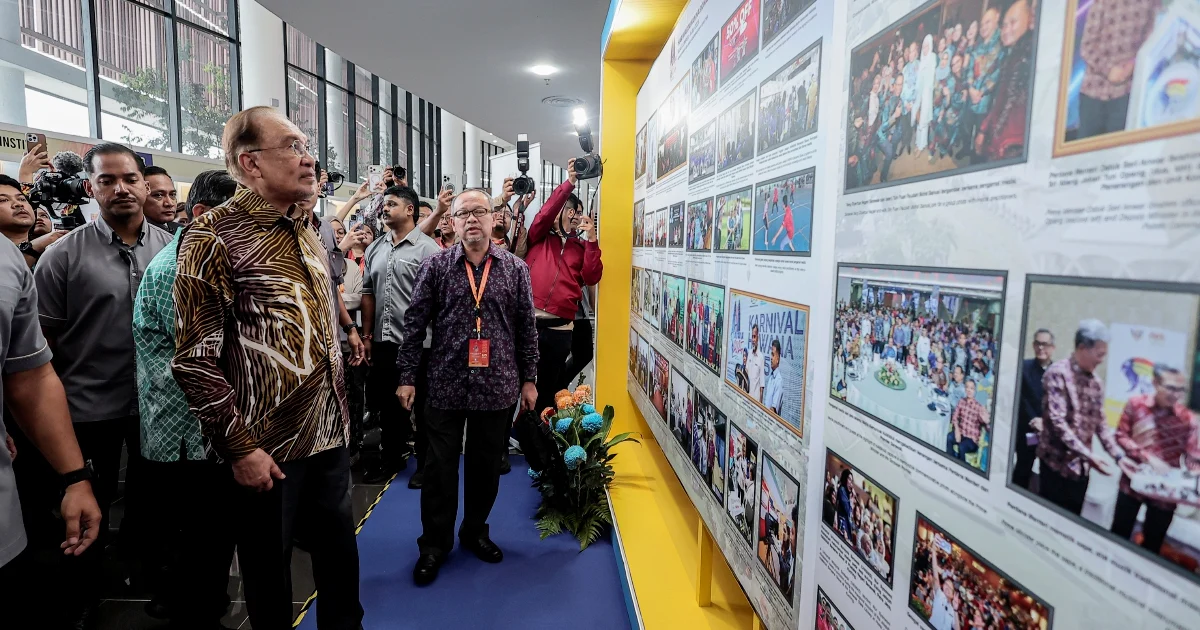
Prime Minister Datuk Seri Anwar Ibrahim has unveiled a significant financial commitment to the journalism profession, announcing a RM1 million government allocation dedicated to Tabung Kasih@Hawana 2026, a welfare fund designed to support media practitioners. The allocation was disclosed during remarks at an event in Permatang Pauh, signalling the administration's prioritisation of the news industry at a time when traditional media outlets face mounting economic pressures and digital disruption challenges across Southeast Asia.
The Tabung Kasih@Hawana 2026 initiative represents a targeted intervention to address welfare concerns among journalists, a profession that has experienced significant workforce attrition and economic strain in recent years. By earmarking public funds for such a scheme, the government acknowledges the critical role that media practitioners play in sustaining democratic institutions and public discourse. The welfare fund model reflects a broader regional trend of governments and industry bodies recognising journalists' contributions whilst grappling with the sustainability of news production in an era dominated by digital competition and advertising revenue fragmentation.
Beyond the immediate welfare allocation, Anwar's announcement underscores the government's stated commitment to fostering media industry transformation. This framing suggests a comprehensive approach that moves past stopgap measures to embrace structural modernisation within the Malaysian news sector. The timing of such support is particularly relevant given that newsrooms across the country have undergone significant organisational restructuring, with many outlets adopting hybrid business models and digital-first strategies to remain commercially viable.
The investment in journalist welfare carries implications that extend beyond individual practitioners to the broader health of Malaysia's information ecosystem. When media professionals lack adequate financial security and support mechanisms, newsroom quality can deteriorate, investigative capacity shrinks, and the profession becomes vulnerable to external pressures that compromise editorial independence. By providing direct welfare support, the government signals recognition of these systemic risks and positions the measure as an investment in institutional resilience rather than mere charitable expenditure.
For Malaysian newsrooms operating within an increasingly competitive digital landscape, such government backing offers a counterbalance to market forces that have consistently undervalued journalism. Many regional publishers have faced declining circulation revenues and advertising displacement to tech platforms, creating a squeeze on staff compensation and benefits. A dedicated welfare fund can serve as a stabilising mechanism that helps retain experienced journalists and stabilises employment conditions across the industry.
The announcement also reflects international best practices in media support. Several developed democracies have implemented journalist welfare programmes and industry support funds recognising that robust media systems require deliberate public and private sector investment. The Malaysian approach of combining direct welfare funding with stated commitments to industry transformation suggests policymakers are thinking systematically about media sustainability rather than responding to isolated crises.
The Hawana 2026 conference itself, where this commitment was announced, likely served as a gathering point for media executives, journalists, and policymakers to discuss sector challenges and opportunities. Such forums have become increasingly important as the industry grapples with technological disruption, audience fragmentation, and the monetisation challenges posed by digital distribution channels. That the Prime Minister chose to make this announcement at such a venue underscores the political salience of media issues within Malaysian governance discourse.
From a regional perspective, Malaysia's approach to journalist welfare funding may influence policy discussions in other Southeast Asian nations confronting similar media industry pressures. The public commitment to supporting news professionals through dedicated funds could establish a template for other governments seeking to shore up domestic media sectors without direct editorial intervention. This distinction—between supporting the profession and controlling its output—remains crucial to maintaining press freedom standards that international observers closely monitor.
The allocation amount, whilst modest relative to broader government spending, carries symbolic weight. The RM1 million commitment signals that journalist welfare is not peripheral to government priorities but warrants direct budgetary attention. For individual practitioners struggling with economic insecurity, such funds can provide crucial support during career transitions, illness, or retirement, reducing the financial desperation that sometimes leads journalists to compromise professional standards.
Implementing such a welfare fund effectively will require careful governance to ensure transparent administration and equitable distribution among journalists across different media outlets and organisational sizes. The fund's design—whether it prioritises emergency assistance, professional development, health benefits, or retirement contributions—will significantly influence its impact on workforce stability and morale throughout the industry.
Looking forward, the sustainability of media transformation initiatives depends not only on discrete funding allocations but on consistent policy support over extended periods. The government's continued commitment to supporting media industry development, as stated by Anwar, suggests this allocation may be the first of multiple interventions designed to position Malaysia's news sector for long-term competitiveness and resilience.
%22%2F%3E%3C%2Fpattern%3E%3C%2Fdefs%3E%3Crect%20width%3D%22100%25%22%20height%3D%22100%25%22%20fill%3D%22url(%23ph2y81qg)%22%2F%3E%3Crect%20width%3D%22100%25%22%20height%3D%22100%25%22%20fill%3D%22url(%23ph2y81qp)%22%2F%3E%3Ctext%20x%3D%2250%25%22%20y%3D%2250%25%22%20text-anchor%3D%22middle%22%20dominant-baseline%3D%22central%22%20fill%3D%22rgba(255%2C255%2C255%2C0.95)%22%20font-family%3D%22Georgia%2C%20'Times%20New%20Roman'%2C%20serif%22%20font-weight%3D%22700%22%20font-size%3D%22320%22%20letter-spacing%3D%22-0.02em%22%3ETV3%3C%2Ftext%3E%3C%2Fsvg%3E)
%22%2F%3E%3C%2Fpattern%3E%3C%2Fdefs%3E%3Crect%20width%3D%22100%25%22%20height%3D%22100%25%22%20fill%3D%22url(%23ph2pvjyg)%22%2F%3E%3Crect%20width%3D%22100%25%22%20height%3D%22100%25%22%20fill%3D%22url(%23ph2pvjyp)%22%2F%3E%3Ctext%20x%3D%2250%25%22%20y%3D%2250%25%22%20text-anchor%3D%22middle%22%20dominant-baseline%3D%22central%22%20fill%3D%22rgba(255%2C255%2C255%2C0.95)%22%20font-family%3D%22Georgia%2C%20'Times%20New%20Roman'%2C%20serif%22%20font-weight%3D%22700%22%20font-size%3D%22170%22%20letter-spacing%3D%22-0.02em%22%3EJudicial%3C%2Ftext%3E%3C%2Fsvg%3E)