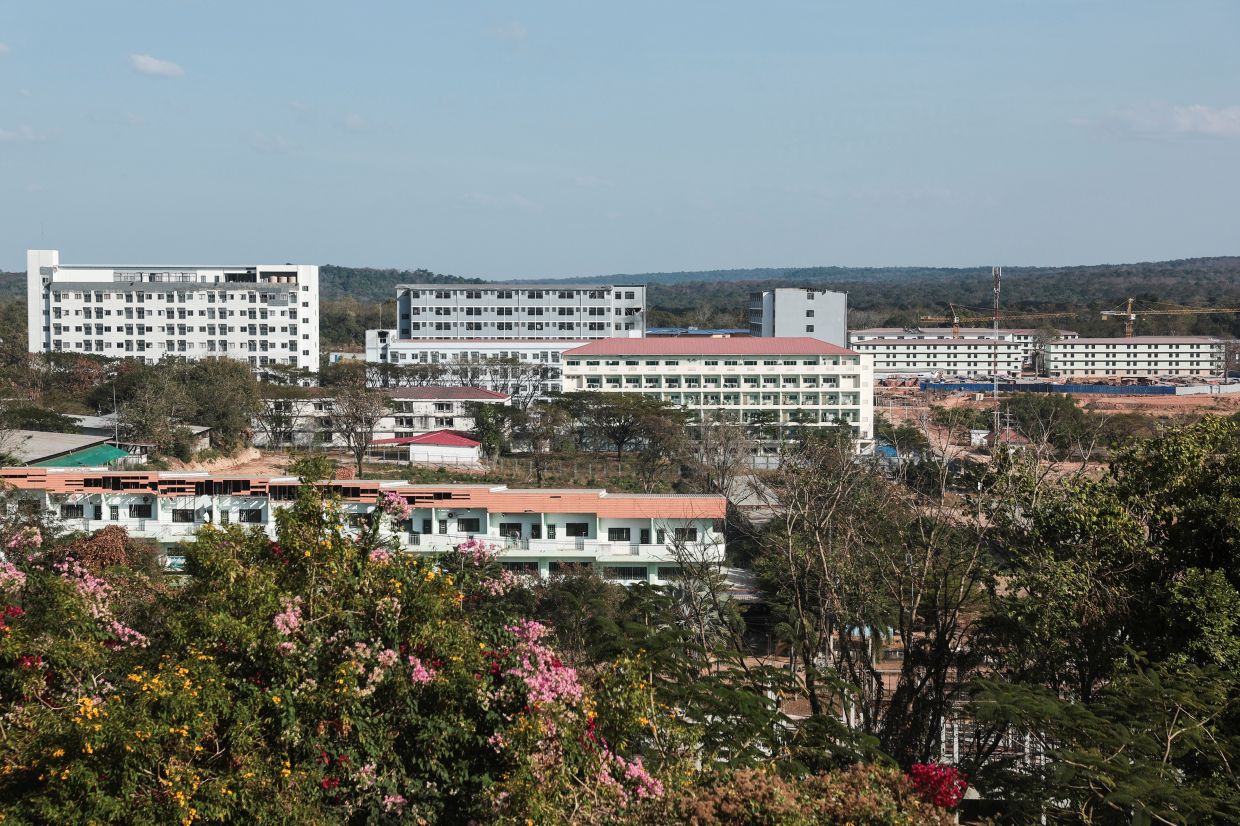
A major Cambodian gambling operation controlled by a politically connected businessman appears to have rented facilities to criminal syndicates running elaborate fraud schemes, according to findings by the news agency Reuters. The discovery shines a spotlight on how transnational organised crime has embedded itself within Southeast Asia's casino industry, exploiting the region's porous governance and political patronage networks to operate industrial-scale scamming enterprises that victimise people worldwide.
Lim Heng Group, which operates the Royal Hill casino on the Thai-Cambodian border near O'Smach, leased buildings on its compound to tenants at significantly inflated rates, far exceeding market value for the remote location. A rental agreement dated March 2024 reviewed by Reuters specified monthly payments of US$200,000 for three structures over a two-year period—a figure that stands in stark contrast to comparable properties. A similarly sized building in an upscale neighbourhood of the capital Phnom Penh was being advertised at just US$25,000 monthly, illustrating the vast premium charged at Royal Hill.
Inside these leased buildings, criminals had constructed elaborate facades designed to deceive their victims. Multiple rooms were decorated to resemble police stations and bank offices from various countries, providing realistic backdrops for what investigators describe as impersonation scams targeting individuals across the globe. Thai military officials and former workers at the compound confirmed these operations were occurring at the site, which Reuters visited in February and March following an invitation from Thai security forces. The scamming enterprise represented what experts term a "factory of fraud"—a concentrated facility where victims, many subjected to human trafficking, are coerced into perpetrating romance scams and law enforcement impersonation frauds against targets internationally.
The scale of financial harm from such operations across Southeast Asia is substantial. The United States government has estimated that Americans alone lost approximately US$10 billion to fraudsters operating in the region during 2024. These criminal networks typically operate under Chinese-affiliated leadership and frequently utilise casinos as integral components of their infrastructure, providing convenient mechanisms to launder and conceal illicit profits generated through scamming activities. Academic researchers studying Cambodia's political economy note that the kingdom's casino sector is predominantly controlled by businesspeople with close ties to government and military figures, creating environments where oversight mechanisms become compromised by interconnected interests.
Lim Heng occupies a particularly privileged position within Cambodia's power structure. He holds a royal title equivalent to a duke, has been photographed attending social gatherings alongside senior military commanders, and contributed US$20,000 to Cambodia's armed forces during the previous year. His group's connections to senior state officials are neither concealed nor marginal—they represent the type of integrated political-business relationships that characterise Cambodia's elite networks. This proximity to power raises critical questions about whether such connections insulated his operations from regulatory scrutiny or enforcement action by authorities who might otherwise have moved aggressively against landlords facilitating criminal activity.
When evidence of scamming operations at Royal Hill became public through media reports in 2024, Lim Heng Group responded not by acknowledging the criminal activity but by initiating legal action against the publishers. In September 2024, the company filed complaints accusing two Cambodian news outlets of "incitement to discrimination" after they reported on foreign nationals allegedly being confined at the casino compound. The legal complaints provided no specific details regarding which claims in the reporting the company disputed, instead employing broad characterisations of the journalists' work. One publisher, Penn Nuon, confirmed the legal pressure and acknowledged removing his article after seeking legal counsel, though he maintained the reporting's accuracy. This approach—using defamation and incitement laws to suppress rather than refute uncomfortable reporting—has become a familiar pattern in Cambodia's media landscape.
The Cambodian government's handling of Royal Hill has been marked by opacity and apparent incongruence. Despite extensive evidence becoming public about scamming operations at the site, including fabricated police stations and bank offices broadcast internationally, official Cambodian statements persistently described Royal Hill merely as a hotel facility. This characterisation persists even as Thai security forces, who occupy the compound following December's border skirmish, have provided journalists and international organisations access to evidence documenting the criminal infrastructure. Minister Chhay Sinarith, a senior official tasked with combating online fraud, told Reuters that investigations into alleged operations in the Royal Hill area were ongoing, but notably suggested that Thai forces should return custody of seized locations to Cambodian authorities—a request that would conveniently reassert control over evidence and investigations.
Legal experts in Cambodia note that landlords can face criminal charges if investigations establish they possessed knowledge of criminal activity occurring on their property and permitted it to continue. The March 2024 rental agreement between Lim Heng Group and the scam operation's operators would constitute documentary evidence of the company's engagement with the tenant. When the company initiated legal action in September 2024 against publishers reporting on the Royal Hill operations, it simultaneously placed itself on notice regarding potential criminal activity at the site—knowledge that became increasingly difficult to disclaim as the matter gained international attention. Whether Cambodian prosecutors will pursue such charges remains unclear, particularly given the business owner's political and military connections.
The involvement of casinos in scamming operations reflects broader structural vulnerabilities within Southeast Asia's financial and governance frameworks. International organised crime experts observe that Chinese-led criminal networks strategically integrate casinos into their operations to exploit regulatory gaps and leverage the cash-intensive nature of gambling to obscure money laundering. An Amnesty International investigation documented that casino owners were in direct control of at least a dozen scam centres operating across Cambodia, information derived from gambling regulator records and witness testimony. These findings indicate the problem extends well beyond Royal Hill, suggesting systemic capture of the casino sector by transnational organised crime.
Cambodia's government has publicly committed to eradicating scam centres and has taken some enforcement steps, including extraditing alleged scamming kingpin Chen Zhi to China and enacting legislation directly targeting scammers. Yet these measures appear selective and do not address the fundamental issue of how politically-connected businesspeople maintain operational control over criminal infrastructure. The case of Lim Heng Group illustrates a core challenge for Southeast Asia: the intersection of organised crime, casino gambling, and political patronage creates zones of impunity where commercial landlords can profit from facilitating transnational fraud even as international pressure mounts for accountability. Until authorities demonstrate willingness to pursue cases against high-level business figures with government connections, such operations will likely persist, adapting their methods while maintaining the protective relationships that have historically shielded them from enforcement action.

