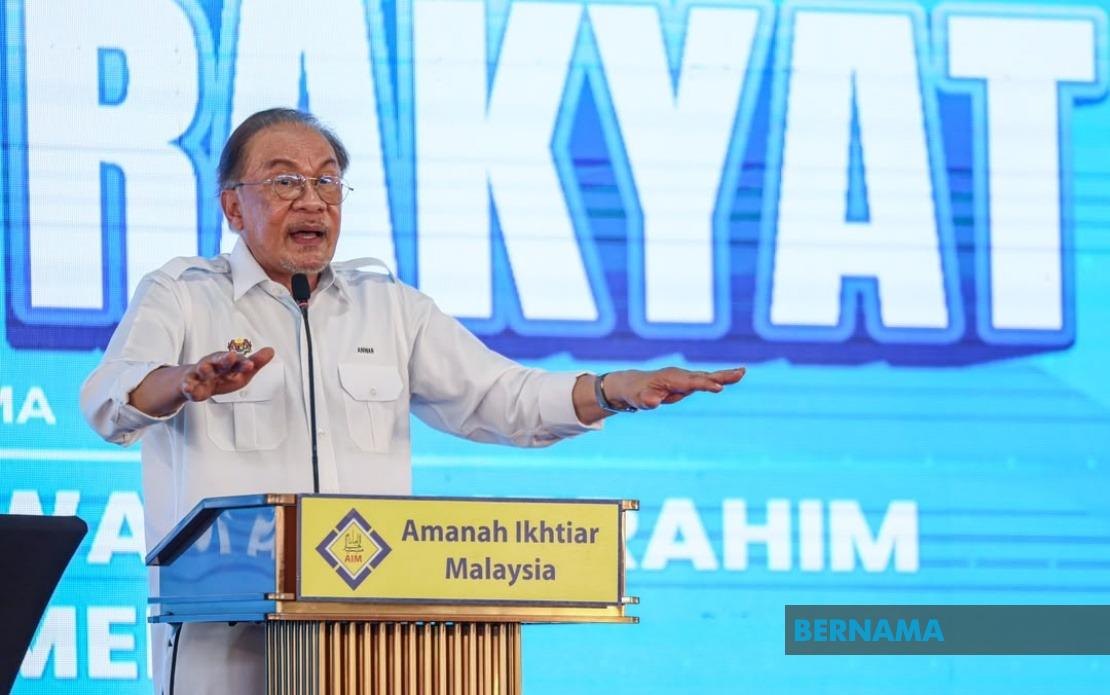
Prime Minister Datuk Seri Anwar Ibrahim has attributed the political opposition he faces to the MADANI Government's resolute anti-corruption agenda, suggesting that parties threatened by his administration's integrity framework are banding together in a coordinated challenge. Speaking at a campaign event in Batu Pahat for the Johor state election, the Pakatan Harapan chairman contended that his government's strict approach toward officials who misappropriate public resources or exploit their positions has generated widespread discomfort among establishment figures accustomed to operating without oversight.
Anwar's characterisation of the political pressure as a consequence of his administration's ethical stance reflects a broader narrative about governance standards that the federal leadership has sought to advance since taking office. The Prime Minister framed the attacks against him not as legitimate political opposition but rather as defensive reactions from vested interests worried about heightened accountability. His argument carries particular weight in the Malaysian political context, where historical narratives about systemic corruption and power concentration have shaped public discourse and voting behaviour. By positioning his administration as the guardian against such abuses, Anwar attempted to reframe the political conflict as fundamentally about whether Malaysia should tolerate or actively prosecute corruption.
During the campaign rally, Anwar emphasised his personal conduct as evidence of the principles he seeks to institutionalise throughout government. He pointed out that despite numerous official visits to Johor as Prime Minister, he has neither acquired land holdings, secured commercial projects, nor accumulated shareholdings in the state. This invocation of personal propriety serves as a rhetorical contrast to historical precedents of leaders leveraging their positions for material gain, a practice deeply embedded in Malaysia's recent political history. The Prime Minister's insistence on this point suggests that he recognises the salience of integrity concerns among voters and views personal exemplification as crucial to persuading the electorate that systemic change is possible.
Anwar's defence of Pakatan Harapan's governance model included an assertion that the coalition's partnership with the Democratic Action Party has not compromised policies affecting Bumiputera interests or Islamic initiatives. Over his three-and-a-half years in office, he maintained, DAP representatives within the Cabinet have consistently supported measures benefiting Malay communities and Islamic institutions. This point addresses a persistent anxiety among certain voter segments regarding the ideological composition of the coalition, particularly the participation of a secular, non-Bumiputera majority party in a government setting policy for a Muslim-majority nation. By presenting Cabinet voting records as evidence of harmony between partners on sensitive issues, Anwar sought to neutralise a potent source of political vulnerability.
The Prime Minister's campaign rhetoric also tackled the substantive governance gap between the federal government's investment in development projects and the lived experience of ordinary Johoreans. While acknowledging that billions of ringgit have been allocated to major infrastructure and economic initiatives, Anwar highlighted persistent challenges in housing affordability, municipal services, and social safety net provision. This framing assigns responsibility for these failures to the state government rather than the federal administration, strategically positioning Pakatan Harapan as the corrective force that Johor requires. His observation that wealth concentration among a narrow elite persists despite substantial development spending echoes critiques about the distributive outcomes of Malaysia's growth model and resonates with voters experiencing economic anxiety.
Anwar's appeal for Johor voters to elect a state government aligned with the federal administration reflects a structural logic of Malaysian governance where coordination between these levels accelerates implementation of programmes and policy initiatives. The argument that misalignment creates friction and inefficiency carries practical weight, particularly for constituencies where federal funding, infrastructure projects, and welfare benefits depend partly on administrative cooperation. By framing the Johor election as consequential for the broader trajectory of national governance, the Prime Minister elevated the state contest beyond parochial concerns and positioned it within the larger narrative of systemic transformation. This rhetorical strategy aims to mobilise voters who care about federal-level reform and see state elections as mechanisms for consolidating or reversing that agenda.
The campaign event itself demonstrated the mobilisation capacity of Pakatan Harapan in Johor, with the Prime Minister noting the substantial turnout and endurance of supporters despite extreme heat. Anwar's characterisation of the gathering as extraordinary and his contrast with previous campaign experiences served multiple purposes: affirming the enthusiasm and commitment of his political base, suggesting momentum for his coalition ahead of the July 11 polling date, and reinforcing the narrative that his administration commands genuine popular support despite coordinated opposition. Such observations about crowd size and energy, routine elements of political campaigns, carry particular significance in Malaysian contexts where election results remain partially unpredictable and where public displays of support influence voter perceptions of a candidate's viability.
With 172 candidates contesting 56 state seats in the Johor election, the July polling represents a significant test of Pakatan Harapan's appeal in a state that remains strategically important for Malaysia's electoral arithmetic. Early voting was scheduled for July 7, ahead of the main polling date, allowing assessment of turnout patterns and voting intentions. The Johor contest occupies particular significance within the broader federation, given the state's economic weight and historical association with the United Malays National Organisation's political dominance. A strong Pakatan Harapan performance would vindicate the federal coalition's governance model and extend its influence, while disappointing results would provide ammunition to opposition narratives about the fragility of the current administration.
Anwar's framing of his predicament—as a consequence rather than a cause of political conflict—reflects a strategic choice to define the terms of political competition. By attributing opposition to his anti-corruption stance rather than to other dimensions of his leadership or policy choices, the Prime Minister invokes a framework within which his opponents appear to be defending corrupt practices. This rhetorical positioning constrains the space for legitimate criticism and casts dissent as self-interested rather than principled. Whether such messaging persuades undecided voters in Johor or merely energises existing supporters remains uncertain, but the persistent emphasis on integrity and governance standards indicates that Anwar considers these concerns central to his political sustainability and his coalition's electoral prospects.

