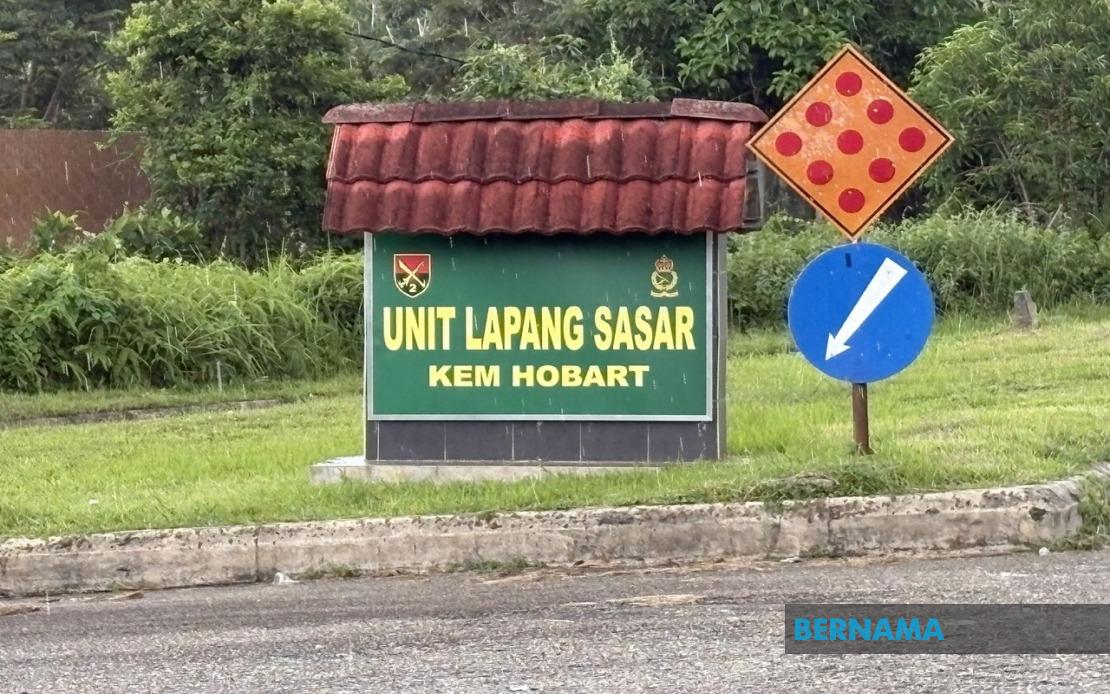
A tragic incident at Hobart Camp in Gurun has left two Malaysian Army personnel dead after an explosion during a routine training exercise, prompting authorities to launch a comprehensive investigation that will rely heavily on accounts from those present at the scene. The blast occurred during a grenade-throwing exercise conducted as part of the Combat Enhancement Training programme involving the First Squadron of the Royal Malaysian Engineers Regiment at approximately 10:57 am, marking a sobering reminder of the inherent risks associated with military weapons training in Malaysia.
Kuala Muda police chief ACP Hanyan Ramlan confirmed that the police force has initiated a sudden death report investigation into the circumstances surrounding the explosion. In remarks made at the Forensic Department of Sultan Abdul Halim Hospital in Sungai Petani, the officer stressed that obtaining cooperation from all relevant parties would be essential to understanding how the incident unfolded and to prevent similar tragedies in the future.
The two soldiers who perished have been identified as Corporal Norazmi Abu Bakar, serving with the Sixth Battalion of the Royal Malay Regiment, and Private Siti Khadijah Sungip, attached to the First Squadron of the Royal Malaysian Engineers Regiment. Both were undergoing intensive instruction in the handling and deployment of heavy weapons as part of their regular military training regime when the accident occurred.
According to the preliminary account provided by the Malaysian Army, the explosion happened whilst personnel were engaged in a grenade-throwing exercise. The two victims sustained severe injuries from the blast and were immediately transported to Sultan Abdul Halim Hospital for emergency medical treatment. Despite the rapid response and medical intervention, both soldiers were pronounced dead before arriving at the facility, indicating the severity of their injuries sustained from the blast.
The subsequent post-mortem examinations were conducted at Sultanah Bahiyah Hospital in Alor Setar, a standard procedure in cases involving sudden deaths. These autopsies will provide crucial medical evidence that may shed light on the exact nature and cause of the fatal injuries, contributing to the police investigation's understanding of the incident.
The witness statement collection process will prove critical to the investigation's success, as those who were physically present during the exercise can provide firsthand accounts of the events leading up to the explosion, the circumstances during which it occurred, and any factors that may have contributed to the tragedy. Police have indicated their commitment to recording comprehensive statements from all individuals who observed the incident, recognising that such testimonies form the foundation of a thorough investigation.
This incident highlights the persistent occupational hazards faced by military personnel throughout Southeast Asia who engage in high-risk training activities involving explosive devices and heavy weaponry. The Malaysian Armed Forces conducts extensive training programmes to prepare personnel for combat scenarios, yet accidents during such exercises, whilst statistically uncommon, remain a sobering reality within military operations across the region.
The sudden death report classification indicates that authorities are treating this as an investigation into unexpected fatalities rather than a criminal matter at this preliminary stage, though the police investigation will determine whether any negligence or procedural breaches may have contributed to the incident. Such investigations typically examine whether safety protocols were properly implemented, whether personnel had received adequate training, and whether equipment was in proper working condition.
The tragedy also raises questions about safety measures and oversight procedures in place during weapons training exercises across Malaysia's military establishments. Hobart Camp, situated in Gurun, serves as a significant training facility for various military units, and the incident will likely prompt a review of protocols and safety standards in force at the installation.
For the families of Corporal Norazmi Abu Bakar and Private Siti Khadijah Sungip, this represents an immense loss. The incident underscores the sacrifices made by military personnel in service to their nation and the dangers inherent in their chosen profession, even during routine training activities conducted under normal circumstances.
The investigation's outcome may have implications beyond this single incident, potentially influencing future training protocols, equipment maintenance procedures, and safety standards across Malaysian military installations. Authorities will likely conduct a detailed examination of whether current procedures adequately protect personnel engaged in grenade-throwing and heavy weapons training exercises.
As the police investigation progresses and witness statements are collected and analysed, greater clarity should emerge regarding the precise sequence of events that led to the explosion. The cooperation of military officials at Hobart Camp and the detailed accounts of those present will be instrumental in establishing a comprehensive understanding of this tragic incident and identifying any systemic issues that might require remedial action to prevent future occurrences.

%22%2F%3E%3C%2Fpattern%3E%3C%2Fdefs%3E%3Crect%20width%3D%22100%25%22%20height%3D%22100%25%22%20fill%3D%22url(%23ph40buhg)%22%2F%3E%3Crect%20width%3D%22100%25%22%20height%3D%22100%25%22%20fill%3D%22url(%23ph40buhp)%22%2F%3E%3Ctext%20x%3D%2250%25%22%20y%3D%2250%25%22%20text-anchor%3D%22middle%22%20dominant-baseline%3D%22central%22%20fill%3D%22rgba(255%2C255%2C255%2C0.95)%22%20font-family%3D%22Georgia%2C%20'Times%20New%20Roman'%2C%20serif%22%20font-weight%3D%22700%22%20font-size%3D%22320%22%20letter-spacing%3D%22-0.02em%22%3EGRS%3C%2Ftext%3E%3C%2Fsvg%3E)