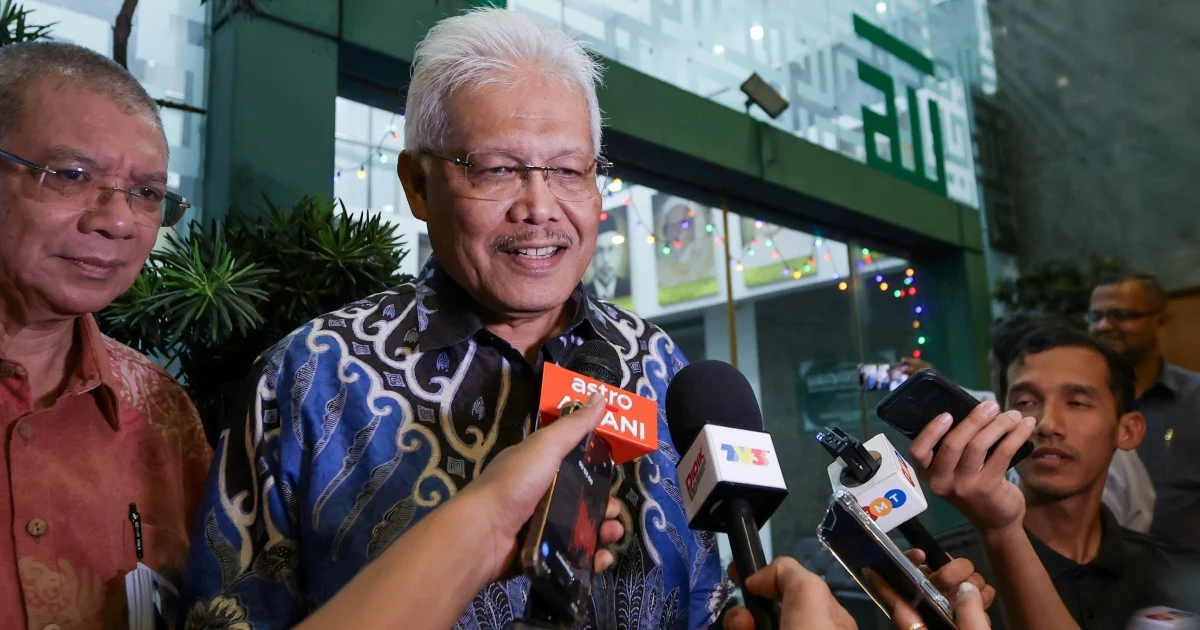
Perikatan Nasional's chief whip, Datuk Seri Takiyuddin Hassan, has submitted formal notification to the office of the Dewan Rakyat Speaker confirming the reappointment of Datuk Seri Hamzah Zainudin as opposition leader. The procedural filing marks an official confirmation of a senior leadership transition within the coalition and establishes the parliamentary hierarchy that will guide PN's activities in the chamber.
The submission represents a standard administrative requirement in Malaysia's parliamentary system, whereby changes in opposition leadership must be documented with the Speaker's office to ensure the Dewan Rakyat maintains accurate records of opposition representation and parliamentary appointments. Such notifications carry procedural weight, as they formally establish who holds authority to speak on behalf of the opposition during parliamentary debates and committee assignments.
Hamzah Zainudin's return to the opposition leadership post underscores his continued influence within Perikatan Nasional, despite the coalition's complex political manoeuvring over recent months. As a veteran politician with substantial parliamentary experience, his reappointment signals PN's confidence in his ability to marshal the coalition's parliamentary strategy and represent their collective interests in the Dewan Rakyat.
The opposition leader's role carries significant responsibilities in Malaysia's Parliament. The position entails coordinating the opposition's response to government policies, leading questioning during question time, engaging in legislative debates, and liaising with the Speaker's office on procedural matters. The office also traditionally commands additional parliamentary resources and speaking privileges that strengthen the opposition's ability to scrutinize government business.
For Perikatan Nasional, formalizing this appointment through official notification demonstrates organisational coherence at a time when Malaysian politics continues to navigate complex coalition arrangements. The coalition, which has oscillated between government and opposition status, now operates from the opposition benches following shifts in parliamentary support. Establishing clear leadership hierarchies helps PN project stability to its members and the electorate.
Hamzah's track record includes substantial experience in opposition and government roles across multiple parliamentary terms. His legislative expertise and parliamentary acumen make him a natural choice for leading opposition business, particularly as PN seeks to maintain its relevance and influence in the lower house during a period when government formation and coalition mathematics dominate political attention.
The formal notification process reflects Malaysia's adherence to parliamentary protocol and constitutional conventions. The Speaker's office requires accurate information about opposition structures to facilitate proper parliamentary administration, from allocating opposition benches to scheduling debates and managing parliamentary questions. Documentation of opposition leadership ensures transparency in parliamentary proceedings and maintains institutional records.
This administrative step occurs against the backdrop of broader discussions about Malaysia's political direction and the role opposition coalitions play in holding government accountable. A well-organised opposition with clear leadership can more effectively utilise parliamentary mechanisms to challenge government policies, propose alternative legislation, and engage constructively in legislative processes.
Hamzah's reappointment may also reflect internal agreement among PN's constituent parties regarding parliamentary strategy. The coalition comprises multiple political entities with sometimes divergent interests, so consensus on senior appointments suggests internal cohesion on major policy directions and tactical approaches to opposition politics.
The opposition leader position carries symbolic weight beyond its administrative functions. Opposition figures typically become faces of alternative governance visions, particularly as parliamentary terms progress and electoral cycles approach. Hamzah's formal reconfirmation strengthens his profile as PN's public representative in parliamentary debates and media engagements relating to government accountability.
For Malaysian and Southeast Asian political observers, clear opposition structures matter for democratic accountability. When opposition coalitions function smoothly with established leadership, they can more effectively perform their constitutional duty of scrutinising executive power and providing legislative oversight. This formal notification ensures Parliament's institutional machinery operates with accurate information about opposition representation.
The timing of this notification occurs as Parliament resumes its various scheduled sessions and committees resume work. Having formally appointed leadership in place allows PN to engage immediately in parliamentary business with clear direction and established authority structures. This administrative clarity facilitates more efficient parliamentary operations and clearer communication channels between opposition and government sides of the chamber.
As Malaysian politics continues evolving, the opposition's organisational strength and leadership clarity contribute to parliamentary effectiveness and democratic health. Hamzah's reappointment, confirmed through proper administrative channels, represents PN's commitment to maintaining institutional coherence while fulfilling its constitutional role in scrutinising government action and representing voters who did not support the current administration.