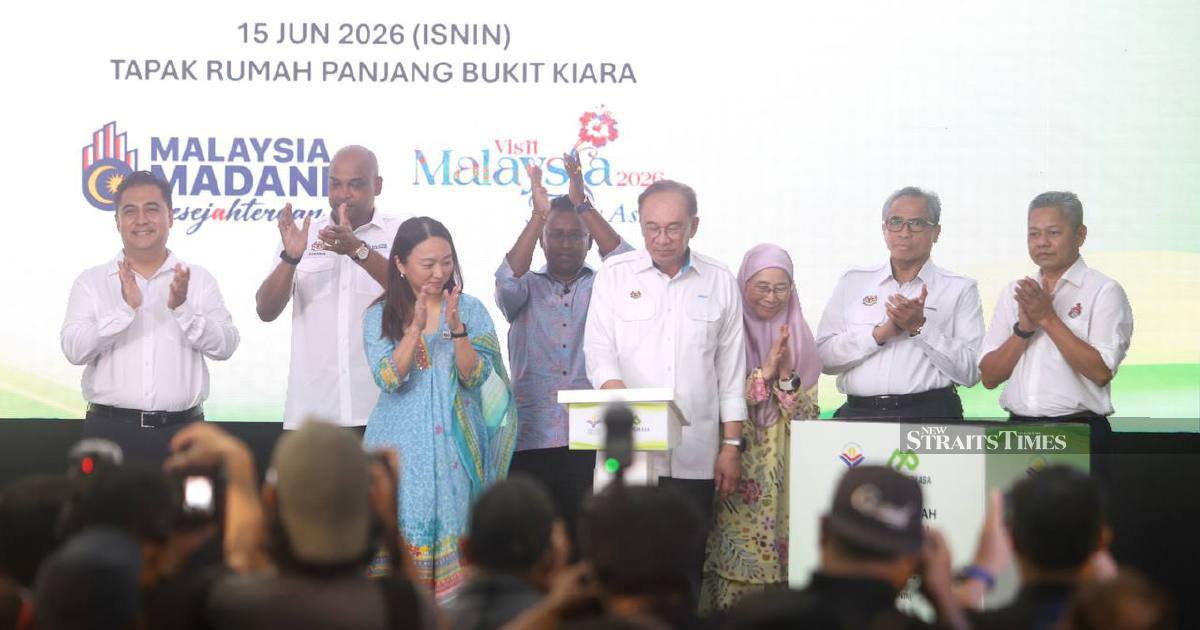
Prime Minister Datuk Seri Anwar Ibrahim has issued a stark warning to Malaysians about the dangers of politically motivated campaigns designed to fracture communities along racial and ethnic lines, emphasising that such tactics ultimately harm ordinary citizens who must live together across diverse neighbourhoods and workplaces. Speaking to the nation, he underscored that the real victims of this destructive political strategy are everyday Malaysians, whose livelihoods, safety, and social cohesion suffer whenever politicians deliberately stoke communal grievances for electoral advantage.
The Prime Minister's intervention reflects growing concerns within Malaysia's political establishment about the persistence of race-based rhetoric in public discourse, particularly as the nation navigates post-pandemic economic recovery and prepares for future electoral cycles. His message carries particular weight given Malaysia's history of managing plural societies with competing ethnic and religious narratives, a balancing act that requires constant vigilance against actors who prioritise short-term political gains over long-term national stability.
Anwar's statement serves as a reminder that Malaysia's stability ultimately depends on citizens rejecting simplistic narratives that pit one community against another. While Malaysia has managed to avoid the kind of sustained communal violence that has erupted in neighbouring nations with similar demographic composition, the underlying tensions remain susceptible to manipulation by politicians seeking to mobilise support through identity-based appeals rather than policy achievements or competent governance.
The timing of this intervention suggests concern about emerging patterns in Malaysian political discourse, where both federal and state-level actors have occasionally resorted to racially charged messaging during campaign periods or when facing political pressure. These strategies often exploit genuine grievances—economic inequality, educational opportunities, religious and cultural recognition—but reframe them as zero-sum ethnic competitions rather than national policy challenges requiring inclusive solutions.
From an economic perspective, racial polarisation carries tangible costs that extend beyond the social fabric. When communities become divided, business confidence deteriorates, foreign investment hesitates, and consumer spending contracts as uncertainty rises. Malaysia's competitive position in Southeast Asia depends on maintaining the institutional stability and social peace that have historically underpinned its status as a regional economic hub. Investors view political instability rooted in communal tension as particularly risky, making inclusive governance not merely a moral imperative but an economic necessity.
Anwar's caution also acknowledges the role of social media in amplifying divisive messaging far beyond what traditional media channels could achieve. Political operatives have become increasingly sophisticated in deploying algorithmically targeted content that reaches specific communities with tailored messages designed to inflame rather than inform. This technological dimension means that divisive campaigns can now operate with unprecedented speed and reach, making counter-messaging and public education campaigns like the Prime Minister's intervention increasingly important.
The practical implications for Malaysian voters are significant. When citizens recognise divisive tactics for what they are—cynical attempts to distract from policy failures, economic mismanagement, or corruption—they become inoculated against them. Conversely, communities that accept race-based framing of political contests tend to experience deteriorating public services, as politicians pivot away from substantive governance toward symbolic politics that require no actual investment or delivery.
For Southeast Asian observers, Malaysia's struggle with managing racial politics offers important lessons. The region contains multiple nations navigating similar plural societies, and the approaches taken in Kuala Lumpur influence thinking across the region. Malaysia's success in periodically reasserting non-communal governance norms demonstrates that race-based politics is not inevitable, even in diverse democracies, though it requires consistent political leadership and an engaged citizenry willing to reward inclusive governance and punish divisive campaigning.
The Prime Minister's intervention also implicitly calls on fellow politicians across the political spectrum to exercise restraint and choose competing on policy competence rather than communal mobilisation. This requires a degree of political maturity and confidence that not all actors possess, particularly those facing electoral vulnerability or seeking to rebuild damaged political brands. Yet his message frames restraint not as weakness but as strength—the capacity to lead without needing to divide.
Looking forward, the effectiveness of Anwar's warning will ultimately depend on whether Malaysian voters internalise and act on the message. Democratic systems cannot function well when citizens consistently vote along rigid ethnic or religious lines, as this transforms majoritarian politics into communal competition where compromise becomes impossible and minority protections depend on goodwill rather than institutional design. Malaysia's constitutional framework presupposes a degree of cross-communal coalition-building that only occurs when voters prioritise performance and inclusion over identity mobilisation.
The challenge for Malaysian democracy in the coming years involves strengthening institutions that reward inclusive governance while creating consequences for divisive politics. This means voters must vote strategically, media outlets must maintain editorial standards that resist simplistic communal narratives, and civil society organisations must continue advocating for shared citizenship rather than merely defended group interests. Anwar's statement suggests that at least portions of Malaysia's political leadership understand these imperatives, even if implementing them remains a generational undertaking.


%22%2F%3E%3C%2Fpattern%3E%3C%2Fdefs%3E%3Crect%20width%3D%22100%25%22%20height%3D%22100%25%22%20fill%3D%22url(%23ph40buhg)%22%2F%3E%3Crect%20width%3D%22100%25%22%20height%3D%22100%25%22%20fill%3D%22url(%23ph40buhp)%22%2F%3E%3Ctext%20x%3D%2250%25%22%20y%3D%2250%25%22%20text-anchor%3D%22middle%22%20dominant-baseline%3D%22central%22%20fill%3D%22rgba(255%2C255%2C255%2C0.95)%22%20font-family%3D%22Georgia%2C%20'Times%20New%20Roman'%2C%20serif%22%20font-weight%3D%22700%22%20font-size%3D%22320%22%20letter-spacing%3D%22-0.02em%22%3EGRS%3C%2Ftext%3E%3C%2Fsvg%3E)