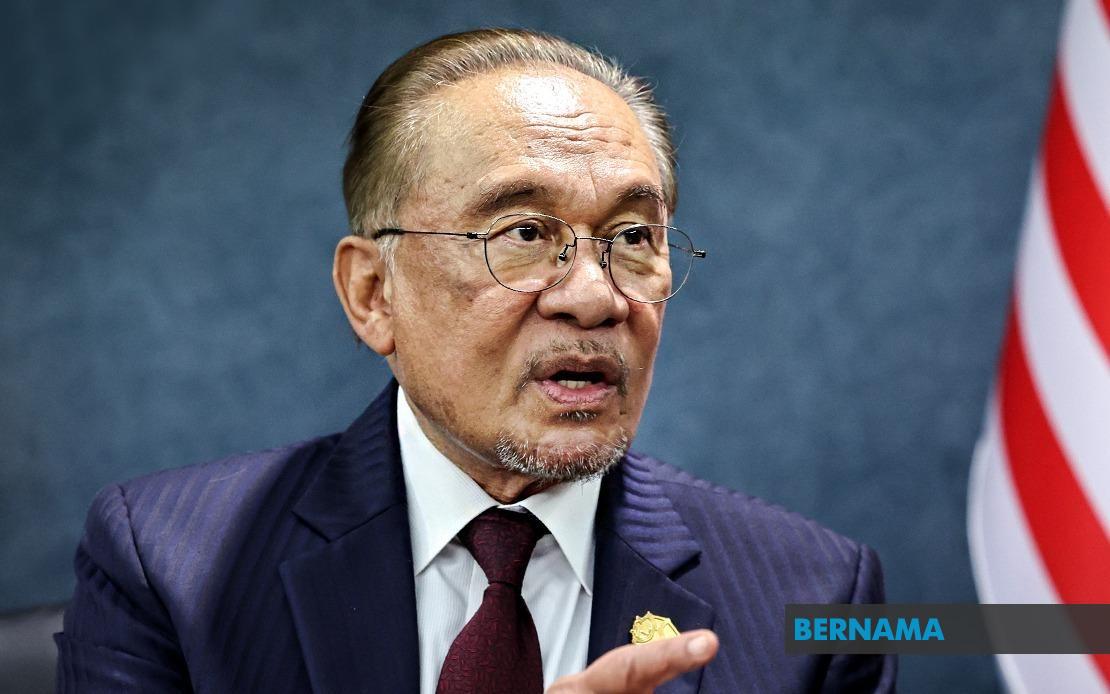
Prime Minister Datuk Seri Anwar Ibrahim is set to deliver a keynote address at the ASEAN-Russia Business Forum in Kazan on June 17, underscoring Malaysia's active engagement in a partnership framework that has grown substantially over three decades. His participation reflects the significance of the bilateral relationship and Malaysia's commitment to deepening ties with Russia across multiple sectors. The forum, held at Kazan IT Park, brings together business leaders and government officials from ASEAN nations and Russia to explore commercial and investment opportunities that could benefit companies across both regions.
The Prime Minister, who concurrently holds the Finance Ministry portfolio, will speak directly to representatives from the private and public sectors attending the event. His welcome at the venue will be extended by Ilya Nachvin, Minister of Digitalisation of Public Administration, Information Technologies and Communications of the Republic of Tatarstan, signalling Russia's emphasis on technological cooperation within this engagement platform. Following the forum proceedings, Anwar will attend a gala dinner at the Tatar State Academic Theater, where the commemorative summit will be formally celebrated, and subsequently participate in a courtesy meeting with Russian President Vladimir Putin. This layered diplomatic schedule demonstrates Malaysia's senior-level commitment to the relationship and the strategic importance placed on direct engagement with Moscow's leadership.
Kazan's selection as the host city carries particular symbolism for ASEAN-Russia cooperation. Situated approximately 800 kilometres east of Moscow at the junction of the Volga and Kazanka rivers, this major city of 1.3 million residents occupies a unique cultural position within Russia, often designated as the country's third capital after Moscow and St Petersburg. With a documented history exceeding one thousand years, Kazan has emerged as a pivotal centre of Islamic culture and heritage in Russia, earning recognition as a bridge between Russian and Muslim-majority civilisations. This cultural crossroads identity makes the venue conceptually apt for discussions between ASEAN, a grouping with significant Muslim populations, and Russia, whose leadership increasingly seeks to balance relations across diverse geopolitical constituencies.
The 2024 summit represents a milestone moment for both parties, coinciding with the 35th anniversary of ASEAN-Russia dialogue relations. The partnership formally began in 1991 when Moscow first engaged ASEAN as a dialogue partner, a status that was formalized into a full Dialogue Partnership in 1996. The relationship reached an inflection point in 2018 with its elevation to a Strategic Partnership, cementing both sides' determination to expand collaboration across political and security matters, economic integration, and socio-cultural exchanges. This historical progression illustrates how bilateral ties have matured from initial post-Cold War diplomatic exploration into a substantive partnership with institutional depth and mutual strategic interest.
From a Malaysian perspective, the economic dimension of ASEAN-Russia engagement carries tangible importance. Russia ranked as Malaysia's ninth-largest trading partner among European nations in 2025, with bilateral commerce totalling RM8.72 billion (USD2.04 billion). This trade relationship reflects complementary economic profiles, with Malaysia exporting electrical and electronic goods, machinery, equipment components, and processed food products to Russian markets. Conversely, Malaysia imports petroleum products, minerals, chemicals, and chemical-based commodities from Russia, illustrating how resource interdependencies form the foundation of mutual commercial benefit. For Malaysian exporters, Russia's vast domestic market and strategic position across European and Asian economic zones present sustained opportunities for growth, particularly as geopolitical realignments create alternative supply chain routes.
Broader ASEAN-Russia trade performance in 2024 reached USD18.1 billion, demonstrating the substantial aggregate value of commerce flowing between the ten-member regional grouping and Moscow. However, Russian foreign direct investment into ASEAN remains proportionally modest at USD92.97 million (RM367.90 million), suggesting significant untapped potential for capital flows and deeper economic integration. This gap between trade volumes and investment figures indicates an opportunity space where deliberate policy coordination and business-to-business engagement forums, such as the one Anwar is addressing in Kazan, can catalyse greater capital commitment from Russian enterprises into ASEAN markets. For Malaysian policymakers and business communities, identifying sectors where Russian investment could be strategically directed—whether in technology, energy, or infrastructure—constitutes a practical outcome of high-level diplomatic engagement.
The timing of this commemorative summit reflects shifting geopolitical dynamics within which both ASEAN and Russia find themselves operating. ASEAN's fundamental commitment to non-alignment and strategic autonomy means that maintaining substantive engagement with multiple major powers, including Russia, remains integral to the grouping's balancing strategy in an increasingly multipolar global order. For Malaysia specifically, which holds nuanced regional positions and maintains diverse international partnerships, the Kazan forum represents an opportunity to articulate its economic and political interests while demonstrating that ASEAN's Russia engagement remains substantive despite global tensions elsewhere. The forum platform itself, focused on business and investment rather than purely geopolitical topics, allows both sides to emphasise economic pragmatism and commercial opportunity.
Anwar's participation carries added significance given his dual role as Prime Minister and Finance Minister, positioning him as uniquely capable of addressing both political-strategic and economic dimensions of the relationship. His keynote at the business forum will likely emphasize Malaysia's openness to Russian investment in emerging sectors, potential collaboration in digital economy expansion—signalled by the IT Park venue—and maintenance of stable commercial relations regardless of broader international tensions. The courtesy call with President Putin, meanwhile, signals respect for protocol and provides opportunity for direct communication on bilateral issues of mutual concern. Such high-level meetings, while often ceremonial in appearance, provide channels for clarifying positions and identifying areas where cooperative efforts might be expanded.
Looking ahead, the business forum outcomes may include announcements regarding specific investment projects, sectoral cooperation frameworks, or enhanced trade facilitation mechanisms between Malaysian companies and Russian counterparts. Kazan's positioning as a regional innovation hub, particularly in information technology and digital services, aligns with Malaysia's aspirations to position itself as a Southeast Asian technology leader. Potential collaboration between Malaysian and Russian technology firms, facilitated through diplomatic channels and formal summit processes, could generate synergies benefiting companies in both nations. Similarly, opportunities exist for enhanced cooperation in petrochemicals, renewable energy, and manufacturing sectors where both nations possess complementary capabilities.
The ASEAN-Russia Strategic Partnership, while less visible in global discourse than other regional alignments, constitutes an important element of Southeast Asia's diversified diplomacy. For Malaysia, engagement with Russia through forums like the Kazan business summit reinforces the principle that strategic autonomy requires maintaining multifaceted international relationships. Neither exclusive alignment with Western powers nor wholesale reorientation toward Beijing characterises Malaysian policy; rather, pragmatic engagement with all major powers—including Russia—reflects the nation's commitment to maximizing options and safeguarding economic interests. The commemorative summit, occurring amid evolving global geopolitical configurations, demonstrates ASEAN's capacity to sustain substantive partnerships across traditional dividing lines, a capability that enhances regional stability and Malaysian interests alike.

%22%2F%3E%3C%2Fpattern%3E%3C%2Fdefs%3E%3Crect%20width%3D%22100%25%22%20height%3D%22100%25%22%20fill%3D%22url(%23ph40buhg)%22%2F%3E%3Crect%20width%3D%22100%25%22%20height%3D%22100%25%22%20fill%3D%22url(%23ph40buhp)%22%2F%3E%3Ctext%20x%3D%2250%25%22%20y%3D%2250%25%22%20text-anchor%3D%22middle%22%20dominant-baseline%3D%22central%22%20fill%3D%22rgba(255%2C255%2C255%2C0.95)%22%20font-family%3D%22Georgia%2C%20'Times%20New%20Roman'%2C%20serif%22%20font-weight%3D%22700%22%20font-size%3D%22320%22%20letter-spacing%3D%22-0.02em%22%3EGRS%3C%2Ftext%3E%3C%2Fsvg%3E)