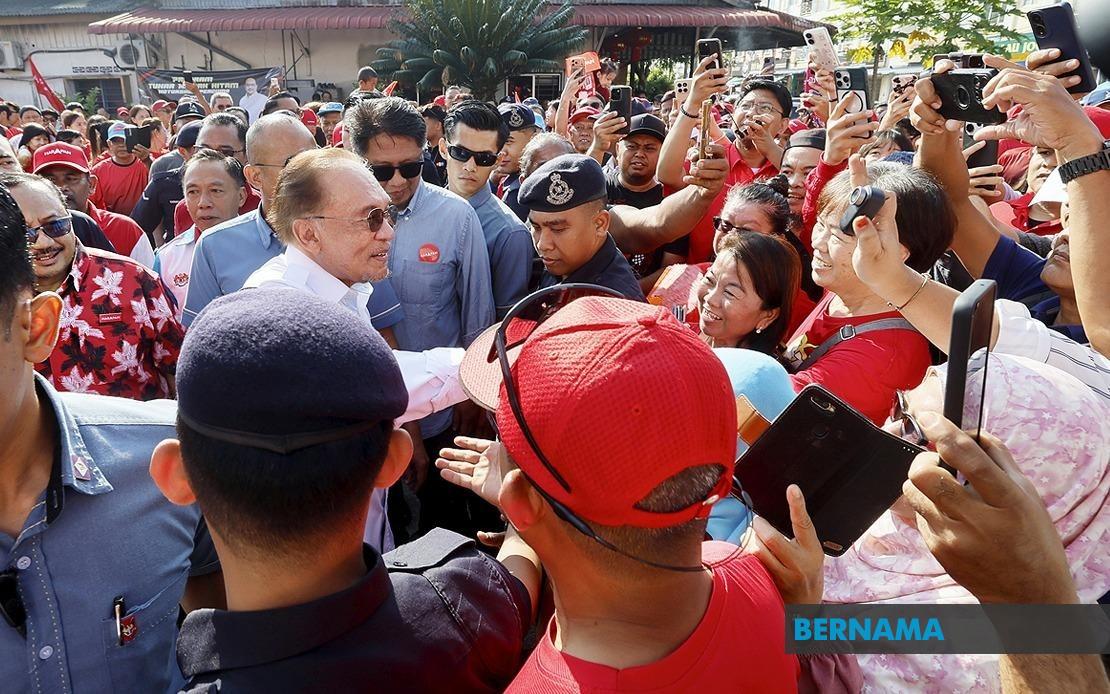
Prime Minister Datuk Seri Anwar Ibrahim took time out of his schedule on Tuesday to reconnect with an elderly couple whose determination to meet him had captured public attention. Abdul Razak Pelangga, 86, and his wife Jamilah Samsudin, 64, became the focus of the encounter while Anwar attended the "Yok! Meriahkan Johor! Undi Harapan" campaign programme in Senggarang, a key event in the lead-up to Johor's state elections.
The couple's story had gained significant traction online after their initial meeting during the Prime Minister's breakfast stop in the same town the previous Sunday. What made their encounter memorable was the lengths they had gone to achieve it—Abdul Razak had personally pedalled a trishaw for nearly one kilometre, a remarkable feat for someone in his ninth decade. The journey was undertaken to honour his wife's wish to meet the nation's leader, a detail that resonated with many Malaysians who saw it as a touching display of both spousal devotion and civic engagement.
During their formal meeting at the campaign event, Anwar engaged warmly with the couple in a moment that conveyed both genuine affection and political awareness. The Prime Minister exchanged light-hearted banter with Abdul Razak, playfully remarking on the octogenarian's physical prowess in pedalling the trishaw—a comment that drew smiles and demonstrated Anwar's ability to connect with constituents on a personal level. He also expressed his gratitude to both Abdul Razak and Jamilah for their steadfast support, acknowledging what their gesture represented beyond the symbolic value.
The event in Senggarang served as a microcosm of Pakatan Harapan's campaign strategy in Johor. Joining the Prime Minister was Datuk Fahmi Fadzil, the Communications Minister and PH Communications director, who helped coordinate the programme. The coalition had fielded three candidates for the state election in surrounding constituencies: Onn Abu Bakar standing in Senggarang itself, Mohd Khuzzan Abu Bakar representing Semerah, and Felicia Poh Rui Ling contesting the Penggaram seat. This concentration of party machinery and candidate presence underscores the strategic importance Pakatan Harapan has assigned to the Johor contest.
The timing of the reunion carried electoral significance. Johor's 16th state election was scheduled for the following Saturday, with early voting having already concluded the previous Tuesday. In the final days before polling, such human-interest moments serve multiple purposes for a political campaign: they generate organic media coverage, demonstrate accessibility and empathy on the part of the leadership, and reinforce the narrative that the coalition values ordinary citizens. The story of Abdul Razak's trishaw journey had already achieved viral status on social media, giving the campaign event additional reach and emotional resonance.
For Malaysian observers, particularly those in Johor, the encounter illustrated broader themes about political engagement in the country. The willingness of elderly citizens to undertake physical challenges to participate in the democratic process speaks to a level of civic consciousness that transcends age and physical capacity. Conversely, the Prime Minister's readiness to acknowledge and honour such commitment—rather than treating it as merely a photo opportunity—reflects an understanding that legitimacy in democratic politics stems partly from recognising the sacrifices and convictions of voters.
The Johor state election represented a significant political test for Pakatan Harapan at the state level. The coalition had made substantial efforts to campaign across the state, with senior leadership making multiple appearances and the fielding of competitive candidates across constituencies. Events like the one in Senggarang, blending grassroots political activity with human connection, form a crucial part of modern Malaysian campaign strategy. They allow parties to reach beyond traditional media and connect directly with potential voters through shared moments of warmth and authenticity.
Abdul Razak and Jamilah's story also resonates within the broader context of Malaysian society's respect for perseverance and familial bonds. Their trishaw journey was not a calculated media stunt but rather an organic expression of desire and determination. That it captured public imagination and attracted the Prime Minister's personal attention speaks to how authenticity and genuine human interest can break through the noise of political campaigning. In an era where political discourse is often fractious and polarised, such moments offer a respite and reminder of shared values.
The couple's experience represents one of countless interactions that occur during election campaigns, yet their story gained prominence precisely because it defied the transactional nature of typical political engagement. Rather than a politician visiting a constituency to deliver promises or make announcements, this was a citizen making extraordinary effort to express respect and support. The Prime Minister's response—taking time to meet them again, engaging warmly, and expressing gratitude—validated that effort and sent a message about how leadership ought to acknowledge the commitment of its supporters.
As Johor voters prepared to cast their ballots in the Saturday election, stories like that of Abdul Razak and Jamilah would likely influence perceptions of the competing coalitions. Beyond policy platforms and campaign messaging, electoral outcomes often hinge on the intangible sense of connection voters feel toward their leaders and parties. The reunion between the Prime Minister and the elderly couple, broadcast across social media and news platforms, contributed to that crucial dimension of campaigning—the human element that transforms politics from abstract ideology into lived experience and personal relationship.

