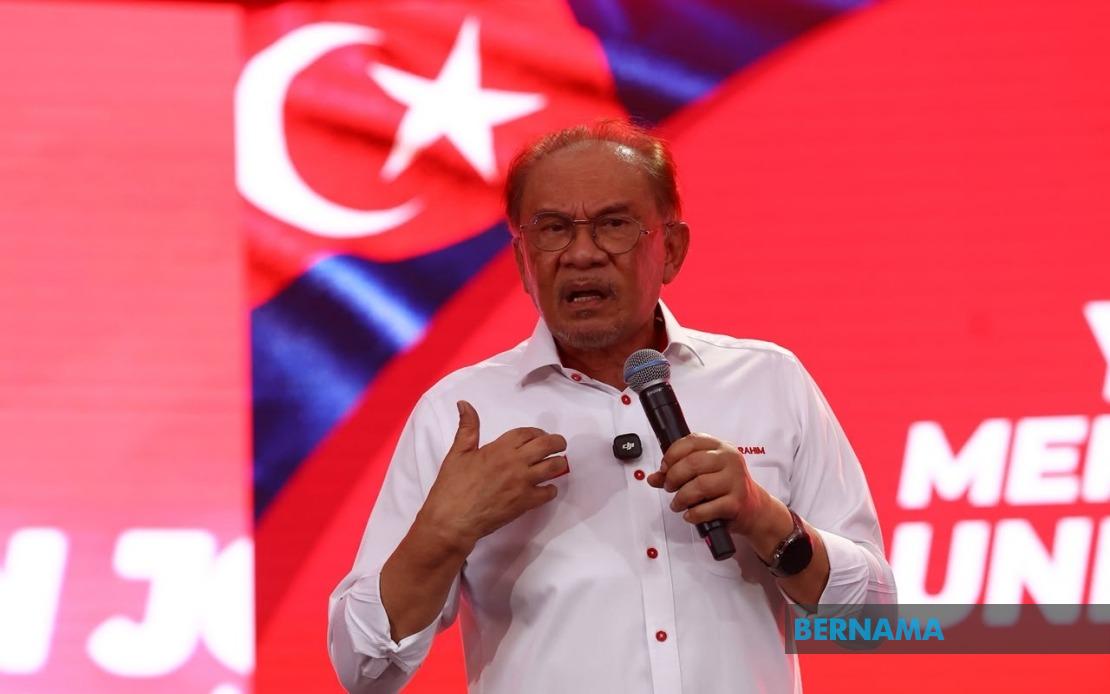
Prime Minister Datuk Seri Anwar Ibrahim has categorically denied social media allegations suggesting he acquired a new BMW vehicle for private purposes, insisting that the vehicle in question is an older asset. Speaking during a campaign event in Senggarang, Batu Pahat on July 9, the premier dismissed what he characterised as deliberate misinformation, questioning the motivation behind spreading such claims while he champions causes benefiting lower-income Malaysians.
The controversy stems from circulating online rumours questioning the status of vehicles within the Prime Minister's fleet. Rather than allowing the narrative to develop unchecked, Anwar chose to address the matter directly at a public gathering held in conjunction with the 16th Johor state election campaign. His intervention underscores the sensitivity surrounding executive perquisites in contemporary Malaysian politics, particularly given the administration's stated commitment to transparency and fiscal responsibility.
Anwar seized the opportunity to draw a distinction between personal ownership and official government assets. He emphasised that the Mercedes-Benz he currently operates was granted by His Majesty Sultan Ibrahim, King of Malaysia, and has been formally registered under the institutional auspices of the Prime Minister's Department rather than held in his personal name. This distinction carries both legal and symbolic weight, positioning the vehicle as state property managed for official duties rather than a benefit accruing to the individual.
The Prime Minister's assertion reflects broader efforts by his administration to project an image of restraint and ethical governance. By contrasting his approach with what he characterised as the practices of predecessors who allegedly misappropriated public resources, Anwar attempted to reinforce his administration's differentiation from its predecessors. The comment, delivered during an event designed to mobilise voter support, doubled as a political statement about values and institutional probity.
Official clarification arrived through the Prime Minister's Department and the Ceremonial and International Conference Secretariat Division, which released a statement on Monday confirming that the BMW in question represents an existing government asset rather than a newly procured vehicle. This technical distinction proves crucial, as new acquisitions would require budgetary approval and scrutiny, whereas existing assets fall within established administrative frameworks. The statement characterised the vehicle as part of BIUPA's managed inventory and designated specifically for official government logistics operations.
The episode reveals the persistent vulnerability of high-ranking officials to speculation regarding government resources, particularly in an era of instant digital communication where allegations circulate rapidly across social platforms. Malaysians remain acutely conscious of perquisite abuse following decades of governance concerns, making any apparent disconnect between leaders' stated values and their material circumstances fertile ground for scepticism. The government's proactive response strategy—combining personal denial with institutional verification—represents an attempt to manage this reputational risk.
Contextually, the timing of these rumours during the Johor state election campaign adds a layer of political calculation. Opposition figures or rival factions may deploy such allegations as campaign tactics to erode public confidence. Conversely, the government's willingness to engage with the matter publicly suggests confidence that clarification would satisfy voters' concerns. The event itself, styled 'Yok! Meriahkan Johor! Undi Harapan,' was designed to energise Pakatan Harapan supporters ahead of Saturday's state-level polling.
Packatan Harapan is contesting all 56 state seats in what represents a significant test of the coalition's electoral strength in Johor. The coalition's leadership presence at the Senggarang event—including Communications Minister Datuk Fahmi Fadzil and local candidates Onn Abu Bakar, Mohd Khuzzan Abu Bakar, and Felicia Poh Rui Ling—underscored the importance attached to the campaign. Vehicle ownership allegations, however minor in absolute terms, could cumulatively affect voter perceptions of leadership credibility.
For Malaysian voters and regional observers, the episode illustrates how contemporary political discourse intertwines governance substance with perception management. Even when allegations lack substantive foundation, their circulation and the need for formal rebuttal consume political energy and shape narratives. The Prime Minister's willingness to address the matter directly, rather than delegating the response entirely to institutional channels, reflects recognition that personal assurances carry weight that official statements alone cannot fully replicate.
The broader significance of this incident extends beyond the specific vehicles involved. It demonstrates the heightened scrutiny surrounding executive decision-making and resource deployment under the current administration. Whether such scrutiny reflects genuine public interest in accountability or represents routine political sniping remains subject to interpretation. What appears clear is that allegations regarding leadership materialism resonate powerfully in Malaysian political culture, particularly when leaders have positioned themselves as advocates for inclusive development and equitable resource distribution.

