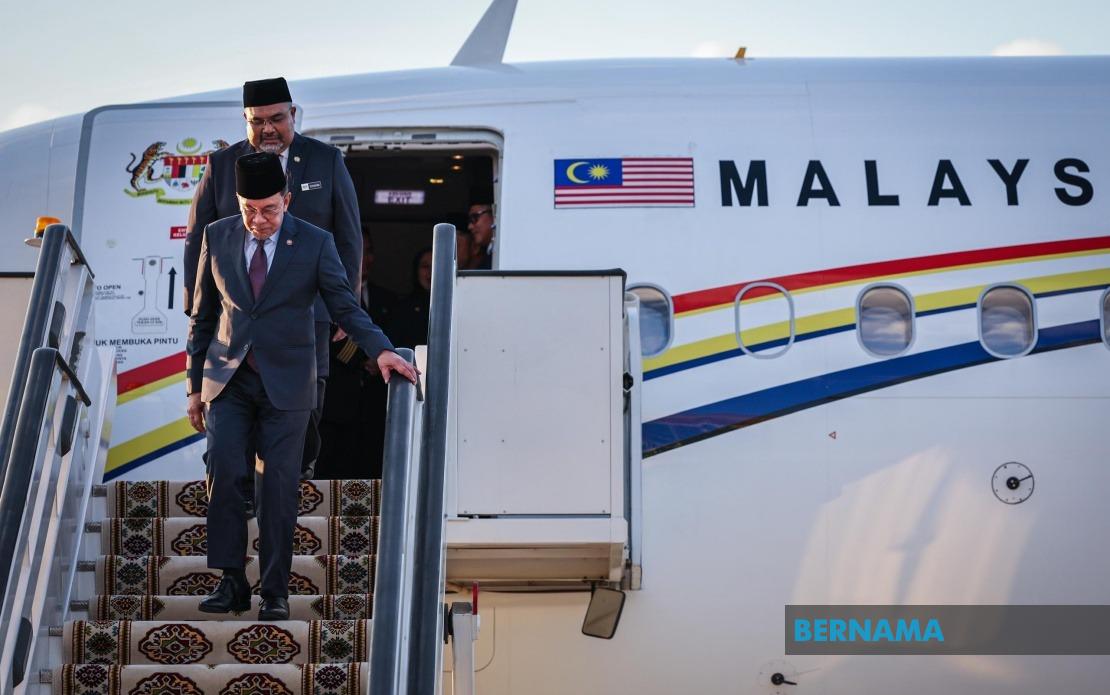
Prime Minister Datuk Seri Anwar Ibrahim touched down in Ashgabat on the evening of June 18, completing the second leg of his Central Asian itinerary after departing Kazan, Republic of Tatarstan. The aircraft bearing Malaysia's top political leader arrived at Ashgabat International Airport at 8 pm local time, with the formal two-day official visit scheduled to run through June 19. Anwar's journey to the Turkmen capital, situated in one of the world's most strategically important hydrocarbon-rich regions, underscores Malaysia's deliberate pivot towards strengthening ties with Central Asian economies and positioning itself as a key partner beyond its traditional Southeast Asian sphere.
The delegation accompanying the prime minister reflects the multifaceted nature of the visit. Datuk Seri Johari Abdul Ghani, who oversees Malaysia's crucial investment, trade and industrial portfolios, travelled alongside Akmal Nasrullah Mohd Nasir, the Economy Minister, signalling that economic cooperation and commercial opportunities occupy prime focus. Their presence, complemented by senior officials from the Prime Minister's Office and the Foreign Ministry, indicates Kuala Lumpur's intention to explore substantive avenues for collaboration rather than merely conducting ceremonial diplomacy.
Upon arrival, Anwar was welcomed by Malaysia's Ambassador to Turkmenistan Mohd Suhaimi Ahmad Tajuddin, while the Turkmen side was represented by Deputy Chairman of the Cabinet of Ministers for Oil and Gas Guvanch Agajanov. This selection of receiving officials by the host nation reveals Turkmenistan's recognition of Malaysia's economic interests, particularly its significant energy sector footprint in the country. The arrangement hints that discussions will centre substantially on hydrocarbons, investment frameworks, and bilateral commercial development.
The timing and nature of this visit carry considerable diplomatic weight. Organised at the invitation of Turkmenistan President Serdar Berdimuhamedov, it functions as reciprocal diplomacy, responding to Berdimuhamedov's official visit to Malaysia in December 2024. This marks Anwar's inaugural official visit to Turkmenistan and represents only the fifth occasion a Malaysian prime minister has travelled to the nation. Such relative rarity underscores that this engagement is carefully calibrated, suggesting a turning point in Malaysia-Turkmenistan relations and perhaps a broader strategic recalibration towards Central Asia.
The agenda for June 19 demonstrates the formal gravity of the occasion. A welcoming ceremony hosted by President Berdimuhamedov at the Presidential Palace will set the ceremonial tone, followed by one-on-one bilateral discussions and formal diplomatic talks. The planned signing of a joint statement, alongside the exchange of pre-negotiated agreements and memoranda of understanding, indicates that substantive groundwork has preceded this visit. Rather than representing exploratory discussions, the visit appears designed to formalise commitments and launch new cooperative frameworks that Malaysia and Turkmenistan have jointly developed.
Beyond formal state functions, the itinerary incorporates cultural and community dimensions that reflect Malaysia's approach to regional engagement. Anwar will attend a private dinner with the Malaysian diaspora and Malaysia's allies within Turkmenistan, fostering people-to-people connections. Furthermore, an official luncheon with President Berdimuhamedov and prayers at the Turkmenbashi Ruhy Mosque, locally known as the Gypjak Mosque, allow Anwar to connect with Turkmenistan's Islamic heritage—an important avenue for building bonds within a nation where Islam represents a significant cultural force.
The Malaysia-Turkmenistan Forum, which Anwar will jointly officiate with President Berdimuhamedov at the Chamber of Commerce and Industry of Turkmenistan, offers a platform for private sector engagement. This forum amplifies the visit's commercial significance, enabling Malaysian and Turkmen business figures to forge partnerships and explore joint ventures beyond government-level agreements. For Malaysian companies seeking expansion into Central Asia and enterprises interested in accessing Malaysian markets and expertise, such forums prove invaluable for identifying opportunities.
Economically, Turkmenistan occupies considerable importance within Malaysia's Central Asian strategy. In 2025, the nation ranked as Malaysia's fourth-largest trading partner among Central Asian states, with bilateral trade totalling RM75.80 million. Notably, Malaysian exports dominated this figure, valued at RM75.50 million and demonstrating a robust nine percent year-on-year increase. This asymmetry suggests Malaysia possesses competitive advantages in products and services that Turkmenistan actively seeks, potentially spanning manufacturing, technology, petrochemical products, or professional services.
The most compelling dimension of Malaysia-Turkmenistan economic relations involves Petroliam Nasional Bhd, Malaysia's flagship national oil company. Petronas has established itself as a major investor within Turkmenistan's energy sector, accumulating investments valued at RM52.73 billion since 1996. This represents nearly three decades of sustained commitment and signifies that energy cooperation forms the bedrock of bilateral relations. For Malaysia, Turkmenistan's hydrocarbon wealth and energy infrastructure represent critical long-term investment vehicles; for Turkmenistan, Petronas brings technical expertise, capital, and access to global energy markets.
The broader context positions this visit within Malaysia's emerging strategic diversification. As regional powers jostle for influence across Central Asia—a zone rich in natural resources and positioning itself at the intersection of Asian commerce—Malaysia's engagement through high-level visits and substantial corporate investment projects asserts its relevance. Unlike powers pursuing geopolitical leverage through military or political pressure, Malaysia's approach emphasises commercial partnership and mutual economic benefit, a strategy consonant with its historical diplomatic philosophy.
For Malaysian stakeholders, particularly enterprises in energy, manufacturing, and professional services, this visit signals government commitment to deepening Central Asian markets. Enhanced bilateral frameworks, new memoranda of understanding, and elevated diplomatic standing may facilitate market access and partnership opportunities. The visit also demonstrates Anwar's personal investment in geographic diversification of Malaysia's foreign policy, moving beyond traditional focal points to embrace emerging economic frontiers.
The diplomatic choreography surrounding this visit—from the careful selection of accompanying officials to the structured agenda balancing ceremonial and substantive engagement—reflects mature statecraft. Malaysia enters this relationship not as a supplicant seeking patronage but as a confident economic actor with valuable contributions to offer. As the visit concludes with Anwar's press conference with Malaysian media, observers will scrutinise announced agreements and frameworks to gauge concrete outcomes and their implications for Malaysian businesses and strategic positioning within Central Asia.

%22%2F%3E%3C%2Fpattern%3E%3C%2Fdefs%3E%3Crect%20width%3D%22100%25%22%20height%3D%22100%25%22%20fill%3D%22url(%23ph40buhg)%22%2F%3E%3Crect%20width%3D%22100%25%22%20height%3D%22100%25%22%20fill%3D%22url(%23ph40buhp)%22%2F%3E%3Ctext%20x%3D%2250%25%22%20y%3D%2250%25%22%20text-anchor%3D%22middle%22%20dominant-baseline%3D%22central%22%20fill%3D%22rgba(255%2C255%2C255%2C0.95)%22%20font-family%3D%22Georgia%2C%20'Times%20New%20Roman'%2C%20serif%22%20font-weight%3D%22700%22%20font-size%3D%22320%22%20letter-spacing%3D%22-0.02em%22%3EGRS%3C%2Ftext%3E%3C%2Fsvg%3E)