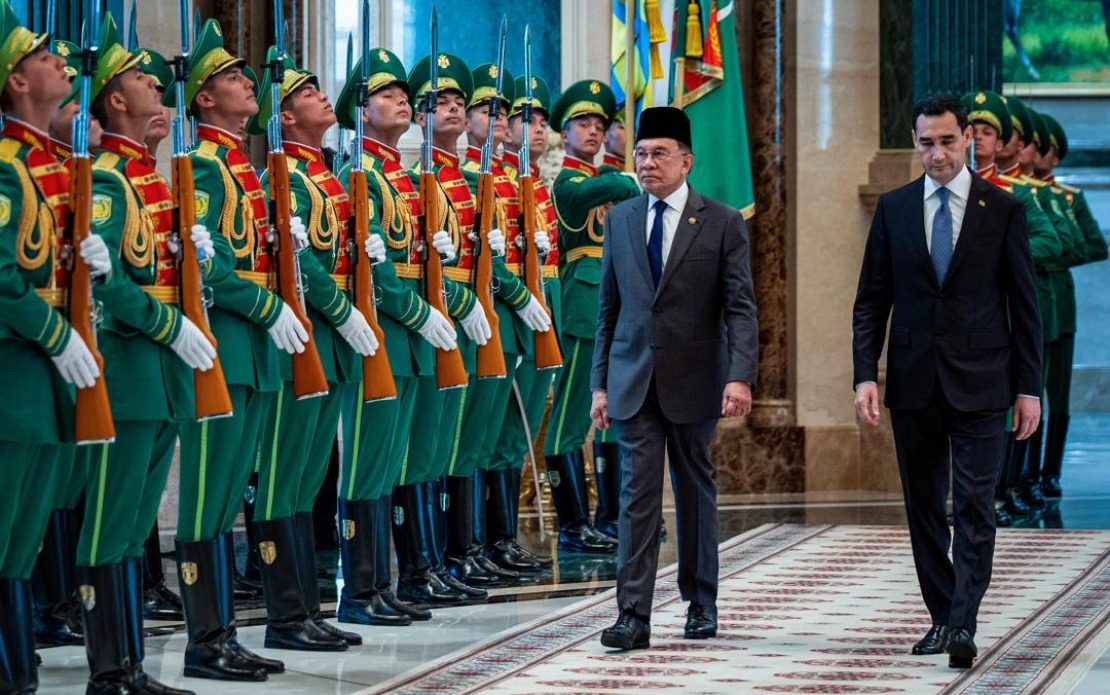
Prime Minister Datuk Seri Anwar Ibrahim stepped into a new chapter of Malaysia's diplomatic engagement with Central Asia as he was formally welcomed at the Turkmenistan Presidential Palace in Ashgabat on Thursday. The ceremonial reception, featuring a full guard of honour and the simultaneous playing of both nations' national anthems, underscored the significance Turkmenistan attaches to strengthening ties with Malaysia. This inaugural state visit since Anwar took helm as the country's 10th Prime Minister in November 2022 represents an important milestone in establishing direct high-level relationships between Kuala Lumpur and the oil-rich Central Asian nation.
Turkmenistan President Serdar Berdimuhamedov personally received the Malaysian premier, a gesture that reflects the importance both countries place on bilateral relations. The formal protocol extended to Anwar and his delegation signalled Turkmenistan's intent to deepen partnerships beyond ceremonial courtesy. Following the initial reception formalities, the Prime Minister was introduced to senior cabinet ministers and key government officials, creating immediate platforms for potential future collaboration across multiple sectors. This structured approach to diplomatic engagement demonstrates how Central Asian nations are increasingly prioritising engagement with Southeast Asian counterparts.
The composition of Malaysia's delegation and the carefully orchestrated introduction to Turkmenistan's leadership hierarchy suggest a comprehensive approach to exploring areas of mutual benefit. By presenting his team to President Berdimuhamedov, Anwar positioned Malaysia as a serious partner ready to implement collaborative initiatives across trade, investment, and cultural exchange. The bilateral framework being established during this visit could open pathways for Malaysian businesses seeking to access Central Asian markets and resources.
The subsequent private four-eyed meeting between the two leaders provided space for frank discussions on sensitive matters and strategic priorities that might not be appropriate in larger diplomatic settings. These one-on-one conversations often determine the trajectory of bilateral relationships, as they allow presidents and prime ministers to communicate national interests directly without intermediaries. Following this intimate discussion, the formal bilateral meeting brought together the full delegations to expand conversations into broader policy areas and potential cooperation frameworks.
Turkmenistan's deliberate invitation to Anwar underscores the Central Asian nation's desire to strengthen connections with Southeast Asian economies. As a major energy exporter with significant natural gas reserves, Turkmenistan views diversified partnerships with growing Asian economies as critical to its long-term prosperity and geopolitical positioning. For Malaysia, this engagement opens opportunities to explore energy security arrangements, technology transfer, and investment collaborations with a nation possessing substantial hydrocarbon resources.
The two-day visit commencing from June 18 reflects a substantial commitment from the Malaysian Prime Minister's office, suggesting multiple layers of discussion are planned. Unlike ceremonial visits lasting only hours, a two-day engagement typically encompasses sectoral meetings, institutional visits, and extended bilateral negotiations. This duration provides time for working-level officials from both nations to establish contacts and identify concrete areas for cooperation that can be implemented beyond the visit's conclusion.
For Malaysia and other Southeast Asian nations, engagement with Central Asia has gained strategic importance amid shifting global geopolitical dynamics. Turkmenistan's geographical position, resource wealth, and historical significance along ancient trade routes make it an attractive partner for nations seeking to diversify their international relationships. Anwar's visit represents an intentional move to position Malaysia as an active participant in Central Asian affairs rather than a peripheral observer.
The formal nature of this reception carries implications for Malaysia's broader foreign policy trajectory under Anwar's leadership. His administration has signalled commitment to expanding Malaysia's diplomatic footprint across diverse regions, moving beyond traditional Southeast Asian and East Asian partnerships. This visit to Turkmenistan fits within that larger framework of establishing Malaysia as a pragmatic international actor willing to engage with nations across different regions and development levels.
Bilateral discussions on matters of mutual interest typically encompass trade expansion, investment protection, cultural and educational exchanges, and potential security cooperation. Turkmenistan's energy sector offers particular relevance for Malaysian consideration, given the nation's ongoing needs for diverse energy sources and the expertise Malaysian companies possess in petrochemical and energy management sectors. Educational partnerships and people-to-people exchanges could also feature prominently in bilateral conversations, fostering understanding between populations with limited prior interaction.
The timing of this visit and Anwar's selection of Turkmenistan as a destination reflects strategic thinking about where Malaysia should direct diplomatic resources. Rather than merely maintaining established relationships, the Prime Minister is actively cultivating new partnerships that could yield economic and political dividends. For Malaysian businesses seeking international expansion, such high-level visits often precede concrete trade and investment opportunities as they create governmental frameworks facilitating commercial interactions.
As Malaysia navigates an increasingly complex global environment marked by great power competition and economic interdependence, relationships with energy-rich Central Asian nations gain added importance. Turkmenistan's presence in the region and its resource endowments position it as a valuable partner for Malaysian strategic interests. Anwar's visit sends a message that Malaysia recognises Central Asia's importance and is committed to building substantive relationships rather than maintaining purely ceremonial diplomatic contacts.
The success of this inaugural visit will likely determine the frequency and depth of future Malaysia-Turkmenistan interactions. Positive outcomes from bilateral discussions could establish momentum for implementing collaborative projects, whether in energy, trade, or people-to-people exchanges. For Malaysia's regional standing, demonstrating capacity to effectively engage with diverse global partners enhances the nation's profile as a credible and serious diplomatic actor capable of building relationships across different regions and development contexts.
%22%2F%3E%3C%2Fpattern%3E%3C%2Fdefs%3E%3Crect%20width%3D%22100%25%22%20height%3D%22100%25%22%20fill%3D%22url(%23ph4fp9sg)%22%2F%3E%3Crect%20width%3D%22100%25%22%20height%3D%22100%25%22%20fill%3D%22url(%23ph4fp9sp)%22%2F%3E%3Ctext%20x%3D%2250%25%22%20y%3D%2250%25%22%20text-anchor%3D%22middle%22%20dominant-baseline%3D%22central%22%20fill%3D%22rgba(255%2C255%2C255%2C0.95)%22%20font-family%3D%22Georgia%2C%20'Times%20New%20Roman'%2C%20serif%22%20font-weight%3D%22700%22%20font-size%3D%22320%22%20letter-spacing%3D%22-0.02em%22%3EKTMB%3C%2Ftext%3E%3C%2Fsvg%3E)