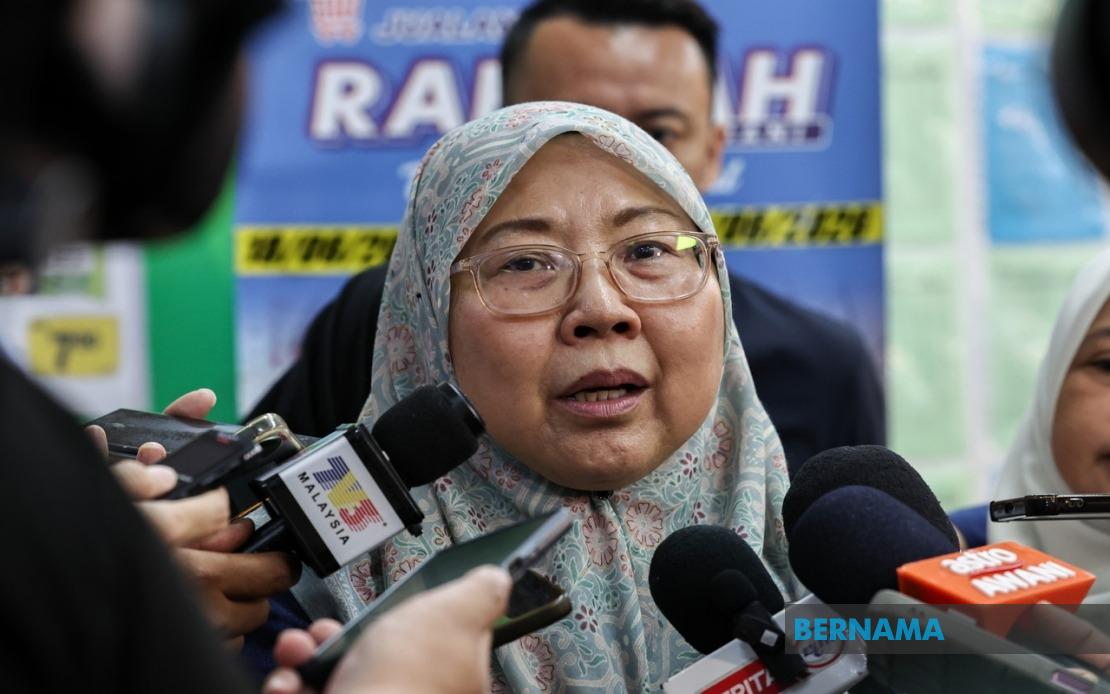
PKR is on the verge of announcing its final roster of candidates for the forthcoming state elections in Johor and Negeri Sembilan, with party secretary-general Datuk Dr Fuziah Salleh confirming that the vetting process is 99 per cent complete. The party intends to stand 20 contenders in Johor's 56-seat assembly and 16 in Negeri Sembilan's 36-seat chamber, according to statements made in Johor Bahru on June 19. Official candidate declarations are anticipated within days, setting the stage for what promises to be a closely watched electoral contest in two strategically important peninsular states.
The composition of PKR's candidate slate reflects a deliberate strategy to balance institutional continuity with renewal. Party leadership has signalled that the final roster will integrate seasoned campaigners alongside newcomers, with particular emphasis on expanding representation among female candidates and younger political aspirants. This approach mirrors broader patterns within opposition coalitions across Southeast Asia, where parties seek to demonstrate both stability and adaptability to shifting voter demographics. The precise breakdown between incumbents and fresh faces will only become clear when the party formally publishes its list, though Fuziah indicated that details on the proportion of new entrants would accompany the official unveiling.
One thorny matter clouding PKR's candidacy preparations centres on the Puteri Wangsa seat in Johor, where overlapping territorial claims threaten coalition unity. Amanah has disputed PKR's assertion that the constituency rightfully belongs to the People's Justice Party, arguing instead that the seat should remain under Amanah's stewardship. The disagreement stems from the 2022 state election, when Puteri Wangsa was loaned to the Malaysian Democratic Alliance Party (MUDA) as part of coalition seat-sharing arrangements. PKR contends this temporary allocation should now revert to it, yet Johor Amanah vice chairman Dr Zuhan Zain has publicly resisted surrendering the seat without additional negotiation.
Rather than impose a unilateral resolution, Fuziah indicated that senior decision-makers within the Pakatan Harapan alliance have taken ownership of resolving this turf dispute. The elevation of the matter to top-level coalition forums reflects the sensitivity surrounding seat allocations, which can significantly impact candidate morale and grassroots enthusiasm. Such disputes, though ostensibly procedural, frequently signal deeper organisational tensions and competing ambitions within multi-party coalitions. In Malaysian politics, where seat distribution often determines electoral momentum, how the Puteri Wangsa question is resolved may serve as a barometer for coalition cohesion heading into polling.
A separate disciplinary matter has also engaged PKR's internal machinery, complicating preparations. Subang Member of Parliament Wong Chen publicly challenged the party to expel him following a formal disciplinary inquiry, a provocation that has forced the party's Disciplinary Board to formally process the case. Such high-profile internal confrontations during campaign preparation cycles can undermine message discipline and distract grassroots activists. Fuziah confirmed that the Board is now examining the Wong Chen matter in detail, though she declined to specify potential timelines or outcomes, leaving considerable ambiguity about whether formal action precedes or follows the electoral contests.
In Johor, the Electoral Commission has scheduled nomination day for June 27, with voting to occur on July 11 following the dissolution of the state assembly on June 1. The 56-member chamber presents a complex battleground where Barisan Nasional currently commands 40 seats, Pakatan Harapan holds 12, Perikatan Nasional controls three, and MUDA represents one member. This configuration means PKR, as the largest component within Pakatan Harapan, faces an uphill struggle to significantly expand opposition influence in a state where the federal-level coalition partner has historically wielded considerable organisational machinery and rural support networks.
Negeri Sembilan presents a somewhat different calculus, with the state assembly comprising 36 seats. Before dissolution on June 5, Pakatan Harapan controlled 17 seats, Barisan Nasional held 14, and Perikatan Nasional occupied five. The relative balance in Negeri Sembilan creates more opportunities for opposition gains compared to Johor's structural disadvantage, though both contests will demand intensive ground operations and voter mobilisation. The Negeri Sembilan election timeline extends through August, with nomination on July 18 and early voting scheduled for July 28.
The sequencing of these elections—Johor in July followed by Negeri Sembilan in August—means PKR and its coalition partners must sustain campaign momentum across two consecutive months, a logistical and financial challenge for parties operating with constrained resources. Success in either state could rejuvenate opposition morale and provide momentum for potential future contests, whilst disappointment might amplify internal coalition frictions or trigger reassessments of electoral strategy. For Malaysian voters, these elections offer an opportunity to evaluate Pakatan Harapan's performance in government and Barisan Nasional's capacity to retain or recover lost ground, particularly regarding economic management and development delivery.
The candidate finalisation process represents a critical juncture in coalition preparations. Beyond the mechanics of vetting and announcement protocols lies the fundamental challenge of fielding candidates capable of articulating party platforms whilst maintaining authentic connections to their constituents. PKR's emphasis on balancing experience with fresh perspectives suggests awareness that electorates increasingly demand representatives responsive to contemporary concerns—urban poverty, education quality, healthcare accessibility, and environmental sustainability—rather than relying solely on traditional patronage networks or partisan loyalties.
As both states prepare for electoral contests, the clarity with which PKR communicates its candidate philosophy and policy priorities will significantly influence voter reception. The simultaneous management of seat disputes, disciplinary matters, and candidate announcements requires carefully calibrated political messaging to avoid appearing internally fractious or leadership-distracted. Southeast Asian voters typically penalise coalitions displaying obvious disunity, particularly when those coalitions position themselves as reformist alternatives to entrenched incumbents. PKR's ability to navigate these parallel challenges whilst projecting organisational competence will substantially determine whether the upcoming elections strengthen or weaken opposition prospects throughout the peninsula.