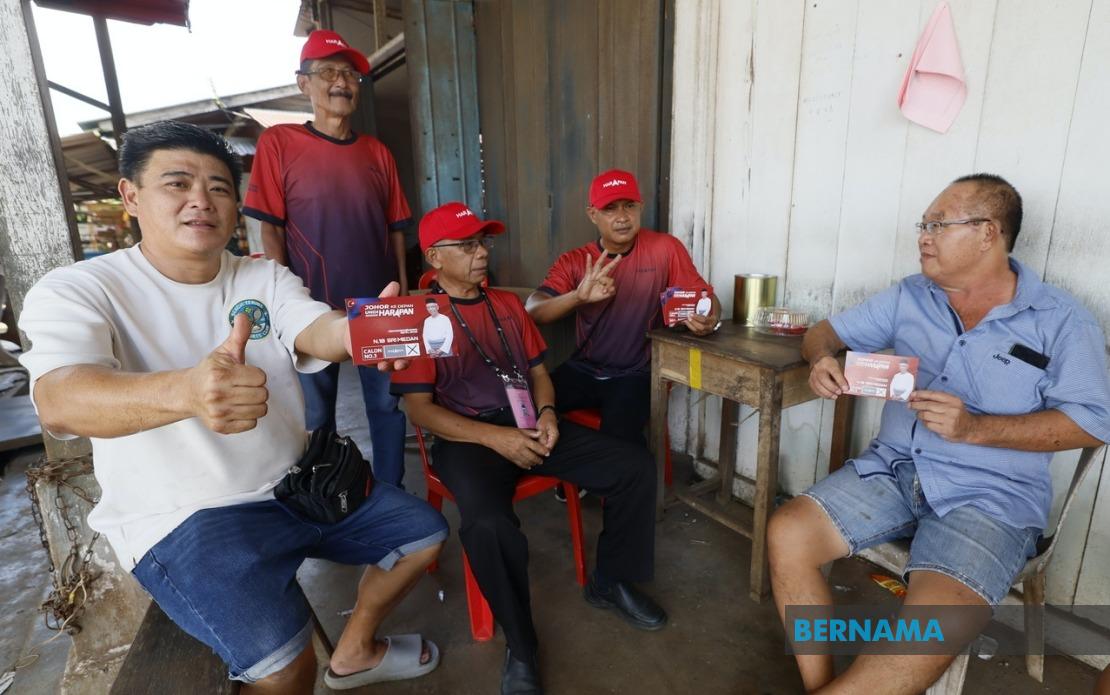
The Pakatan Harapan campaign in the Sri Medan state seat is anchored on direct engagement with voters and a commitment to address longstanding infrastructure challenges that have plagued the constituency. Hishamudin @ Misrin Ishak, the opposition coalition's candidate for the 16th Johor State Election, has positioned himself as a fresh alternative to the Barisan Nasional incumbent in what is traditionally regarded as a government stronghold. Drawing on his background as a mathematics educator and village leader, the candidate known locally as "Cikgu Misrin" has adopted a methodical approach to building community support, prioritizing listening over rhetoric as the campaign enters its closing phase before polling on July 11.
The flooding issue looms largest among Sri Medan voters' grievances, with recurring inundation events continuing to disrupt livelihoods and property despite previous interventions. Hishamudin has signalled this would receive urgent attention, positioning infrastructure resilience as a foundational responsibility rather than a campaign promise. His framing reflects a pragmatic recognition that in constituencies facing regular natural disasters, the capacity to deliver on basic services becomes the primary measure of electoral competence. This approach may resonate particularly with residents who have experienced multiple flood cycles under existing representation.
Beyond immediate crisis management, Hishamudin's platform extends to the spatial imbalance that characterizes many Malaysian constituencies—the disparity between developed urban cores and neglected rural peripheries. His pledge to ensure equitable infrastructure investment across urban, semi-urban, and rural zones within Sri Medan articulates a distributional concern that remains central to Malaysian electoral politics. The candidate has avoided grandiose commitments, instead emphasizing sustainable comfort and practical improvements to facilities and service delivery. This measured tone distinguishes his messaging from the more expansive promises occasionally made by contenders seeking to appear transformative.
Economic empowerment for small and medium enterprises represents another pillar of his campaign. Hishamudin proposes intensifying support mechanisms that help local entrepreneurs expand beyond the confines of local demand, addressing a structural vulnerability that many Malaysian SMEs face in competing regionally. By focusing on market access and export readiness, rather than simple subsidies, his framing suggests an understanding of the need for structural economic competitiveness. This concern aligns with broader Southeast Asian trends toward entrepreneurial ecosystem development and the recognition that SME growth drives inclusive economic opportunity.
Education and skills development emerge as critical priorities for the candidate, particularly in addressing youth migration and economic stagnation. The emphasis on technical and vocational training reflects awareness that traditional academic pathways alone cannot absorb Johor's working-age population, especially in constituencies where manufacturing and service sectors dominate employment. Hishamudin's openness to organizing TVET-related programmes and expanding digital literacy initiatives positions education as a tool for local economic resilience rather than merely academic attainment. This aligns with regional workforce development priorities as Southeast Asian economies face pressure from automation and shifting labour demands.
His background as a village head informs his conceptualization of elected representation as a bridging function between constituents and government machinery. Rather than portraying the state assemblyman's role as one of dramatic policy innovation, Hishamudin frames it as competent administration of welfare services, local development coordination, and constituent grievance resolution. This interpretation reflects the reality that much of a state representative's actual work occurs in the unglamorous domain of permit applications, drainage maintenance, and inter-agency coordination. By emphasizing this aspect openly, he implicitly contrasts himself with candidates who over-promise transformative change.
The campaign's third week has reportedly generated encouraging voter reception despite the seat's historical BN dominance, a signal that conventional assumptions about electoral geography may be shifting. The engagement evident in voter responses suggests at least a willingness among some Sri Medan residents to consider alternatives, particularly if local grievances—particularly flooding—appear unresolved under incumbent administration. Whether this translates into a meaningful challenge to Datuk Zulkurnain Kamisan's incumbency will depend on the degree to which PH's ground organization can convert expressed openness into actual turnout and support.
Hishamudin faces competition from both the BN incumbent and the Perikatan Nasional candidate Ahmad Rosdi Bahari, fragmenting the anti-government vote if sentiment against the current state government runs sufficiently deep. The multi-cornered contest reflects the broader Malaysian electoral landscape in which three-way contests between government, opposition, and Islamist alternatives have become standard. The positioning of each candidate matters acutely; if voters perceive Hishamudin as genuinely committed to local service rather than pursuing higher political office, this could enhance his credibility relative to more nationally oriented candidates.
The July 11 polling date marks the culmination of what appears to be a methodical campaign emphasizing accessibility and local problem-solving over national political narratives. Early voting on July 7 may prove decisive for constituents, particularly among those working outside their home districts. For Hishamudin, the challenge remains translating encouraging walkabout responses into the organizational discipline required to mobilize voters on election day, particularly in the semi-rural sections of Sri Medan where outreach infrastructure may be less developed than in urban areas. The consistency of his messaging around practical governance and accessibility will likely prove more influential than grander promises.

