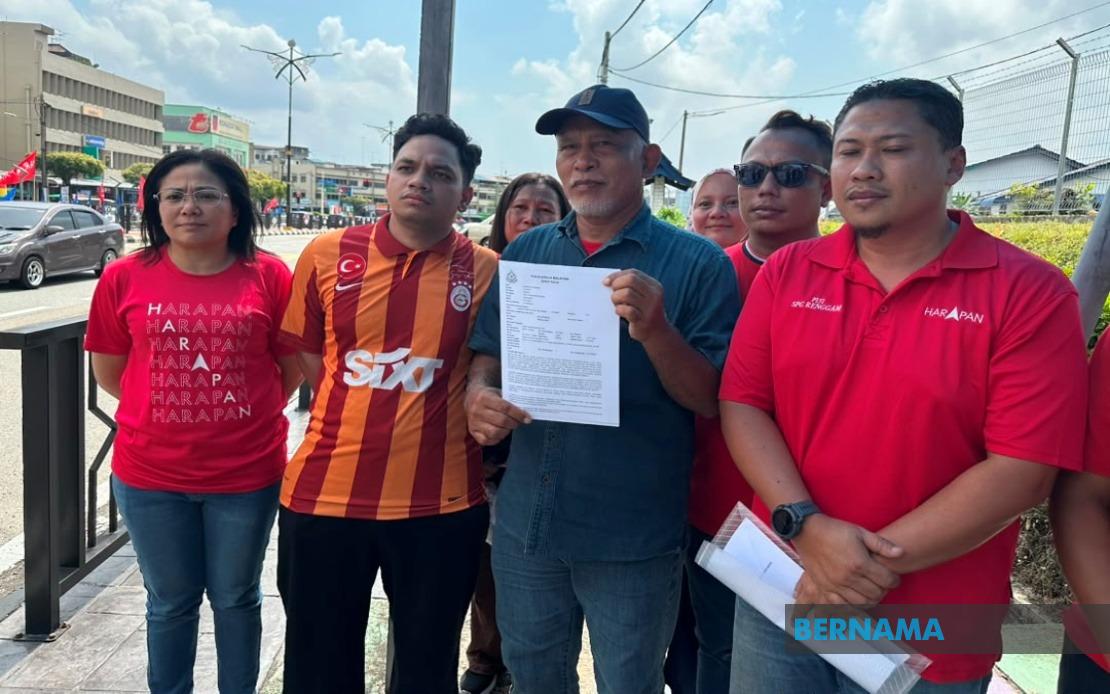
A representative of the Pakatan Harapan candidate contesting the Machap seat has escalated concerns about alleged election misconduct by filing a formal police report against Johor Menteri Besar Datuk Onn Hafiz Ghazi, centring on what he claims was the improper mobilisation of vocational education students for campaign purposes during the ongoing state election cycle. The complaint, lodged at Simpang Renggam district police headquarters, marks a significant escalation in tensions surrounding electoral conduct in the state's competitive political environment.
Khiru Nasir Rohani, also serving as Simpang Renggam Amanah deputy division chief, alleges that a systematic effort was undertaken to encourage students enrolled at technical and vocational institutions across the state to participate in politically oriented programmes designed explicitly to boost electoral support for Barisan Nasional candidates. The alleged campaign activities represent a concerning intersection of education, state resources, and electoral politics—an issue that reverberates beyond immediate local politics given growing concerns across Southeast Asia about the politicisation of educational institutions and youth participation in partisan activities.
According to Khiru Nasir's formal complaint, the alleged misconduct potentially violates multiple provisions of the Election Offences Act 1954, with particular emphasis on sections prohibiting undue influence and the misuse of official position or institutional resources for electoral gain. The specificity of these legal claims suggests a calculated effort to invoke formal regulatory frameworks rather than merely political rhetoric, lending the accusation a quasi-judicial character that may compel investigative bodies to take action regardless of political affiliation.
The focal point of the complaint centres on a programme held in Kluang on July 4, which allegedly served as the venue for open campaign activities ostensibly organised under the guise of vocational education initiatives. The alleged requirement that TVET students attend this event raises questions about institutional autonomy and the distinction between legitimate educational activities and partisan political mobilisation—a distinction increasingly blurred in competitive electoral contexts throughout the region.
This incident reflects broader patterns of election-related disputes in Malaysian state politics, where access to government machinery and institutional resources often becomes a flashpoint for inter-party conflict. The involvement of vocational education students—typically younger, less politically experienced individuals—adds a dimension concerning the targeting of persuadable demographics. For Malaysia's electoral integrity, such allegations carry particular weight given the country's historical concerns about separation between government apparatus and election conduct.
Khiru Nasir explicitly called upon multiple enforcement bodies—the police, Malaysian Anti-Corruption Commission, and Election Commission—to conduct comprehensive investigations. This invocation of multiple agencies simultaneously serves a dual function: it amplifies the seriousness of the allegation while distributing the complaint across institutions whose mandates interconnect but remain distinct, potentially increasing oversight complexity and investigative scrutiny.
The timing of the complaint, lodged mere days before scheduled state election polling, underscores the intensity of competition and the stakes perceived by political actors in Johor, where control of the state government has oscillated between major coalitions. With 172 candidates contesting 56 state seats in an electoral process scheduled for the following Saturday, allegations of campaign misconduct acquire heightened political salience and media resonance.
For Malaysian readers and regional observers, this incident illuminates persistent challenges in preventing the misuse of state machinery and public institutions for electoral purposes. Despite Malaysia's Electoral Commission oversight mechanisms and established legal prohibitions, enforcement remains contested, particularly when allegations involve well-positioned political figures who command significant institutional resources and may shape investigative processes through their political influence.
The allegation also raises questions about institutional accountability within TVET institutions themselves. If educational facilities and student bodies were indeed mobilised for campaign purposes, this suggests either institutional leadership complicity or inadequate internal safeguards against political interference. Strengthening boundaries between educational administration and electoral activity represents a governance imperative that extends beyond the immediate Machap contest.
From a Southeast Asian perspective, Malaysia's experience with alleged campaign misconduct involving educational institutions reflects regional patterns where countries struggle to maintain electoral integrity while governments simultaneously maintain substantial influence over public institutions. Thailand, Indonesia, and the Philippines have all grappled with similar tensions, suggesting structural challenges that transcend national borders and persist despite legal frameworks designed to prevent such conduct.
The complaint's survival through investigative processes will depend substantially on evidence quality and the degree of institutional independence maintained by investigating bodies. Political pressure from both directions—from those supporting and opposing the named Menteri Besar—will inevitably influence investigative momentum and public perception of outcomes.
Ultimately, whether formal investigations proceed, and with what vigour, will signal to future political actors the actual enforcement costs of alleged campaign misconduct, thereby shaping behaviour in subsequent electoral cycles across Malaysian states. This case therefore possesses implications extending well beyond the immediate Johor election, potentially influencing campaign norms and institutional boundaries across the federation.

