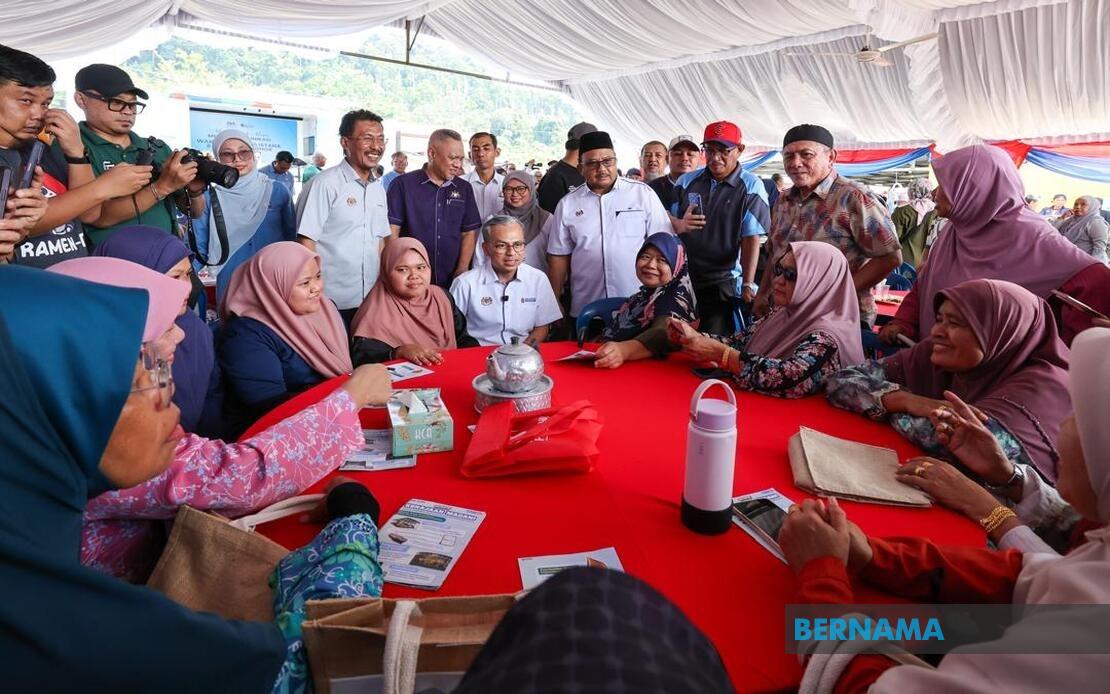
Pakatan Harapan's communications apparatus moved to quash internal and external criticism over the timing of its Johor state election manifesto on Friday, with the coalition's communications director and cabinet minister Datuk Fahmi Fadzil insisting the delayed launch was not a strategic misstep but rather a calculated decision to ensure comprehensive content and ministerial-level approval. Speaking during a grassroots engagement event in Batu Pahat, Fahmi directly rebutted suggestions from former Bangi MP Ong Kian Ming that the manifesto's late introduction had hampered PH's ability to build campaign momentum in what is shaping up as a fiercely competitive contest in one of Malaysia's most politically volatile states.
The timeline of the manifesto release has emerged as a contentious point in Johor's political discourse, with opposition voices contending that PH's delayed unveiling of its vision for the state placed the coalition at a disadvantage relative to Barisan Nasional's better-established narrative architecture. Ong had previously predicted a landslide BN victory, citing multiple PH vulnerabilities including the absence of a publicly declared menteri besar candidate, limited participation by senior party figures in the campaign trail, and the coalition's relatively compressed window to articulate its policy platform to voters. However, Fahmi's characterization of these concerns as divorced from ground reality reflects PH's confidence that the substance and timing of the manifesto announcement were calibrated appropriately within the broader campaign cycle.
The Johor state election, now in full swing with polling day set for July 11 and early voting scheduled for July 7, represents a critical electoral battleground that will test the resilience of both major coalitions in a state that has been historically competitive yet unpredictable. The contest encompasses 172 candidates vying for 56 state assembly seats, making it a substantial undertaking logistically and strategically for all participating parties. PH's approach of consolidating internal agreement on manifesto content before public launch suggests the coalition is prioritizing unified messaging over speed to market, a calculation that reflects the sensitivity of intra-coalition dynamics within Pakatan's multiethnic membership base.
Fahmi's comments also deployed a counter-offensive against Barisan Nasional's current messaging strategy, noting that former UMNO Youth chief Khairy Jamaluddin appeared to be carrying a disproportionate share of BN's campaign burden relative to sitting Johor Menteri Besar Datuk Onn Hafiz Ghazi. This observation carries strategic implications insofar as it suggests potential fractures or hierarchical imbalances within the BN campaign structure, with Khairy's elevated profile potentially signalling either his ambitions within UMNO's internal power dynamics or concerns about the current menteri besar's ability to energize the grassroots base. Fahmi's quip about "copying and pasting" Khairy's campaign intensity to Onn Hafiz was a pointed jab at what PH perceives as unequal burden-sharing within the BN alliance.
When responding to allegations that PH's manifesto was derivative of BN's policy platform, Fahmi pivoted the accusation back toward the ruling coalition's leadership, suggesting that if anything required replication, it was Khairy's demonstrable campaign vigor rather than any substantive policy overlap. This rhetorical maneuver reflects broader campaign dynamics in which both coalitions attempt to seize the narrative regarding authenticity and originality of vision. The suggestion that Khairy could potentially debate Maszlee Malik, PH's candidate for the Puteri Wangsa state seat, adds another layer of competitive intensity to what is increasingly emerging as a multifaceted campaign battle extending beyond traditional party boundaries.
Internal opposition party dynamics have presented additional complications for PH's campaign narrative, particularly surrounding the Democratic Action Party's handling of former Prime Minister Najib Tun Razak's potential pardon. Marina Ibrahim, the former Skudai assemblyman who withdrew from politics, publicly attributed her departure to disillusionment with what she characterized as the "charade" of DAP leadership regarding the pardon issue, and her social media statements have circulated widely across Malaysian political discourse. This development threatened to undermine PH's coalition cohesion messaging and provide ammunition for BN attacks on the integrity of the alliance's internal decision-making processes.
Fahmi's response to concerns about the DAP-related controversy centered on empirical observations from campaign events rather than abstract assurances, claiming that grassroots turnout and support at PH gatherings throughout the campaign period had remained robust and buoyant. This ground-level perspective stands in counterpoint to social media narratives and suggests that the coalition believes public sentiment on the ground has not been substantively swayed by the pardon-related discord. He specifically highlighted Ng Yak Howe, a DAP candidate for the Bentayan state seat, as evidence that the party continued to field credible candidates despite the reputational challenges it faced.
The broader strategic context suggests that PH's campaign in Johor operates against a backdrop of evolving coalition dynamics and complex intra-party tensions that extend far beyond the immediate electoral contest. The coalition's emphasis on internal consensus-building before public announcements, while potentially slowing tactical responsiveness, appears designed to prevent the kind of public ruptures that characterized some previous campaign cycles. For Malaysian voters, particularly in Johor where electoral competition has historically been fierce and outcomes unpredictable, the manifestos and narratives emerging from both coalitions will be scrutinized against the backdrop of these leadership communications and internal dynamics.
The Johor state election ultimately presents a microcosm of larger questions about coalition governance, policy coherence, and the capacity of multiethnic political alliances to maintain unified messaging while accommodating diverse ideological and ethnic constituencies. PH's defense of its manifesto timing, rejection of criticisms regarding campaign architecture, and confrontation of internal party scandals collectively reveal a coalition attempting to project confidence and control during a critical electoral moment. Meanwhile, BN's reliance on high-profile personalities like Khairy to supplement the current menteri besar's campaign presence suggests possible underlying concerns about the grassroots mobilization capacity of the current state government heading into what could be a closely contested election.
As Johor voters prepare for the July 11 polling day, the manifestos and campaign narratives articulated by both coalitions will be tested against the lived realities of voters who have experienced both PH and BN governance. The coalition's investment in comprehensive manifesto development and top-level endorsement processes reflects a calculation that substance and unity matter more than speed to market in securing electoral support. Whether this strategic choice yields the anticipated electoral dividends for Pakatan Harapan will become apparent as the campaign enters its final intensive week and voters render their verdicts on which coalition deserves stewardship of Malaysia's second-largest state.

