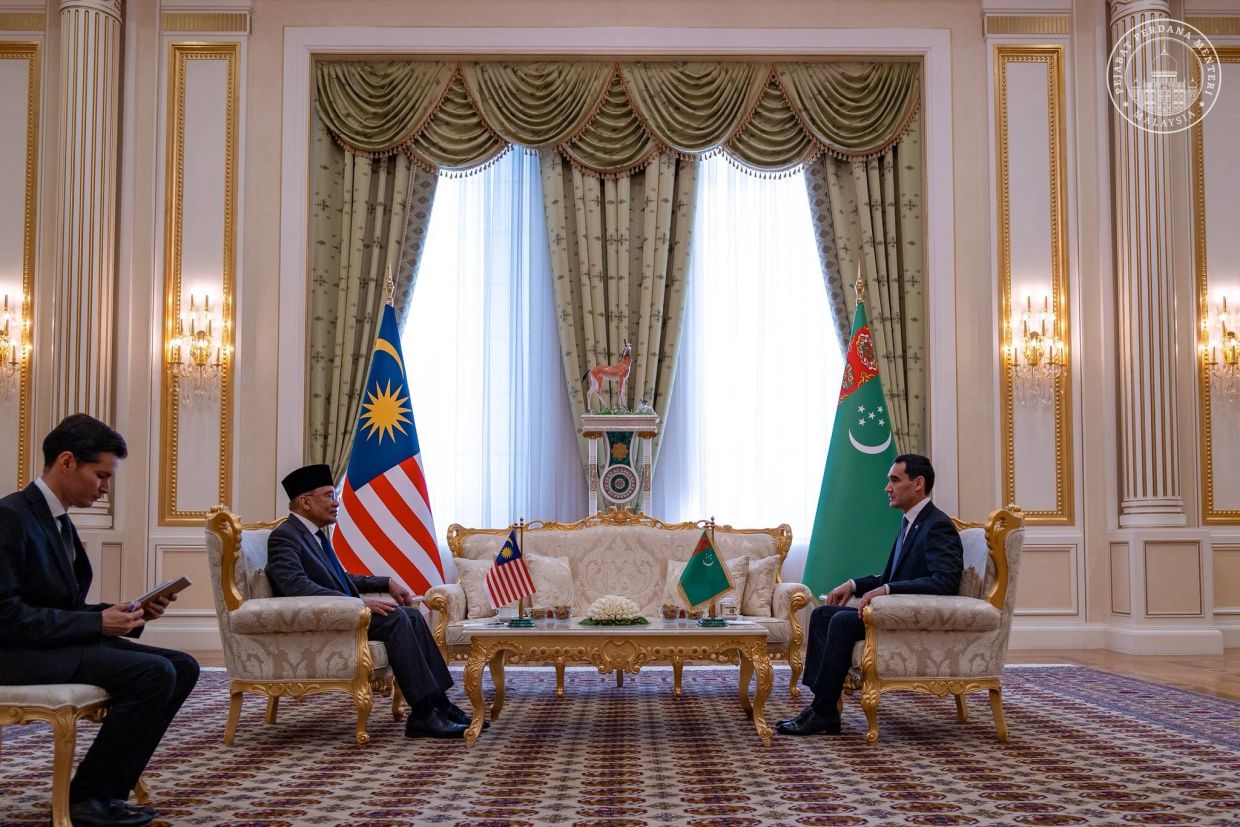
Prime Minister Datuk Seri Anwar Ibrahim and Turkmenistan President Serdar Berdimuhamedov oversaw the formal signing of a strategic partnership between Malaysia's national oil company PETRONAS and Turkmenistan authorities in Ashgabat today, crystallising three decades of energy sector cooperation between the two nations. The agreement represents a significant milestone in bilateral relations, underscoring Malaysia's strengthening economic footprint across Central Asia and cementing PETRONAS's position as a trusted regional energy operator with global reach and technical capability.
The partnership arrives at a particularly strategic moment, as it coincides with the 30-year anniversary of Malaysia-Turkmenistan cooperation in the energy sector. This extensive historical relationship has provided the foundation for deeper institutional ties, allowing both nations to build mutual understanding and operational efficiency in hydrocarbon development. The longevity of this engagement demonstrates sustained commitment beyond political cycles, establishing energy collaboration as a cornerstone of bilateral relations that has weathered regional challenges and market volatility.
According to the Prime Minister's Office, the arrangement extends beyond conventional energy partnerships to encompass broader dimensions of mutual development. The framework specifically targets talent development and technology transfer, recognising that modern energy cooperation demands capacity building in both human resources and technical expertise. By facilitating knowledge exchange, Malaysia positions itself not merely as an energy producer but as a developer of skilled professionals capable of managing complex hydrocarbon operations in partnership with regional peers.
Turkmenistan's natural gas reserves represent one of the world's largest untapped energy resources, and the strategic partnership creates explicit pathways for PETRONAS to engage with these vast potential reserves. This exploration and development opportunity aligns with global energy security concerns, particularly as traditional suppliers face geopolitical constraints and demand remains robust across Asia and beyond. For Malaysia, participation in developing Turkmenistan's gas sector diversifies PETRONAS's asset portfolio and reduces dependency on any single geographic region whilst strengthening Malaysia's credentials as an energy security partner for international markets.
The agreement also carries symbolic significance regarding Malaysia's global standing in energy industries. The partnership demonstrates international recognition of Malaysian technological capability, operational expertise, and strategic reliability in managing complex energy projects. This confidence reflects PETRONAS's track record across multiple continents and validates the MADANI government's positioning of Malaysia as a nation capable of competing in sophisticated global energy markets. Such validation enhances Malaysia's soft power and creates diplomatic leverage in broader regional discussions about energy infrastructure and security.
Trade flows between the two countries reflect the deepening economic engagement. In 2025, Turkmenistan emerged as Malaysia's fourth-largest trading partner among Central Asian nations, with bilateral commerce valued at RM75.80 million. Malaysian exports to Turkmenistan reached RM75.50 million, representing a robust nine per cent increase year-on-year. These figures, whilst modest in absolute terms, indicate accelerating momentum and demonstrate that energy sector partnerships translate into tangible commercial activity across multiple industries.
PETRONAS's investment commitment in Turkmenistan underscores the company's long-term confidence in the market. Since initiating operations in 1996, PETRONAS has accumulated total investments exceeding RM52.73 billion in the country, making it one of the company's most significant investment destinations globally. This cumulative commitment reflects multiple phases of exploration, development, production, and infrastructure investment across three decades, demonstrating patience with long-cycle energy projects and confidence in Turkmenistan's resource potential and regulatory environment.
The timing of the Prime Minister's two-day official visit provides appropriate political cover for advancing the partnership agreement. Bilateral meetings between Anwar and President Berdimuhamedov allow both governments to address not only energy matters but broader regional cooperation frameworks. Such high-level engagement signals government commitment to the PETRONAS-Turkmenistan relationship and creates political momentum for resolving any outstanding issues hindering deeper collaboration. The official welcome ceremony and structured bilateral agenda reflect diplomatic protocols that emphasise the significance Malaysia places on Central Asian partnerships.
For Southeast Asia more broadly, Malaysia's deepening engagement with Turkmenistan offers lessons in economic diversification and strategic hedging. As regional nations seek to reduce reliance on traditional Western markets and balance geopolitical relationships, energy partnerships with Central Asian producers provide alternative routes for resource security and economic cooperation. Malaysia's success in establishing three decades of productive energy collaboration with Turkmenistan demonstrates that consistent engagement and mutual respect create sustainable partnerships that survive political transitions and market fluctuations.
The strategic partnership also addresses global energy transition challenges. Whilst natural gas serves as a bridge fuel during the transition to renewable energy sources, investments in Turkmenistan's gas sector require modern technologies that minimise environmental impact and operational emissions. PETRONAS's involvement potentially brings international best practices and clean energy technologies to Central Asian projects, aligning resource development with contemporary environmental standards and contributing to global climate objectives.
Looking forward, the partnership creates multiple expansion vectors for Malaysia-Turkmenistan relations beyond hydrocarbons. The knowledge transfer framework could extend into renewable energy development, downstream processing, petrochemicals, and related industrial sectors where Malaysian expertise offers value. Joint training programmes could develop professional networks that strengthen people-to-people connections and create shared understanding that transcends government-level diplomacy. Investment opportunities may emerge in complementary sectors as bilateral confidence increases.
The MADANI government's explicit welcoming of this partnership indicates its strategic vision for Malaysia's role in global energy markets. By positioning energy diplomacy as central to economic development and international standing, the government signals that resource-based industries remain important despite broader economic diversification efforts. This balanced approach recognises that energy revenues fund development programmes and that energy sector expertise creates skilled employment and technical capabilities with applications across multiple industries.
As Malaysia continues navigating complex regional relationships and seeking stable energy supplies for its growing economy, strategic partnerships like that with Turkmenistan provide diversified sourcing options and geopolitical flexibility. The three-decade foundation of the Malaysia-Turkmenistan relationship, crystallised in today's partnership agreement, positions both nations to capitalise on expanding opportunities whilst contributing to regional stability and global energy security.
%22%2F%3E%3C%2Fpattern%3E%3C%2Fdefs%3E%3Crect%20width%3D%22100%25%22%20height%3D%22100%25%22%20fill%3D%22url(%23ph4fp9sg)%22%2F%3E%3Crect%20width%3D%22100%25%22%20height%3D%22100%25%22%20fill%3D%22url(%23ph4fp9sp)%22%2F%3E%3Ctext%20x%3D%2250%25%22%20y%3D%2250%25%22%20text-anchor%3D%22middle%22%20dominant-baseline%3D%22central%22%20fill%3D%22rgba(255%2C255%2C255%2C0.95)%22%20font-family%3D%22Georgia%2C%20'Times%20New%20Roman'%2C%20serif%22%20font-weight%3D%22700%22%20font-size%3D%22320%22%20letter-spacing%3D%22-0.02em%22%3EKTMB%3C%2Ftext%3E%3C%2Fsvg%3E)