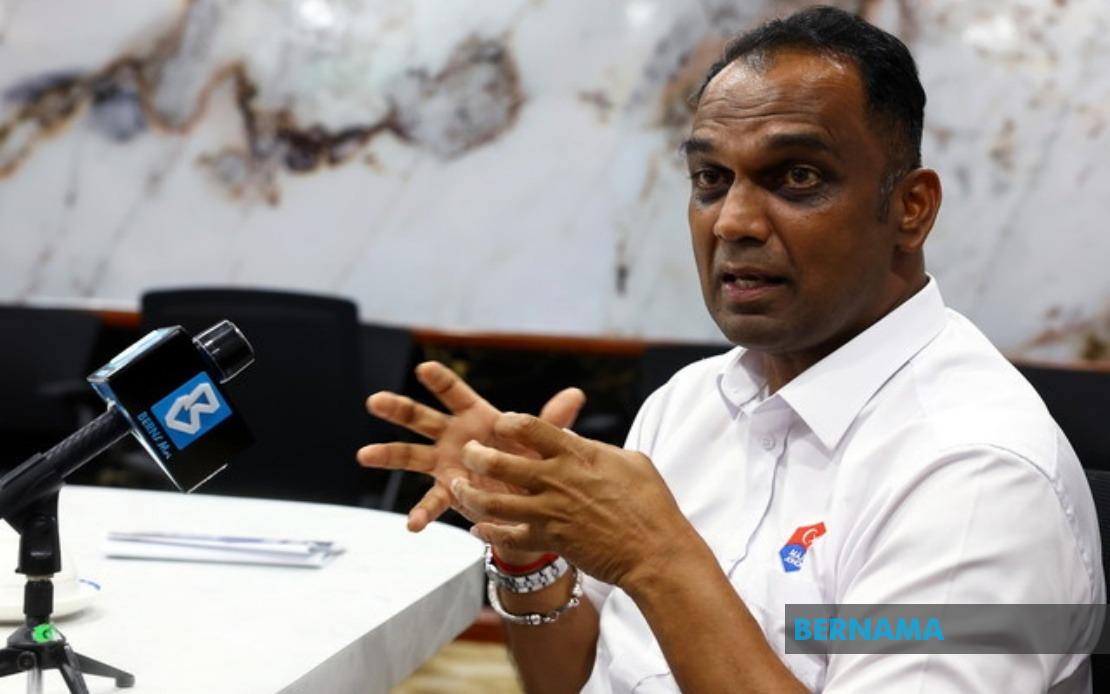
P. Pannir Selvam, the Barisan Nasional nominee for the Perling constituency, is charting a distinctly personal course through the 16th Johor State Election campaign by emphasizing intimate community dialogue over mass media blitzes. The first-time state-level contestant has made what he terms "pocket talks"—small-group conversations held directly within his constituency—the centrepiece of his electoral strategy, betting that this granular approach will resonate more profoundly with voters than conventional campaign methods.
While Pannir Selvam does not dismiss the expanding reach of social media platforms as campaign instruments, he remains firmly convinced that nothing substitutes for the human connection forged through face-to-face meetings. These pocket talks, he argues, create tangible bridges between candidate and constituent, allowing voters to assess his sincerity and commitment in an authentic setting. Rather than broadcasting rehearsed messaging to thousands simultaneously, his methodology prioritizes quality interactions in smaller clusters, a calculation that reflects broader shifts in how some politicians are attempting to build electoral coalitions amid voter fatigue with traditional party machinery.
The strategic logic underpinning this approach extends beyond mere optics. According to Pannir Selvam, these sessions furnish him with unmediated insight into the specific grievances and aspirations animating the Perling electorate. By listening directly to residents, he gains actionable intelligence about which issues demand prioritization—information that surveys and focus groups may miss or distort. This feedback loop theoretically enables him to tailor his policy commitments to authentic local needs rather than imposing generic party platforms, thereby differentiating himself from competitors relying on one-size-fits-all messaging.
Pannir Selvam's family background substantially reinforces his personal credential in public service. His father, Datuk KS Balakrishnan, is a political stalwart of considerable standing within Johor's establishment, having served five terms as Permas Assemblyman and occupied a seat on the state's executive council. At 84 years old, the elder Balakrishnan continues actively campaigning alongside his son, traversing constituencies regardless of weather conditions—a visible gesture that Pannir Selvam frames not merely as familial loyalty but as a transmission of hard-won wisdom about the demands and responsibilities of representative government.
This generational continuity carries particular significance in Malaysian politics, where dynastic connections and mentorship from respected senior figures often confer substantial electoral advantage. Pannir Selvam credits his father with imparting foundational lessons about non-partisan public service, emphasizing that politicians must serve all constituents equitably regardless of race, and must cultivate the resilience to absorb criticism constructively. These principles—sincerity, honesty, and integrity—form the moral framework that Pannir Selvam professes will guide his conduct should voters entrust him with a mandate.
His background as a member of the Johor Bahru City Council (MBJB) provides practical grounding in municipal administration and urban governance. Drawing on that experience, Pannir Selvam has identified concrete priorities for Perling: alleviating chronic traffic congestion and expanding inadequate parking infrastructure around the Taman Perling Public Market, a shopping hub that serves local residents daily. These are not abstract policy proposals but tangible quality-of-life concerns that affect commuters and shoppers routinely. By anchoring his campaign platform to such locally-rooted issues, he positions himself as someone who has listened to community pain points and proposes solutions deriving from lived understanding of municipal challenges.
The Perling constituency itself represents a substantial electoral battleground. With 109,992 registered voters on the electoral rolls, it commands meaningful numerical weight within the state legislature. The contest is three-cornered, pitting Pannir Selvam against Alan Tee Boon Tsong of Pakatan Harapan and Boo Wei Han of Parti Bersama Malaysia. This fragmentation across three candidates means that victory margins could potentially hinge on modest percentage-point differentials, rendering localized support networks and grassroots legitimacy potentially decisive factors in an otherwise crowded field.
The broader context of the 16th Johor State Election underscores the state's political centrality within Malaysia's peninsular politics. Johor constitutes a traditional Barisan Nasional stronghold of historic importance, and maintaining control of this state legislature carries symbolic and substantive consequences for the coalition's national standing. The election encompasses 172 candidates contesting 56 assembly seats, representing a comprehensive political renewal reflecting post-2022 electoral realignments within both the government and opposition camps.
Pannir Selvam's methodology reflects broader pedagogical debates within electoral politics about optimal candidate-voter engagement in an age of digital saturation. His insistence on pocket talks over viral social media campaigns suggests a hypothesis that voters suffering from information overload and campaign fatigue may actually privilege substantive local conversations with candidates who demonstrate authentic engagement. Whether this grassroots-intensive approach proves electorally decisive in contemporary Malaysian contests remains an open empirical question, but it signals a counter-trend against the reflexive digitalization of political campaigning.
The campaigning period culminates with early voting scheduled for July 7 and polling day on July 11. Pannir Selvam's confidence, expressed through his remarks about encouraging voter responses to pocket talks thus far, suggests internal optimism about his coalition's competitive positioning. However, the presence of two other credible candidates means Perling remains genuinely contested terrain. His strategy of deep community immersion and reliance on paternal political guidance represents a calculated bet that authenticity and local responsiveness will outweigh whatever organizational advantages his opponents may possess.

