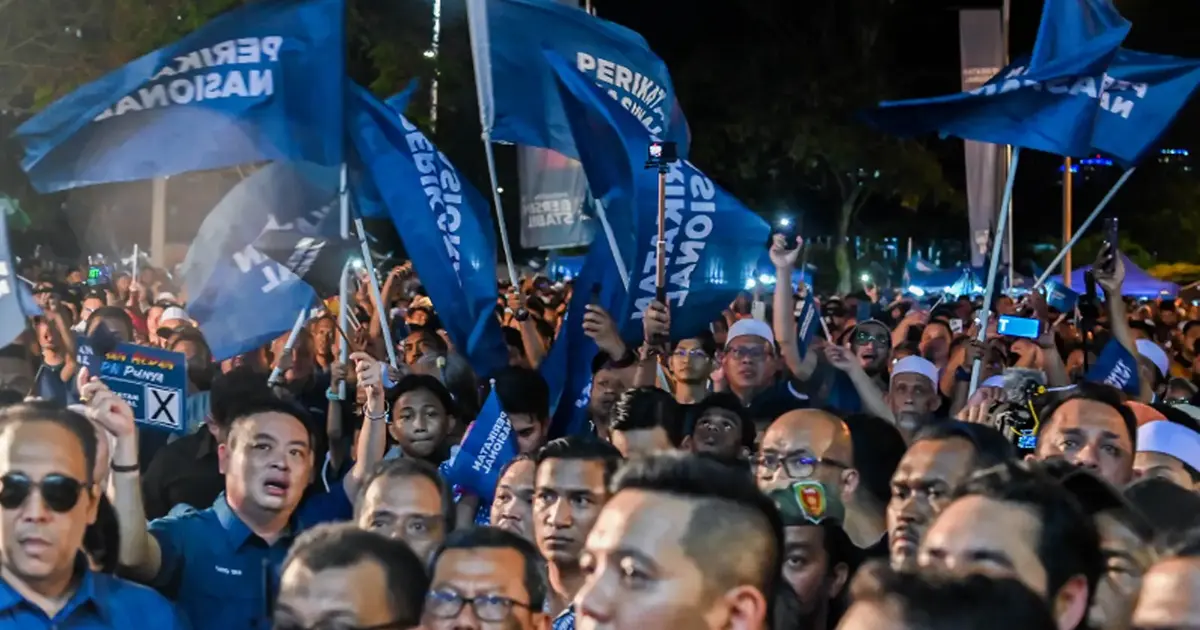
The stability of Perikatan Nasional (PN) hangs in the balance as underlying fractures between its principal components, PAS and Bersatu, have erupted into what observers characterise as a damaging internal conflict. According to Yusri Ibrahim, chief researcher at the Ilham Centre, the coalition has transitioned beyond simple disagreement into what he describes as a 'guerrilla war' phase, signalling that the antagonism between the two parties has fundamentally altered in nature and intensity.
The deterioration of relations between PAS and Bersatu represents a critical juncture for PN's political viability. Unlike formal disputes that might be resolved through dialogue and compromise, the guerrilla warfare characterisation suggests the conflict has become asymmetrical and decentralised, with skirmishes occurring across multiple fronts—parliamentary manoeuvres, grassroots mobilisation, and public statements designed to undermine opponents. This shift indicates that both parties may have abandoned hopes for reconciliation in the near term, instead pursuing strategies designed to maximise their own organisational strength at the expense of coalition cohesion.
For Malaysian political observers, the unravelling of PN would represent a significant realignment of the country's parliamentary landscape. PN emerged as a formidable opposition force following the 2022 elections, capturing substantial support particularly in Peninsular Malaysia. The coalition's apparent strength masked deep ideological and strategic differences that have now surfaced with considerable force. The dissolution or severe weakening of PN would redistribute parliamentary power among remaining coalitions and independent MPs, potentially altering the balance of parliamentary mathematics that has defined Malaysian politics in recent years.
The roots of the PAS-Bersatu conflict run deep, stemming from fundamentally divergent approaches to governance and Islamic politics. PAS, as an Islamic party with historical roots in religious activism, prioritises the implementation of Shariah-based policies and has consistently advocated for stronger Islamic governance frameworks. Bersatu, by contrast, was founded as a vehicle for former Prime Minister Mahathir Mohamad's faction and has traditionally emphasised multiethnic coalition-building and pragmatic governance. These philosophical differences have created persistent tension regarding PN's strategic direction and policy emphasis.
The guerrilla war phase that the coalition has allegedly entered suggests both parties are now employing tactics that circumvent traditional party leadership channels. Rather than engaging in formal negotiations or seeking mediation through senior party figures, individual members and lower-level organisational structures may be undertaking independent actions designed to weaken their rivals. This decentralisation of conflict makes resolution substantially more difficult, as central leadership struggles to control or coordinate responses to provocations emanating from multiple sources within their own organisations.
For Malaysian voters and political observers, this internal collapse raises important questions about PN's capacity to function as a coherent political force. Coalitions depend fundamentally on shared strategic interests and sufficient ideological overlap to permit coordinated action. When member parties begin competing with each other as intensely as they compete with external opponents, the coalition's primary function—aggregating political strength across multiple constituencies—becomes compromised. Supporters within PN constituencies may find themselves caught between conflicting party allegiances, potentially reducing overall coalition effectiveness in parliamentary affairs.
The implications extend beyond PN itself to the broader opposition landscape in Malaysia. A weakened or fractured PN could create space for other coalitions to strengthen their parliamentary positions. Pakatan Harapan, Malaysia's primary opposition coalition, may find opportunities to attract PN-aligned MPs and constituents disenchanted by the internal conflict. Alternatively, the realignment could produce a more fragmented parliament with increased numbers of independent MPs, complicating government formation and making legislative business more difficult to conduct.
Analyst assessments like those from the Ilham Centre serve as important early warning indicators for Malaysia's political trajectory. When respected research institutions identify fundamental structural problems within major political coalitions, their observations typically reflect developments visible to experienced political observers and party insiders. The characterisation of PN's internal conflict as entering a guerrilla warfare phase suggests that Yusri Ibrahim and colleagues at the Ilham Centre perceive escalation patterns that indicate the situation has moved beyond manageable disagreement.
The timing of this deterioration coincides with broader shifts in Malaysian politics following the 2023 state elections and various by-elections that have tested coalition coherence. Both PAS and Bersatu have sought to strengthen their respective positions, and this competitive dynamic, when combined with fundamental strategic disagreements, naturally creates the conditions for escalating conflict. State-level politics in particular have become arenas where inter-party competition within coalitions has manifested quite visibly.
Looking forward, several possible outcomes seem plausible. PN leadership might attempt to restore order through senior-level interventions and renegotiated power-sharing arrangements that address underlying grievances. Alternatively, the coalition could splinter formally, with PAS and Bersatu operating as separate parliamentary forces. A third possibility involves gradual attrition, with PN remaining nominally intact while its members defect to other coalitions or independent status over time. The eventual resolution will substantially shape Malaysia's political configuration through the next general election cycle.
The challenges facing PN also offer insights into coalition politics more broadly in Malaysia. Coalitions have proven essential to Malaysian governance, yet they remain fragile constructs dependent on careful management of diverse interests and ideologies. The current PN crisis demonstrates that even newly formed coalitions, despite initial apparent strength, can unravel when underlying tensions accumulate and escalate unchecked. This reality carries implications for how political parties approach future coalition negotiations and the sustainability of multi-party governing arrangements.

%22%2F%3E%3C%2Fpattern%3E%3C%2Fdefs%3E%3Crect%20width%3D%22100%25%22%20height%3D%22100%25%22%20fill%3D%22url(%23ph40buhg)%22%2F%3E%3Crect%20width%3D%22100%25%22%20height%3D%22100%25%22%20fill%3D%22url(%23ph40buhp)%22%2F%3E%3Ctext%20x%3D%2250%25%22%20y%3D%2250%25%22%20text-anchor%3D%22middle%22%20dominant-baseline%3D%22central%22%20fill%3D%22rgba(255%2C255%2C255%2C0.95)%22%20font-family%3D%22Georgia%2C%20'Times%20New%20Roman'%2C%20serif%22%20font-weight%3D%22700%22%20font-size%3D%22320%22%20letter-spacing%3D%22-0.02em%22%3EGRS%3C%2Ftext%3E%3C%2Fsvg%3E)