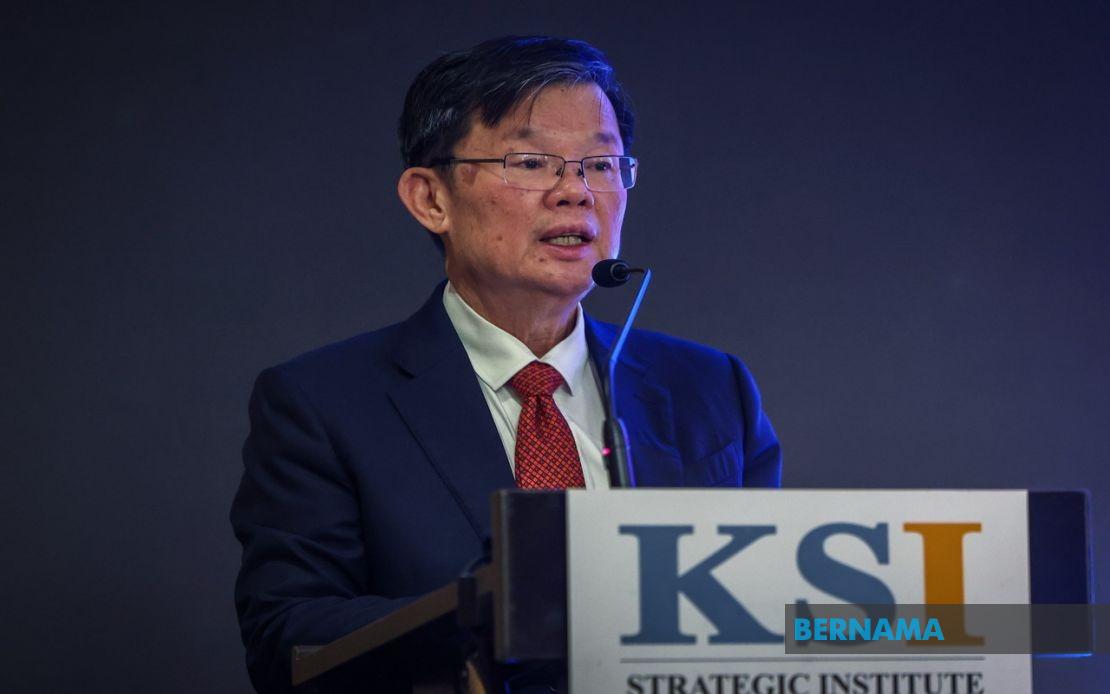
Penang Pakatan Harapan intends to increase its representation of female candidates in the next state election, though the recruitment of sufficient qualified and enthusiastic participants remains an ongoing obstacle, according to coalition chairman and Chief Minister Chow Kon Yeow. Speaking after opening the World Women Economic and Business Summit 2026 in George Town, Chow acknowledged the tension between the coalition's aspirational goals and the practical realities of candidate selection, emphasising that expanding women's presence in elected office requires a robust pipeline of individuals prepared to contest seats.
The 30 per cent women's participation benchmark, which Penang PH continues to champion, represents a longstanding commitment within Malaysia's political landscape. Yet despite this target being formally introduced in 2009, the nation has fallen considerably short of the mark. Current statistics reveal a stark disparity: women comprise merely 13.5 per cent of Members of Parliament and 12 per cent of state assemblypersons across Malaysia. This persistent gap underscores the structural and cultural barriers that continue to limit female advancement in electoral politics, a problem that Penang's leadership acknowledges but has struggled to resolve comprehensively.
Chow articulated a nuanced perspective on the challenge, noting that women have made substantial inroads in numerous professional domains including education, commerce, engineering and civil service roles. The underrepresentation in politics, therefore, reflects not a lack of capability or credentials but rather distinct obstacles specific to the electoral arena. The pressures inherent in political campaigning, the scrutiny faced by female candidates, family considerations and historical networking disadvantages create a unique constellation of barriers that discourage qualified women from entering the political fray, even within a coalition explicitly committed to gender parity.
The recruitment difficulty points to a fundamental distinction between aspirational policy statements and implementation. Penang PH's commitment to fielding women candidates depends entirely on the availability of suitable contenders willing to contest, a dependency that highlights the upstream problem of candidate development. Without a deliberate, sustained effort to identify, nurture and encourage women to consider political careers, the coalition risks perpetually falling short of its stated objectives. The shortage of candidates reflects wider societal attitudes toward female political participation and the relative absence of structured mentoring pathways for emerging women leaders within the party structure.
Chow advocated for systemic solutions extending beyond rhetoric, suggesting that political parties should formally institutionalise the 30 per cent target within their candidate selection frameworks. This institutionalisation would establish binding commitments rather than aspirational guidelines, creating accountability mechanisms that force parties to actively recruit and support female candidates rather than passively waiting for volunteers to emerge. Such formalisation has proven effective in other jurisdictions where quota systems have demonstrably increased women's electoral participation and subsequent parliamentary representation.
Beyond candidate recruitment, Chow identified the necessity for political parties to ensure balanced female representation on decision-making committees at all levels. This encompasses party councils, policy formulation bodies and strategic planning committees where electoral strategies and candidate selections are determined. Without female voices in these spaces, decisions about candidate selection and party direction may inadvertently perpetuate male-dominated structures. Institutionalising gender balance in party leadership creates role models, demonstrates commitment through action and ensures that women's perspectives inform high-level political decisions.
Mentoring and resource allocation emerged as additional critical factors in Chow's analysis. Emerging women leaders require structured access to financial resources, campaign support, political guidance and networking opportunities that established male politicians often take for granted. By systematically extending these advantages to female candidates, parties can level the playing field and make political participation a more viable career path. Malaysia's regional position within Southeast Asia further underscores the importance of this issue, as several neighbouring countries have achieved higher female parliamentary representation through deliberate policy interventions.
The timing of Chow's remarks, delivered at an economic summit focused on women's participation in business, highlights the broader context of gender equity across Malaysian society. The disproportionately low female representation in politics contrasts sharply with women's educational attainment and economic contributions, suggesting that political structures lag significantly behind societal and professional progress. This discrepancy creates a feedback loop: without strong female political leadership, legislative agendas may insufficiently address gender-related concerns, further discouraging women from political participation.
The Penang experience reflects a nationwide challenge affecting all political coalitions and parties. While Pakatan Harapan has articulated the 30 per cent target explicitly, competing coalitions and the ruling government have also acknowledged this benchmark. Yet across Malaysian politics broadly, the gap between stated commitment and electoral outcomes remains substantial. The issue transcends party affiliation and reflects entrenched cultural attitudes, campaign financing structures disadvantaging newcomers and the particular difficulties faced by women balancing family obligations with the demands of political campaigning.
Moving forward, Penang PH's approach requires complementary action across multiple domains. Party leadership must actively recruit women into candidate development programmes, provide targeted financial and strategic support for female aspirants, establish mentoring relationships between experienced female politicians and newcomers, and create internal party mechanisms ensuring gender parity in decision-making bodies. These measures collectively address both the immediate recruitment challenge and the longer-term systemic factors limiting women's political participation. Without such comprehensive intervention, Malaysia's female political representation will likely remain stuck below the 30 per cent target for the foreseeable future, representing an underutilisation of human capital and a democratic deficit in legislative representation.

%22%2F%3E%3C%2Fpattern%3E%3C%2Fdefs%3E%3Crect%20width%3D%22100%25%22%20height%3D%22100%25%22%20fill%3D%22url(%23ph40buhg)%22%2F%3E%3Crect%20width%3D%22100%25%22%20height%3D%22100%25%22%20fill%3D%22url(%23ph40buhp)%22%2F%3E%3Ctext%20x%3D%2250%25%22%20y%3D%2250%25%22%20text-anchor%3D%22middle%22%20dominant-baseline%3D%22central%22%20fill%3D%22rgba(255%2C255%2C255%2C0.95)%22%20font-family%3D%22Georgia%2C%20'Times%20New%20Roman'%2C%20serif%22%20font-weight%3D%22700%22%20font-size%3D%22320%22%20letter-spacing%3D%22-0.02em%22%3EGRS%3C%2Ftext%3E%3C%2Fsvg%3E)