Penang Chinese Town Hall has wrapped up its 2025 financial year with total income of RM12.61 million against expenditure of RM12.55 million, leaving a modest operating surplus of RM59,191. The figures underscore a broadly balanced budgetary position for the heritage organization, which continues to serve as a cultural and community hub in the state capital.
Donations overwhelmingly dominate the organization's revenue streams, accounting for RM11.24 million of the total intake. This reliance on philanthropic contributions reflects the town hall's role as a repository of community goodwill and its capacity to mobilize support from members and sympathizers. Beyond donations, the organization derives revenue from rental and maintenance fees totalling RM439,671, auditorium rental receipts of RM361,245, and anniversary-related income of RM222,498. This diversified though heavily skewed revenue base shows the town hall's efforts to generate income through its physical facilities and commemorative events.
On the expenditure side, the organization's spending priorities reveal its operational model. Donations made by PCTH to causes and beneficiaries represented its single largest outlay at RM11.12 million, consuming approximately 88.6 percent of total spending. This figure declined from RM12.35 million in 2024, suggesting either reduced philanthropic disbursements or more focused allocation in the past year. Meanwhile, the organization's personnel costs climbed to RM502,625 from RM452,761 in the previous year, reflecting either wage adjustments or additional headcount to support expanded activities.
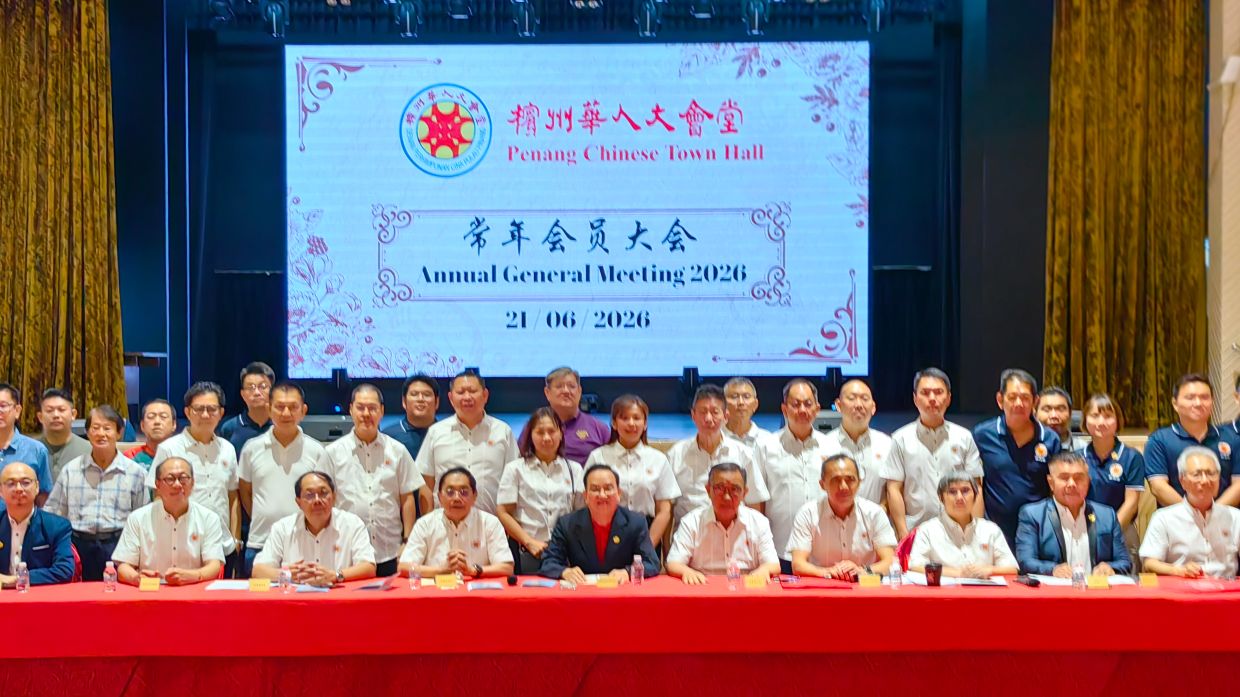
At the organization's annual general meeting held on June 21, which drew roughly 200 members, chairman Tan Sri Prof Tan Khoon Hai used the platform to articulate broader civic themes beyond routine organizational business. He exhorted Malaysians to exercise their voting rights responsibly and to approach electoral choices with deliberation rather than reflexive partisanship. With Johor and Negri Sembilan scheduled to conduct state elections during 2025, his remarks carried immediate relevance to the political calendar affecting the region.
Tan's electoral message emphasized that voters should evaluate competing parties on their track records and policy proposals through a rational lens, ultimately supporting candidates who could foster national unity, stimulate economic dynamism, and preserve social equilibrium. His framing positioned elections as consequential exercises extending beyond the parochial concerns of local infrastructure and service delivery to encompass the shaping of Malaysia's broader trajectory. The appeal to informed citizenry reflects a perspective that democratic participation requires substantive engagement rather than passive or uninformed participation at the ballot box.
Among the organization's recent initiatives, the chairman highlighted the completion of a comprehensive upgrade to Ping Zhang Hall, part of the town hall complex. The refurbished venue now features contemporary amenities including enhanced spatial design, state-of-the-art sound engineering, sophisticated lighting apparatus, and modern LED infrastructure. According to Tan, the renovated hall positions itself as a versatile event space suited to corporate banquets, organizational celebrations, anniversary commemorations, charitable fundraisers, and community assemblies. The investment in facility modernization signals the town hall's intent to remain operationally competitive and attractive to diverse user groups seeking professional event hosting.
Extending beyond domestic organizational concerns, PCTH has embarked on a significant regional technology initiative. In partnership with business and technology entities from China and across Asean, the organization will host the 2026 China-Asean Artificial Intelligence Cooperation Forum scheduled for November in Penang. This undertaking represents a substantial pivot toward positioning the town hall as a venue for high-level international technological dialogue and policy exchange.
Penang's historical positioning as the Silicon Valley of the East and its entrenched status as Malaysia's premier hub for electrical and electronics manufacturing provide the geographical and industrial foundation for hosting such a forum. Tan emphasized that the state possesses robust institutional and commercial infrastructure supporting the advancement of AI-related industries. The planned gathering will convene researchers, corporate executives, and sectoral specialists from throughout the region to examine emerging artificial intelligence technologies, their industrial deployment, and bilateral or multilateral commercial partnerships spanning national borders.
Tan characterized the forum as a high-level convening opportunity facilitating technological knowledge transfer and regional cooperation on the AI frontier. He actively encouraged PCTH members with pertinent expertise and professional backgrounds to engage substantively with the forum's development and execution, positioning participation as a means to reinforce Penang's standing within Asean's technological landscape. The initiative reflects a strategic recognition that cultural and community organizations can serve as catalysts for economic and technological advancement when aligned with regional competitive priorities and positioned as trusted neutral convening platforms for stakeholder engagement.
%22%2F%3E%3C%2Fpattern%3E%3C%2Fdefs%3E%3Crect%20width%3D%22100%25%22%20height%3D%22100%25%22%20fill%3D%22url(%23ph1f6pzg)%22%2F%3E%3Crect%20width%3D%22100%25%22%20height%3D%22100%25%22%20fill%3D%22url(%23ph1f6pzp)%22%2F%3E%3Ctext%20x%3D%2250%25%22%20y%3D%2250%25%22%20text-anchor%3D%22middle%22%20dominant-baseline%3D%22central%22%20fill%3D%22rgba(255%2C255%2C255%2C0.95)%22%20font-family%3D%22Georgia%2C%20'Times%20New%20Roman'%2C%20serif%22%20font-weight%3D%22700%22%20font-size%3D%22151%22%20letter-spacing%3D%22-0.02em%22%3EPerikatan%3C%2Ftext%3E%3C%2Fsvg%3E)