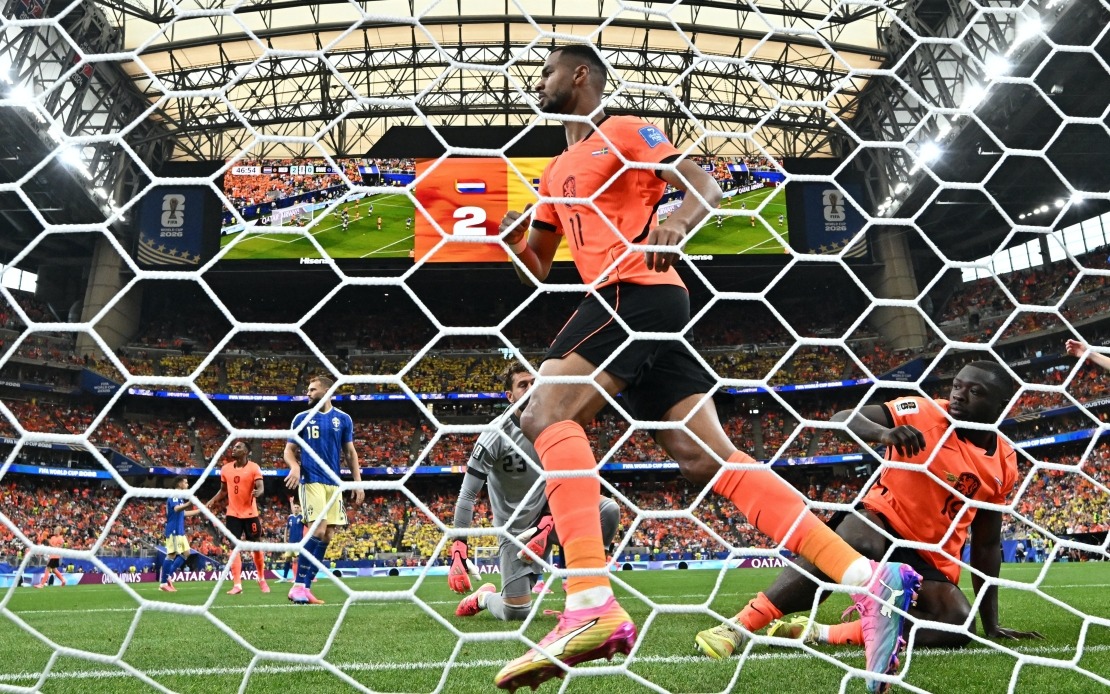
The World Cup has set a new pace for goal-scoring after reaching its 100th goal in merely 33 matches, a speed unseen since the inaugural Swiss tournament nearly seven decades ago. Dutch winger Cody Gakpo provided the historic moment on Saturday, tucking away the Netherlands' third goal in a commanding 5-1 demolition of Sweden. This translates to an impressive average of 3.03 goals per match, significantly outpacing the rhythm of previous tournaments and signalling a dramatic shift in the tournament's attacking character.
The speed at which the century mark has been achieved stands in stark contrast to recent World Cup editions. The 2014 tournament in Brazil needed 36 matches to reach the same milestone, as did Spain's 1982 competition. Even further back, the 1978 final held in Argentina and the 1994 staging in the United States each required 38 matches to accumulate 100 goals. Only the 1954 Switzerland tournament, which reached the mark after 20 matches, surpassed this year's explosive offensive output, though that tournament operated under different competition structures and formats.
Analysts have identified multiple factors contributing to this goal-laden spectacle. The official tournament ball, manufactured as the Trionda model, has drawn particular scrutiny from observers who suspect its aerodynamic properties may disadvantage goalkeepers attempting to judge and react to long-range strikes. Evidence of this theory emerged early in the competition, with precisely ten goals already scored from outside the penalty box—a statistic that warrants close monitoring throughout the remaining fixtures.
Environmental conditions have also played a potential role in the heightened scoring environment. The intense heat experienced across match venues has reportedly induced fatigue among defenders, leading to gaps in concentration and positioning errors that strikers have readily exploited. Tournament organisers recognised this challenge and implemented mandatory three-minute cooling breaks, intended to manage player welfare. Yet these stoppages have inadvertently provided coaches with additional strategic windows to reorganise their teams and implement tactical corrections, occasionally shifting momentum in favour of attacking-minded adjustments.
The structural expansion of the tournament to accommodate 48 teams—up from the traditional 32—has inevitably altered the competitive landscape. Early results presented compelling evidence of this transformation, with traditional powerhouses producing emphatic victories. Germany's opening 7-1 thrashing of Curaçao, Canada's 6-0 demolition of Qatar, and Tunisia's twin defeats to Sweden and Japan by respective scorelines of 5-1 and 4-0 appeared to suggest the expanded format would devolve into one-sided contests between elite and emerging football nations.
However, a more nuanced picture has emerged as the tournament has progressed. Several matches have defied expectations of predictable outcomes, suggesting that while the expanded format has increased scoring opportunities, it has not created a tournament characterised solely by lopsided affairs. Curaçao managed to hold Ecuador in a goalless stalemate, demonstrating defensive discipline despite their earlier heavy loss. Cabo Verde's 0-0 draw with Spain, one of Europe's traditional football superpowers, provided another example of determined defending and tactical coherence from a smaller football nation.
Qatar's performance, despite suffering a 6-0 defeat to Canada, also warrants consideration within this broader context. The host nation spent a significant portion of that match competing with nine players after receiving expulsions, fundamentally altering the contest's dynamics and making the scoreline less reflective of competitive balance. These instances illustrate that the expanded format has created opportunities for surprise results and competitive encounters beyond the marquee clashes between established continental powers.
Underdog nations have demonstrated particular resilience, with countries such as Jordan and Uzbekistan mounting credible performances despite ultimate defeats. Jordan's 3-1 loss to Austria and Uzbekistan's 3-1 reversal against Colombia showed these emerging football nations could compete toe-to-toe with more accomplished opponents for extended periods, creating genuine scoring opportunities and mounting sustained attacking play. This competitive texture suggests the tournament has evolved into a more unpredictable and entertaining spectacle than initial concerns about expanded format imbalances might have suggested.
For Malaysian football followers, the current tournament dynamics offer important lessons. The accessibility created by the expanded format—allowing more nations to participate—has demonstrably not diminished competitive quality or match entertainment value. Instead, it has produced a tournament where attacking football has flourished while smaller nations have found genuine opportunities to prove themselves against established competitors. As the tournament progresses, whether the goal-scoring pace will sustain remains uncertain, yet the early evidence suggests this World Cup may be remembered as a refreshingly open and entertaining competition where tactical innovation and determination matter as much as traditional superiority.
%22%2F%3E%3C%2Fpattern%3E%3C%2Fdefs%3E%3Crect%20width%3D%22100%25%22%20height%3D%22100%25%22%20fill%3D%22url(%23ph15hisg)%22%2F%3E%3Crect%20width%3D%22100%25%22%20height%3D%22100%25%22%20fill%3D%22url(%23ph15hisp)%22%2F%3E%3Ctext%20x%3D%2250%25%22%20y%3D%2250%25%22%20text-anchor%3D%22middle%22%20dominant-baseline%3D%22central%22%20fill%3D%22rgba(255%2C255%2C255%2C0.95)%22%20font-family%3D%22Georgia%2C%20'Times%20New%20Roman'%2C%20serif%22%20font-weight%3D%22700%22%20font-size%3D%22226%22%20letter-spacing%3D%22-0.02em%22%3EHamzah%3C%2Ftext%3E%3C%2Fsvg%3E)
%22%2F%3E%3C%2Fpattern%3E%3C%2Fdefs%3E%3Crect%20width%3D%22100%25%22%20height%3D%22100%25%22%20fill%3D%22url(%23ph3s8t0g)%22%2F%3E%3Crect%20width%3D%22100%25%22%20height%3D%22100%25%22%20fill%3D%22url(%23ph3s8t0p)%22%2F%3E%3Ctext%20x%3D%2250%25%22%20y%3D%2250%25%22%20text-anchor%3D%22middle%22%20dominant-baseline%3D%22central%22%20fill%3D%22rgba(255%2C255%2C255%2C0.95)%22%20font-family%3D%22Georgia%2C%20'Times%20New%20Roman'%2C%20serif%22%20font-weight%3D%22700%22%20font-size%3D%22170%22%20letter-spacing%3D%22-0.02em%22%3ETambirat%3C%2Ftext%3E%3C%2Fsvg%3E)
%22%2F%3E%3C%2Fpattern%3E%3C%2Fdefs%3E%3Crect%20width%3D%22100%25%22%20height%3D%22100%25%22%20fill%3D%22url(%23phl8txg)%22%2F%3E%3Crect%20width%3D%22100%25%22%20height%3D%22100%25%22%20fill%3D%22url(%23phl8txp)%22%2F%3E%3Ctext%20x%3D%2250%25%22%20y%3D%2250%25%22%20text-anchor%3D%22middle%22%20dominant-baseline%3D%22central%22%20fill%3D%22rgba(255%2C255%2C255%2C0.95)%22%20font-family%3D%22Georgia%2C%20'Times%20New%20Roman'%2C%20serif%22%20font-weight%3D%22700%22%20font-size%3D%22194%22%20letter-spacing%3D%22-0.02em%22%3EBintulu%3C%2Ftext%3E%3C%2Fsvg%3E)