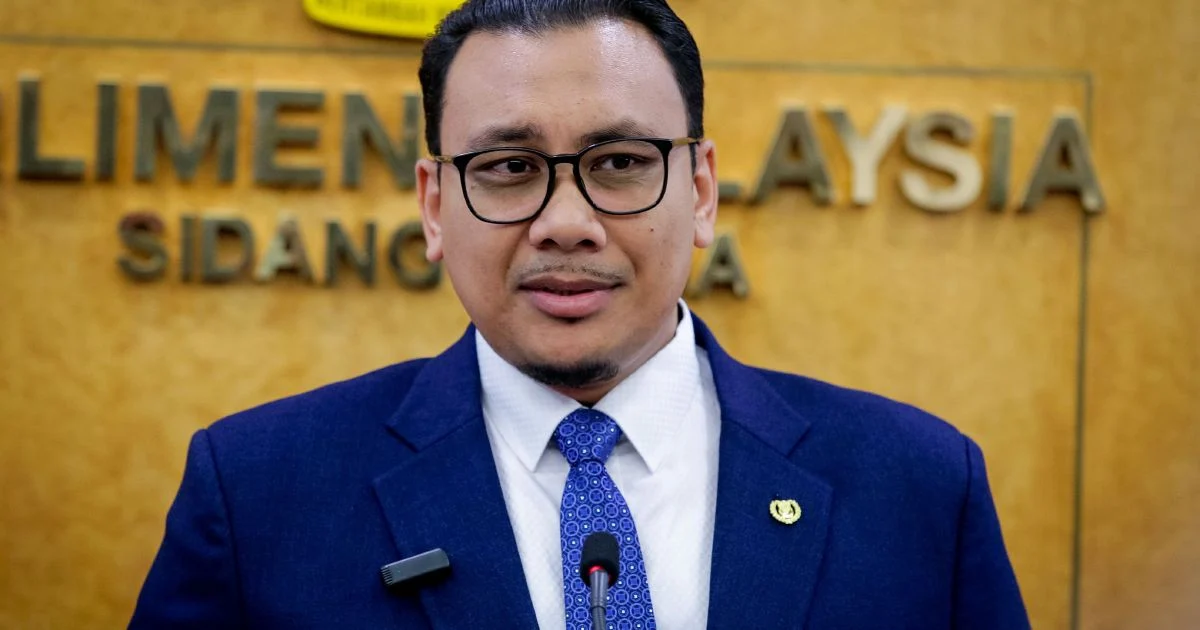
The youth wing of PAS has taken a decisive step toward the courts after its leader, Afnan Hamimi Taib Azamudden, instructed his legal team to move forward with proceedings stemming from a Facebook post. The controversial post, attributed to a figure within the Bersatu party, allegedly contained disparaging remarks about his father and extended family members, crossing what he evidently considered an unacceptable threshold for public discourse.
The decision to pursue formal legal remedies signals an escalation in political tensions within Malaysia's coalition landscape at a time when inter-party relations remain delicate. Rather than addressing the matter through internal party channels or public statement alone, the choice to engage lawyers reflects the gravity with which Afnan Hamimi has assessed the alleged transgression and the potential damage to his family's reputation. This approach underscores a broader pattern in Malaysian politics where personal attacks targeting political figures and their relatives increasingly trigger formal legal consequences.
Social media has emerged as a flashpoint for inflammatory political speech in Malaysia, where the boundary between robust political debate and actionable defamation remains contested. The alleged insult occurring on Facebook, a platform with millions of Malaysian users, amplifies the potential reach and reputational impact of such posts compared to private remarks. What transpires in the digital sphere can rapidly cascade into the mainstream political arena, particularly when it involves family members of prominent party officials, thereby warranting serious legal consideration.
The involvement of a Bersatu leader in this incident carries particular significance given the complex recent history of coalition dynamics. PAS, Bersatu, and other component parties have navigated periods of both cooperation and friction within Malaysia's governing framework. Personal disputes between rising figures in competing parties, particularly when they involve attacks on family honour, can strain these delicate political arrangements and create lasting rifts that extend beyond individual personalities to affect institutional relationships.
Malaysian defamation law provides pathways for individuals to seek recourse when their reputation or that of family members is damaged through false or derogatory statements. The decision to activate legal mechanisms suggests that Afnan Hamimi's counsel believes the alleged Facebook post meets the threshold for actionable defamation, likely based on evidence that the post was published, referred to him or his family identifiably, and contained statements capable of lowering their standing in the community or causing them harm.
The stakes involved in such legal disputes extend beyond individual grievances. When young party leaders—and the PAS Youth chief represents an emerging generation of political actors—establish precedents through litigation, they signal to others that personal and family honour are matters they will defend vigorously. This can either elevate the standard of political discourse by discouraging personal attacks, or alternatively, trigger a cycle of contentious legal disputes that shifts political competition from policy debate into courtroom battles.
Bersatu's position in this unfolding dispute remains important to observe. As a party that has undergone significant internal upheaval and coalition recalibration in recent years, any member's involvement in a defamation case could generate additional scrutiny regarding party discipline and the conduct expected of party representatives, particularly in digital spaces where attribution and context can become muddied. The party leadership may face questions about whether it stands behind the alleged post, distances itself from it, or provides support to its member in potential legal proceedings.
For PAS, this development reflects the party's broader engagement with formal institutions to address grievances rather than relying solely on political manoeuvrings. The PAS Youth wing, in particular, has cultivated an image as a more assertive faction within the party structure, willing to challenge both external critics and internal orthodox positions. Taking legal action represents consistency with this posturing, though it also carries risks if the courts ultimately find against the party or its leader in the proceedings.
The case also highlights evolving sensitivities around family involvement in politics. Malaysian political figures have traditionally expected that their immediate family members remain somewhat insulated from direct political attacks, with such boundaries generally observed across the political spectrum. When these unwritten conventions are transgressed, particularly through public posts that can be shared and amplified indefinitely, the injured parties often feel compelled to respond forcefully to prevent erosion of these protective norms.
As this matter progresses through legal channels, observers will monitor whether other parties emerge to defend either the accused Bersatu leader or the attacking party's conduct, or whether this remains a bilateral dispute between individuals. The outcome could establish important precedent regarding the limits of acceptable speech directed at political figures' families on social media platforms, with implications for how Malaysian politicians conduct themselves in digital spaces going forward.

%22%2F%3E%3C%2Fpattern%3E%3C%2Fdefs%3E%3Crect%20width%3D%22100%25%22%20height%3D%22100%25%22%20fill%3D%22url(%23ph40buhg)%22%2F%3E%3Crect%20width%3D%22100%25%22%20height%3D%22100%25%22%20fill%3D%22url(%23ph40buhp)%22%2F%3E%3Ctext%20x%3D%2250%25%22%20y%3D%2250%25%22%20text-anchor%3D%22middle%22%20dominant-baseline%3D%22central%22%20fill%3D%22rgba(255%2C255%2C255%2C0.95)%22%20font-family%3D%22Georgia%2C%20'Times%20New%20Roman'%2C%20serif%22%20font-weight%3D%22700%22%20font-size%3D%22320%22%20letter-spacing%3D%22-0.02em%22%3EGRS%3C%2Ftext%3E%3C%2Fsvg%3E)