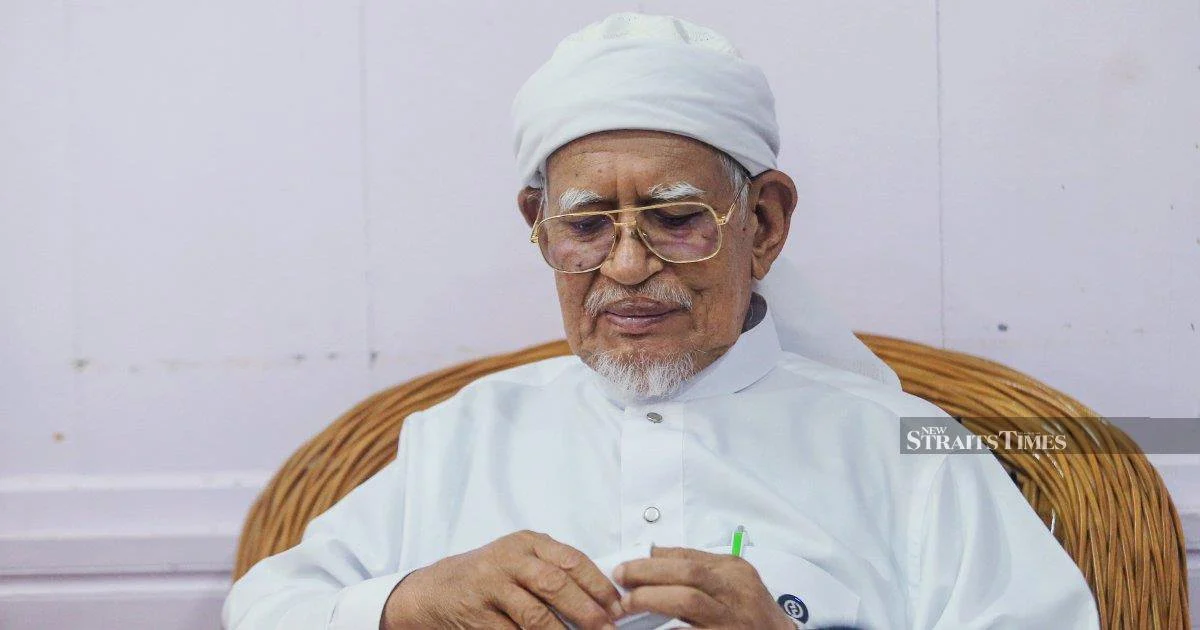
The Islamic party PAS has indicated it stands prepared to extend parliamentary support to Umno should the Barisan Nasional coalition face difficulties in securing the seats necessary to govern Johor following Saturday's state election. Speaking in Muar, party leaders made clear that PAS views such cooperation as a logical extension of the existing political cooperation between the two organisations at federal level, where they have collaborated since the 2022 general election.
This declaration carries particular weight given the fragmented nature of contemporary Malaysian politics, where single-party dominance has become increasingly difficult to achieve. The offer reflects shifting dynamics within the broader conservative-Islamist political spectrum, demonstrating how traditional rivals have learned to navigate coalition politics in an era when splinter groups and competing agendas threaten the stability of previously monolithic voting blocs. For Umno, which has historically dominated Johor politics, the prospect of external support suggests internal strategists may be preparing contingency plans should their campaign underperform.
The timing of PAS's statement represents a calculated move in the weeks leading up to polling day. By publicly committing to potential cooperation before votes are cast, the party positions itself as a responsible political force committed to stability and orderly governance. Simultaneously, it hedges its political bets—demonstrating flexibility to voters while maintaining leverage for post-election negotiations should circumstances require coalition adjustments. This diplomatic positioning has become standard practice across Southeast Asia's electoral landscape, where coalitions frequently emerge only after results become apparent.
For Malaysian politics more broadly, such declarations underscore how the traditional bipolar competition between Pakatan Harapan and Barisan Nasional has fractured into a more complex, multi-directional struggle for power. Umno, despite remaining Johor's dominant force, faces mounting pressure from emerging political competitors and must work harder to maintain the electoral margins it once took for granted. The need to publicly solicit potential backing from PAS signals a subtle acknowledgment that Umno's political dominance in its traditional heartland cannot be automatically assumed.
The broader implications for Johor extend beyond immediate government formation. If Barisan Nasional does indeed fall short of a majority and must rely on PAS support, the resulting administration would operate under constraints that could complicate state-level policymaking. Decisions on religious affairs, development priorities, and social policies would potentially require consensus between Umno's pragmatic development agenda and PAS's more religiously-oriented governance philosophy. Such compromise governance has worked in some Malaysian states but created tensions in others, suggesting Johor voters should consider these potential governance ramifications when deciding how to cast their ballots.
Regionally, this development reflects broader patterns visible across Southeast Asia, where Islamist parties increasingly find themselves positioned as kingmakers in electoral competitions. Thailand, Indonesia, and the Philippines have all witnessed similar scenarios where faith-based political organisations wield disproportionate influence relative to their direct electoral support. Malaysia's experience offers a test case for how such arrangements function in practice and whether they produce stable, effective governance or merely temporary political accommodations subject to reconfiguration after subsequent elections.
For Johor specifically, the state's economic importance to the national economy means that political uncertainty carries tangible consequences. Investors and business interests prefer clarity and predictable policy environments. Protracted coalition negotiations or unstable multi-party governing arrangements could create investor hesitation, potentially dampening the state's economic momentum during a critical period of national recovery. Clear electoral outcomes tend to generate superior business confidence compared to scenarios requiring extended post-election bargaining.
PAS's willingness to cooperate with Umno also reflects the degree to which the party has reconciled itself to operating within established political institutions rather than pursuing an oppositional stance. Having tasted governance at both federal and state levels in recent years, PAS has adopted a pragmatic approach to power-sharing arrangements. This represents significant evolution from the party's historical positioning and suggests Malaysian Islamist politics has matured beyond zero-sum competition toward more sophisticated coalition management.
The question of whether Barisan Nasional actually requires PAS assistance in Johor remains uncertain until ballots are counted on Saturday. Historical voting patterns suggest the coalition should comfortably maintain control, yet contemporary Malaysian electoral behaviour has demonstrated unexpected volatility. Younger voters, urban constituencies, and ethnically mixed areas have increasingly diverged from traditional voting patterns, creating unpredictability that renders confident predictions hazardous.
Nevertheless, PAS's pre-emptive commitment to potential cooperation establishes a political floor beneath which Barisan Nasional's outcome would need to fall before alternative arrangements become necessary. This positioning likely provides some psychological reassurance to Umno supporters concerned about worst-case scenarios, potentially supporting Barisan's campaign messaging by suggesting adequate contingency planning exists regardless of Saturday's specific results. Whether this proves electorally advantageous or raises unnecessary doubts about Barisan's competitive position depends partly on how the message resonates with different voter segments.

